Guide · Scotland
How to start a meal prep business in Scotland
Scotland has its own food regulator, Food Standards Scotland, its own hygiene scheme and its own guidance, so advice written for England does not always fit. This guide covers registering with your council, cooking at home or in a commercial kitchen, CookSafe, the Food Hygiene Information Scheme, allergen information for meals sold online, the cold chain, and VAT. It is guidance, not legal advice: confirm the details with your local authority's environmental health service, Food Standards Scotland and HMRC before you rely on them.
Last reviewed:
Register with your council
Every food business in Scotland registers with the environmental health service at its local authority. Food Standards Scotland says this must be done at least 28 days before opening, and that registration of food businesses is free. If you have already started trading without registering, its advice is to do so as soon as possible.
Registration is per premises. If you cook in more than one place, you register all of them, and Food Standards Scotland says businesses involved in distribution or food supply should register even if no food is kept at the premises. City of Edinburgh Council, for example, lists a home catering business among the businesses that must register, asks for its food premises registration form at least 28 days before you start, and states there is no charge.
A few businesses need approval instead of registration. Food Standards Scotland says businesses that make, prepare or handle meat, fish, egg or dairy products for supply to other businesses may require approval. A meal-prep company selling to the public registers; if you plan to supply shops, gyms or other businesses, ask your council which applies before you sign anything.
Registration is not the only permission. Food Standards Scotland's start-up checklist also tells you to confirm with the local authority planning department that you have the right permission to operate as a food business, and to check with the licensing department whether you need a licence for activities such as late-hours catering or mobile sales.
- Register with your local authority's environmental health service at least 28 days before opening.
- Registration is free.
- Register every premises you cook in.
- Supplying meat, fish, egg or dairy products to other businesses may need approval instead — ask the council.
- Check planning permission and any licences with the council as well.
Cooking at home or in a commercial kitchen
A home kitchen can be a registered food business in Scotland. Aberdeen City Council's guidance for home caterers says registration is free, the form should be returned at least 28 days before you start trading, and you may start trading before an inspection happens. After registration an officer arranges to visit and carry out a food law inspection of the kitchen.
That guidance lists what an officer looks at in a domestic kitchen: good repair and cleanliness, enough space and ideally separate storage for business ingredients, hot and cold water for washing equipment, equipment set aside for business use, pests kept out, no washing machine running during business use, and children and pets kept out of the kitchen while you cook. It also says that, depending on the food you produce, you may need a separate wash hand basin — and for full meals such as curry, rice or noodle dishes it treats a half or second bowl of the kitchen sink used for hand washing as unsuitable.
Before you start at home, Aberdeen's guidance also tells homeowners to check their home insurance, title deeds and mortgage conditions, and tenants to check their tenancy agreement or speak to their landlord. Food Standards Scotland's checklist asks every new business to confirm planning permission with the council.
Rules for a commercial or shared kitchen are the same law applied to a bigger room: you register that premises with its council, and it is inspected. Food Standards Scotland's checklist covers what the premises must have — ventilation, lighting, drainage, sinks, hand-washing facilities and pest control.
- Your council is the one for the address you cook at.
- Full meals may need a separate wash hand basin at home — ask the council before you buy one.
- Check insurance, title deeds, mortgage or tenancy before cooking for sale at home.
- A rented or shared kitchen is registered as its own premises.
Food safety procedures, training and inspections
Every food business has to put in place, implement and maintain food safety management procedures based on the principles of HACCP, as Aberdeen City Council's guidance puts it. Food Standards Scotland publishes CookSafe, a manual that helps catering businesses in Scotland understand and implement HACCP-based systems; it includes house rules and records such as a cold food record. Some businesses use only the sections of CookSafe that apply to the food they make.
Food handlers must be trained in food hygiene. Aberdeen's guidance says it is a requirement that all food handlers are trained, and suggests the Royal Environmental Health Institute of Scotland's Elementary Food Hygiene course as one way to meet it. Food Standards Scotland also offers free online allergen training.
Inspections in Scotland feed the Food Hygiene Information Scheme, which runs differently from the number ratings used elsewhere in the UK. A local authority food safety officer inspects; a Pass means the business broadly met the legal requirements, and a business that did not is issued an Improvement Required certificate. You receive a certificate or sticker to display on your door or window. The scheme gives businesses three safeguards: a request for a re-visit once improvements are made, a right to reply and a right to appeal.
- Write down HACCP-based procedures and keep them up to date; CookSafe is the Scottish starting point.
- Train everyone who handles food, and keep the records.
- The FHIS result is Pass or Improvement Required, not a number.
- Meal prep is cooked days before it is eaten, so record how you chill food and how you set each use-by date.
Labels and allergens for meals sold online
Food businesses must tell consumers if the food they sell contains any of the 14 allergens: celery, crustaceans, eggs, fish, gluten, lupin, milk, molluscs, mustard, peanuts, sesame seeds, soybeans, sulphur dioxide and sulphites, and tree nuts. How you do it depends on how the food is packed and sold.
Since 1 October 2021, food prepacked for direct sale (PPDS) in Scotland must be labelled with the name of the food and a full ingredients list with any of the 14 allergens emphasised within it. Food is PPDS when it is packed before the customer selects or orders it and sold from the same place it was packed — meals sealed in your kitchen and collected from a chiller there are the typical case.
Most meal prep is sold online or by phone, and that is distance selling. Food Standards Scotland's guidance says PPDS food sold this way does not need the mandatory information printed on the packet, but the allergen information must be available to the customer before they buy and again at the moment of delivery. Before the sale it can be on your website, catalogue or menu; at delivery it can be a sticker on the container naming the allergens, a menu sent with the order, or written information handed over by the driver. Any phone number customers use to ask about allergens must not cost more than a standard call.
Many meal-prep companies print a full label on every tray anyway. It satisfies the delivery-time duty, it keeps one process for collected and delivered orders, and a customer with an allergy can read the meal itself. If you supply food to shops or other businesses, it needs fuller labelling — ask your council first.
- PPDS label: name of the food and full ingredients, with the 14 allergens emphasised.
- Online or phone sales: allergen information before purchase and again at delivery.
- Allergen helplines must be free or charged at a standard rate.
- If you cannot avoid cross-contamination, do not label or sell a product as allergen-free.
Insurance
One insurance is a legal requirement once you employ people. GOV.UK says you must get Employers' Liability insurance as soon as you become an employer, covering you for at least £5 million from an authorised insurer, and that you can be fined £2,500 for every day you are not properly insured. It does not apply if you employ only close family members.
Other cover is your decision rather than the law's, but it is still worth deciding deliberately. Aberdeen City Council's guidance asks home caterers to consider whether public liability insurance will be required, and to check their home insurance before cooking for sale. GOV.UK notes that a sole trader may need additional business insurance if something goes wrong.
- Employers' Liability: at least £5 million, as soon as you employ staff.
- Public liability and product cover: not named as legal requirements in these sources; decide on them before your first delivery.
- Tell your home insurer before you start cooking for sale at home.
Setting up the business and VAT
Most businesses start as a sole trader or a limited company. GOV.UK says a sole trader must register for Self Assessment if they earn more than £1,000 in a tax year, which runs from 6 April to 5 April, and that a limited company must be registered before it starts trading.
You must register for VAT if your taxable turnover for the last 12 months goes over £90,000, or if you expect it to go over £90,000 in the next 30 days.
VAT on food turns on how it is supplied. HMRC's Notice 709/1 says cold takeaway food and drink is zero-rated, as long as it is not of a type that is always standard-rated, while hot takeaway food is standard-rated when it is hot when provided and meets one of five tests — heated so it can be eaten hot, heated to order, kept hot after heating, packed to retain heat, or marketed as supplied hot. The notice lists delivery of cooked ready-to-eat food or meals as an obvious example of catering, which is standard-rated, but also says food your customers must prepare themselves — including by reheating pre-cooked food — is not a supply in the course of catering, whether it is delivered or collected. Where a chilled meal-prep box falls is a question for an accountant with your menu in front of them.
- Self Assessment once a sole trader earns more than £1,000 in a tax year.
- VAT registration: over £90,000 taxable turnover in 12 months, or expected within 30 days.
- Cold takeaway food is normally zero-rated; hot food meeting HMRC's tests is standard-rated.
- Food the customer must reheat is not catering under Notice 709/1 — confirm your own position with an accountant.
Keeping meals cold on delivery
GOV.UK's food hygiene guidance says chilled food must be kept at 8°C or below. That is a legal requirement in England, Wales and Northern Ireland and a recommendation in Scotland. The same guidance advises setting your fridge to 5°C or below so food stays cold enough even when the temperature changes, and says chilled food can be kept out of the fridge for up to 4 hours, after which it must be thrown away.
For a delivery round, those 4 hours include loading, driving and every doorstep. Insulated boxes and cold packs, short rounds and a delivery window customers can plan around all keep the clock short. Record fridge temperatures and the times food leaves the kitchen — CookSafe includes a cold food record for exactly this — so you can show the chain held if anyone asks.
Scottish rounds are rarely held up by heat. They are held up by distance and by the last few metres: a tenement stair with a buzzer, a rural road, a ferry or a single-track road out of town. Cost a drop for the area you actually serve before you promise free delivery.
- Aim for 5°C or below in the fridge; 8°C is the upper limit GOV.UK sets out.
- Chilled food out of the fridge for more than 4 hours must be thrown away.
- Keep a temperature record for storage and for the van.
Pricing the week and running it on one system
Price each meal from what it actually costs: ingredients at the prices you pay, the tray, the film, the label and the bag, then kitchen time, delivery and card fees per meal. Weekly plans with a fixed cut-off tell you exactly what to buy and cook before you spend anything.
Once orders come in every week, the work is keeping the menu, the cut-off, the kitchen's quantities, the labels and the delivery round in step. Software such as Mealforma runs orders, subscriptions, kitchen production, labels and delivery routes on one system, for a flat monthly price and never a cut of your sales. It does not register your business, file your VAT or replace your council's advice.
Checklist
- Decide where you will cook: your own kitchen, or a rented commercial or shared one.
- Check planning permission and any licences with your council, and check your insurance, deeds or tenancy if you cook at home.
- Register each premises with your local authority's environmental health service at least 28 days before you open.
- Write HACCP-based food safety procedures, using Food Standards Scotland's CookSafe manual as the starting point.
- Make sure everyone who handles food is trained in food hygiene, and take the free allergen training.
- Work out the 14 allergens for every recipe and decide how customers see them before they buy and at delivery.
- Design your labels: name of the food and full ingredients with allergens emphasised, plus a use-by date you can justify.
- Arrange Employers' Liability insurance before you take on staff, and decide on public and product liability cover.
- Register as a sole trader or limited company, and ask an accountant about VAT on chilled and hot meals.
- Set delivery days, a weekly cut-off and delivery zones, and cost a single drop before you set fees.
- Prepare for the council's inspection: procedures written, records kept, a probe thermometer in the drawer.
- Open orders for one week, cook, deliver, and fix what broke before you sell the second.
Questions
Can I sell meal prep from home in Scotland?
Yes, if you register your home kitchen with your council. Councils treat a home catering business as a food business: you register at least 28 days before you start, an officer arranges to visit and inspect the kitchen, and it is held to food law like any other kitchen. For full meals, the council may expect a separate wash hand basin, so ask before you start.
How much does it cost to register a food business in Scotland?
Nothing. Food Standards Scotland says registration of food businesses is free. You register with the environmental health service at your local authority at least 28 days before opening.
Do I need a food hygiene certificate?
Food handlers must be trained in food hygiene. Aberdeen City Council's guidance, for example, says this is a requirement and suggests the REHIS Elementary Food Hygiene course as one way to meet it. Ask your own council which training it expects.
What is CookSafe?
CookSafe is Food Standards Scotland's manual to help catering businesses in Scotland understand and implement HACCP-based food safety systems. It includes house rules and record sheets, and many small businesses use the sections that apply to the food they make.
How do food hygiene ratings work in Scotland?
Scotland uses the Food Hygiene Information Scheme. After a local authority food safety officer inspects, a business that broadly met the legal requirements gets a Pass, and one that did not gets an Improvement Required certificate. You can request a re-visit once improvements are made, use a right to reply, or appeal.
Do delivered meals need allergen labels?
Food sold online or by phone does not need the PPDS label printed on the pack, but allergen information for the 14 allergens must be available before the customer buys and again at the moment of delivery — for example on your website, then as a sticker on each container or a menu in the bag. Food packed in advance and collected from where it was packed is PPDS and needs the full ingredients label.
Do I charge VAT on meal prep?
Only once you are VAT-registered, which is compulsory over £90,000 taxable turnover in 12 months. After that, HMRC zero-rates cold takeaway food and standard-rates hot food that meets its tests, and treats food the customer must reheat as outside catering. Confirm how your own menu is treated with an accountant before you set prices.
Sources
- Food Standards Scotland — Registering a food business
- Food Standards Scotland — Starting a food business checklist
- Food Standards Scotland — CookSafe guide
- Food Standards Scotland — Food Hygiene Information Scheme: business guidance
- Food Standards Scotland — Managing allergens
- Food Standards Scotland — Guidance on labelling food prepacked for direct sale (PDF)
- Food Standards Scotland — Food allergen labelling and information technical guidance (PDF)
- City of Edinburgh Council — Register a food business
- Aberdeen City Council — Food law guidance for home caterers (PDF)
- GOV.UK — Food hygiene for businesses: chilling and freezing
- HMRC — Catering, takeaway food and VAT (Notice 709/1)
- GOV.UK — VAT registration: when to register
- GOV.UK — Set up a business
- GOV.UK — Employers' liability insurance
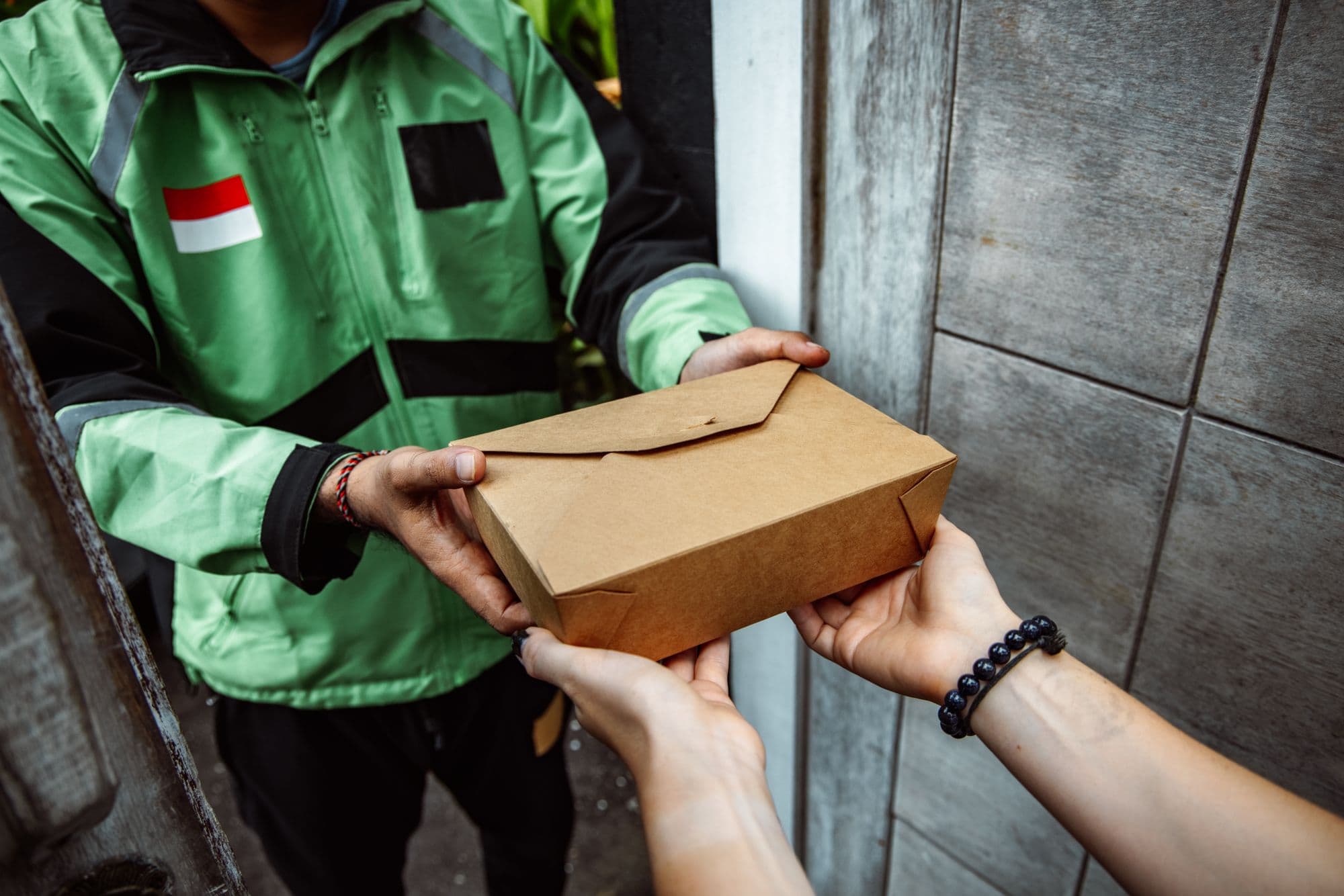
Run your Scotland meal-prep business on one system.
Storefront, subscriptions, kitchen production, labels and delivery routing in one platform — a flat monthly price, never a cut of your sales.
7-day free trial on a real account · from $249/month · never a cut of your sales