Guide · Georgia
How to start a meal prep business in Georgia
In Georgia, a business that cooks, packs and sells meals to the people who eat them is usually licensed by the Georgia Department of Agriculture as a food sales establishment, not by the county health department. This guide covers that license, why meals cannot come from a home kitchen, the food manager rule, labels, sales tax and keeping meals at 41°F on the way to the customer. It is guidance, not legal advice: confirm every requirement and fee with the Georgia Department of Agriculture, your county environmental health office, the Georgia Department of Revenue and the Secretary of State before you pay or sign anything.
Last reviewed:
The food sales establishment license
The Georgia Department of Agriculture (GDA) licenses and inspects retail packaged meal preparation businesses: those that prepare and package meals for sale to the end consumer. Its retail meal processor guidelines say these operators must be licensed as food sales establishments and inspected before they operate. Wholesale to retailers or institutions, restaurants and catering are outside those guidelines, and the GDA notes that which agency has jurisdiction can depend on the business model.
The application goes to the GDA Retail Food Program with a business plan and a product line menu, no more than 90 days and no fewer than 30 days before you plan to open. A GDA inspector carries out a pre-inspection, and the application cannot move forward until you pass it. You then submit Secure and Verifiable documents proving citizenship or lawful residence, pay the fee online, and receive the license certificate within 1 to 7 business days of payment.
License fees run in five tiers: $100, $150, $200, $250 and $300. Licenses run from July 1 to June 30 and are renewed every year by July 1. There is no proration for a new license, and a 50% late penalty applies to renewals not completed by September 1.
- Apply 30 to 90 days before your projected opening date.
- Pass the GDA pre-inspection before the license is issued.
- If the kitchen uses a well or other non-public water supply, include a water test taken within 60 days before you apply.
Can you sell meal prep from home in Georgia?
Not for meals. Georgia's cottage food law, updated by House Bill 398, which took effect on July 1, 2025, removed the state cottage food license and its fee, but it still allows only foods that are not potentially hazardous: breads, cakes, cookies, candies, fruit pies, jams and jellies, dried fruit, granola and similar items. Cottage food operators must complete an ANSI-accredited food safety program, and food handler training is acceptable.
The GDA's basic requirements for retail food also say that food prepared in a private home may not be used or offered in a food sales establishment. A meal prep menu built on cooked chicken, beef, fish and rice needs a licensed commercial kitchen: rented time in a shared kitchen, or a space of your own. The license application asks whether you operate in a shared kitchen.
If your model is closer to a restaurant or a caterer, the county is involved instead. Food service establishments operate under the Georgia Department of Public Health's Food Service Rules (511-6-1), revised on February 12, 2025 to adopt the 2022 FDA Food Code, and are handled by the county environmental health office. In Fulton County, the fee schedule effective April 1, 2022 charges $450, $600 or $750 for new facility plan review and the same amounts for the annual food service inspection, by risk type I, II or III.
Food manager certificates and safe cooking
Under Retail Food Sales Regulation 40-7-1-.03(3), firms that handle time and temperature control for safety foods and carry out activities such as hot holding or cooling must have at least one employee with supervisory and management responsibility who is a Certified Food Protection Manager. The certificate comes from passing a test accredited by the American National Standards Institute (ANSI). The certified manager does not need to be present at all times, but a person in charge must be present during all hours of operation.
The GDA's meal processor guidelines set the cooling rule: cooked food must drop from 135°F to 70°F within the first 2 hours, and from 70°F to 41°F or below within a further 4 hours, checked with probe thermometers. Cold food is held at no more than 41°F and hot food at no less than 135°F. Food employees must be informed of their duty to report symptoms, exposures and illnesses to management.
- Certified Food Protection Manager: at least one supervisory employee.
- Person in charge: on site during all hours of operation.
- Cooling: 135°F to 70°F in 2 hours, then to 41°F within 4 more hours.
Labeling packed meals
The GDA lists the elements of a food label: a statement of identity, the net quantity in both standard and metric units, Nutrition Facts, an ingredients statement in descending order by weight, the allergen declaration, a handling statement, a production code and a declaration of responsibility with the business's physical address. The statement of identity and net quantity go on the principal display panel. The GDA notes that the FDA exempts small businesses from Nutrition Facts, but meal prep customers usually expect them, and a label that makes a health claim has to carry them.
Two elements catch people out. Foods that need temperature control carry a handling statement such as "Keep Refrigerated" or "Keep Frozen", and every package carries a production code showing when it was made, so a recall can find it.
The nine major allergens are milk, eggs, fish, crustacean shellfish, tree nuts, wheat, peanuts, sesame and soybeans. They must appear in the ingredients statement or in a "Contains" statement immediately after it. Sesame became the ninth major allergen on January 1, 2023.
Insurance
None of the official sources reviewed for this guide makes business insurance a legal requirement for a meal prep company in Georgia. Shared kitchens, landlords and wholesale customers usually ask for general and product liability cover, and a vehicle used for deliveries needs cover that includes business use. Ask an insurance broker which policies fit your kitchen and your delivery model.
Register the business and collect sales tax
A limited liability company is registered with the Georgia Secretary of State. Georgia's official guide gives the filing fee as $100 online, or $110 by mail or in person, with extra fees for expedited processing. Every LLC must then file an annual registration between January 1 and April 1, and failing to file leads to administrative dissolution.
Anyone who meets the definition of a dealer must register for a sales and use tax number through the Georgia Tax Center, even if every sale is online. The Department of Revenue says the account number usually arrives by email within 15 minutes of registering online.
Georgia exempts food and food ingredients from state, but not local, sales tax when sold to individuals for off-premises consumption. Prepared food is outside that exemption and is taxed at both state and local rates. The Department of Revenue defines prepared food as food sold heated or heated by the seller, food with two or more ingredients mixed or combined by the seller and sold as a single item, or food sold with eating utensils provided by the seller. A cooked meal made from several ingredients can fit the second test, so ask the Department of Revenue how your menu is treated before you set prices. The local rate generally follows the county where the buyer receives the goods.
Keeping meals cold on the way to the customer
The GDA's meal processor guidelines hold the license holder responsible for the product's integrity, security and temperature until the end consumer takes possession. Meals are held at 41°F or below during storage, transport and pickup, frozen meals stay frozen, and cooked and cooled meals stored at 41°F must be consumed within 7 days, counting the day of preparation as day 1.
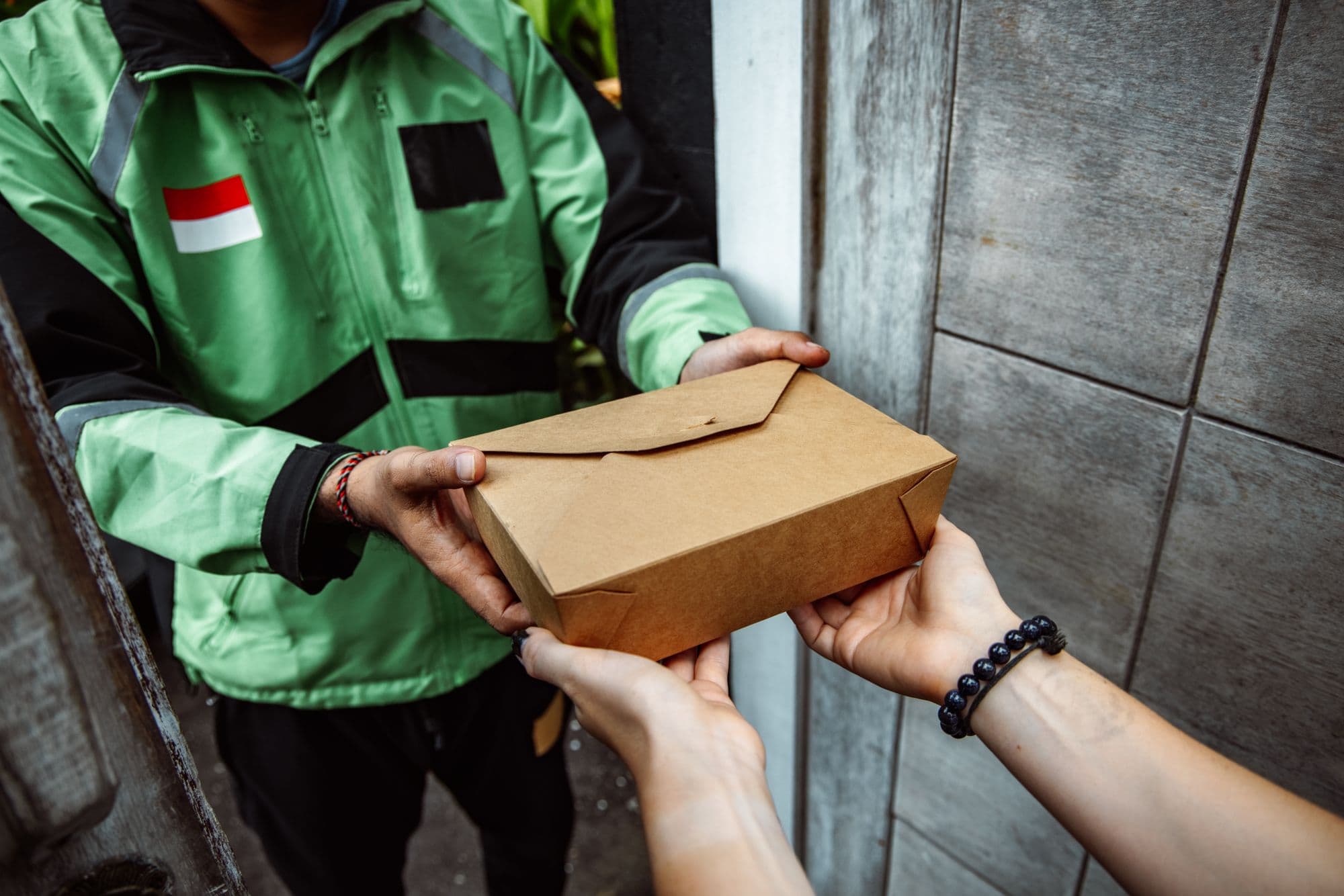
Each item travels in a food-grade secured container with a lid, or in a sealed package. You may sell on site, deliver after payment, or deliver to a drop-off point where customers collect after paying. Through a Georgia summer that means insulated carriers, short routes and windows customers can be home for.
- Hold at 41°F or below from the kitchen to the customer.
- Use a 7-day limit for cooked and cooled meals; the prep day is day 1.
- Sealed packages or secured lidded containers on every delivery.
Pricing your meals and running the week
Price each meal from its real cost: ingredients, packaging and labels, then kitchen rent, labor, delivery and card fees spread across the meals you sell. Weekly plans with a cut-off tell you exactly what to buy and cook before you spend anything.
Once orders arrive every week, the work is keeping the menu, the cut-offs, the kitchen's quantities, the labels and the delivery routes in step. Mealforma runs orders, subscriptions, kitchen production, labels and delivery routes on one system, for a flat monthly price and never a cut of your sales.
Checklist
- Confirm with the GDA that your business is a retail packaged meal preparation business, not food service or wholesale.
- Find a licensed commercial kitchen: shared time or your own space.
- Write the business plan and product line menu for the license application.
- Apply to the GDA Retail Food Program 30 to 90 days before opening.
- Pass the GDA pre-inspection, submit Secure and Verifiable documents and pay the license fee.
- Get a Certified Food Protection Manager certificate for a supervisory employee.
- Register the LLC with the Secretary of State and note the January 1 to April 1 annual registration window.
- Register for a sales and use tax number through the Georgia Tax Center and confirm how your meals are taxed.
- Design labels with the handling statement, production code, ingredients and the nine major allergens.
- Arrange liability insurance and cover for delivery driving.
- Set your plans, prices, cut-off and delivery days, then open orders.
Questions
Can I sell meal prep from home in Georgia?
No, not meals. Georgia cottage food is limited to foods that are not potentially hazardous, such as breads, cookies, jams and granola, and food prepared in a private home may not be used in a licensed food sales establishment. Cooked meals need a licensed commercial kitchen.
Who licenses a meal prep business in Georgia?
The Georgia Department of Agriculture, which licenses retail packaged meal preparation businesses as food sales establishments and inspects them before they open. Restaurants and caterers are handled under the Department of Public Health's food service rules through the county environmental health office.
How much does a food sales establishment license cost?
Between $100 and $300 a year, in five tiers of $100, $150, $200, $250 and $300. Licenses run from July 1 to June 30, are not prorated, and carry a 50% late penalty if the renewal is not completed by September 1.
Do I need a food manager certificate in Georgia?
Yes, if you handle foods that need time and temperature control and carry out activities such as cooling or hot holding. At least one supervisory employee must be a Certified Food Protection Manager, though that person does not have to be present at all times as long as a person in charge is.
Do I charge sales tax on meal prep in Georgia?
Often. Prepared food, which includes two or more ingredients combined by the seller and sold as a single item, is subject to both state and local sales tax. Plain food and food ingredients for off-premises consumption are exempt from state tax but not local tax. Register through the Georgia Tax Center and ask the Department of Revenue how your menu is treated.
How long can meal prep be kept?
The GDA's guidelines say cooked and cooled meals stored at 41°F must be consumed within 7 days, with the day of preparation counted as day 1. Frozen meals must stay frozen.
What software do meal prep businesses use?
Most start with spreadsheets and a general online store, then move to meal prep software once weekly orders, cut-offs, labels and routes get hard to keep in step. Mealforma handles all of them in one system for a flat monthly price.
Sources
- Georgia Department of Agriculture — Retail meal processor guidelines
- Georgia Department of Agriculture — Food establishment licenses (retailers)
- Georgia Department of Agriculture — Food sales license application (retailers)
- Georgia Department of Agriculture — Basic requirements for retail food
- Georgia Department of Agriculture — Certified food protection managers
- Georgia Department of Agriculture — Food labeling requirements
- Georgia Department of Agriculture — Cottage food
- Georgia Department of Agriculture — Cottage food update: HB 398 FAQ
- Georgia Department of Public Health — Food service
- Fulton County Board of Health — Environmental health fee schedule (April 1, 2022)
- Georgia Department of Revenue — Letter ruling LR SUT-2014-18 (food)
- Georgia Department of Revenue — Sales and use tax registration FAQ
- Georgia Department of Revenue — What is subject to sales and use tax
- Georgia.gov — Register an LLC with the Secretary of State
- U.S. FDA — Food allergies
Meal prep software in Georgia
Run your Georgia meal-prep business on one system.
Storefront, subscriptions, kitchen production, labels and delivery routing in one platform — a flat monthly price, never a cut of your sales.
7-day free trial on a real account · from $249/month · never a cut of your sales