Guide · Missouri
How to start a meal prep business in Missouri
Missouri's cottage food law covers baked goods, jams and dried herbs, not cooked meals with meat or dairy. This guide covers the permit, the kitchen, food safety knowledge, labels, sales tax and getting chilled meals to customers. It is guidance, not legal advice: confirm each step with your local public health agency, the Missouri Department of Health and Senior Services and the Missouri Department of Revenue before you pay or sign anything.
Last reviewed:
Licenses and permits
The Missouri Department of Health and Senior Services (DHSS) and local public health agencies regulate retail food establishments: businesses that sell food directly to the end consumer. DHSS wrote the Missouri Food Code, and each local agency either adopts it or adopts its own ordinance that is equal to it or more stringent. Start by calling the environmental health program of the local agency where your kitchen will be.
In Kansas City the Kansas City Health Department's Environmental Public Health Program issues the Food Establishment Permit. It is required for businesses that store, prepare, package or serve food directly to consumers, including those that serve through delivery. You submit an application with supporting documents, new construction or changes to food preparation areas may need plan review by City Planning and Development and the Health Department, and the permit is issued after a pre-opening inspection and payment of the permit fees. The city does not publish the fee on that page; ask the Environmental Public Health Program for the current amount.
Selling to businesses that resell your meals is different. DHSS regulates manufactured food firms, which do not sell directly to the end consumer, and a business that does both may be inspected by both the local agency and the DHSS Manufactured Food program.
- Retail food permit: from your local public health agency.
- Kansas City: Food Establishment Permit from the Kansas City Health Department, issued after a pre-opening inspection.
- Kansas City also requires a business license or a convention and tourism license.
- Wholesale: contact the DHSS Manufactured Food program.
Where you can cook
Missouri's cottage food law, section 196.298 RSMo, lets residents make only three kinds of non-potentially hazardous food at home: baked goods, canned jams or jellies, and dried herbs and herb mixes. DHSS lists meats, dairy, eggs, cut produce, sauces and salsa among the foods that cannot be sold under it. Since August 28, 2022 there has been no annual income cap, and cottage foods may be sold online when both the producer and the buyer are in Missouri.
A meal-prep menu built on cooked meat, eggs or dairy is outside the cottage law, so it must meet the local agency's food safety rules and may have to be produced in an approved commercial kitchen. The Missouri Food Code also says the person in charge must ensure food establishment operations are not conducted in a private home or in a room used as living or sleeping quarters.
Most new businesses either rent time in a shared commercial kitchen or lease a space of their own. Ask the local agency before you sign whether you need your own permit to cook in a shared kitchen, and check the cold storage you will get.
- Cottage foods: baked goods, canned jams or jellies, dried herbs only.
- Excluded: meats, dairy, eggs, cut produce, sauces and more.
- Meals with meat or dairy: an approved kitchen under a local permit.
Food safety knowledge and inspections
The Missouri Food Code requires the person in charge to demonstrate knowledge of foodborne disease prevention, HACCP principles and the code during inspections. They can do it by having no priority violations, by answering the inspector's questions correctly, or by being a certified food protection manager who passed a test from an accredited program.
A local agency may set stricter rules than the state code, so ask yours whether it requires a certified food protection manager or food handler training. The state code is based on the FDA model food code, and it requires refrigerated, ready-to-eat food held for more than 24 hours to be date marked and used within seven days when held at 41°F or less.
- Person in charge: must demonstrate food safety knowledge.
- Certified food protection manager: one accepted way to do it.
- Ready-to-eat chilled food: date marked, seven days at 41°F or less.
Labeling packed meals
The Missouri Food Code says food packaged in a food establishment must be labeled with its common name, the ingredients in descending order of predominance by weight, an accurate quantity, the name and place of business of the manufacturer, packer or distributor, and the food source of each major food allergen. Nutrition labeling is required under federal rules unless an exemption applies.
Federal law names nine major food allergens: milk, eggs, fish, crustacean shellfish, tree nuts, peanuts, wheat, soybeans and sesame. Sesame became the ninth on January 1, 2023. The FDA says a food containing one of them must name the allergen source on the label, either in parentheses after the ingredient or in a "Contains" statement next to the ingredient list, and must name the specific tree nut, fish or shellfish.
Cottage foods carry their own label: the operation's name and address, the food's name, ingredients, net weight, allergens, and a statement that it was made in a kitchen not inspected by DHSS.
Insurance
None of the Missouri sources this guide relies on makes business insurance a legal requirement for a meal-prep business, so treat it as a business decision rather than a licensing step. Ask your local public health agency whether anything is required for your kind of operation.
Ask your insurance adviser about general and product liability cover for the food you sell, and about cover for the vehicles you deliver in. Shared kitchens, landlords and wholesale customers may set their own insurance requirements in their contracts, so read those before you sign.
Registering the business and sales tax
A limited liability company is formed by filing articles of organization with the Missouri Secretary of State, which accepts them online. If you trade under a name other than your own true name, Missouri law requires you to register it as a fictitious name with the Secretary of State.
A business making taxable sales must register with the Missouri Department of Revenue for a sales tax license, online or with Form 2643. The state sales tax rate is 4.225 percent, and local sales taxes apply on top of it.
Section 144.014 RSMo reduces the state rate on qualifying food, the items that can be bought with SNAP benefits, to 1.225 percent. The reduced rate does not apply at an establishment where food it prepared for immediate consumption, on or off the premises, makes up more than 80 percent of its gross receipts, and hot food ready to eat is taxed at the regular rate. Chilled meals for later can fall on either side of that line, so ask the Department of Revenue how your menu is treated before you set prices.
- LLC: articles of organization with the Secretary of State.
- Trading name: fictitious name registration.
- State sales tax: 4.225 percent, or 1.225 percent on qualifying food, plus local taxes.
Keeping meals cold on delivery
The Missouri Food Code requires potentially hazardous food to be held at 41°F or less, and DHSS describes 41°F to 135°F as the temperature danger zone where bacteria grow more rapidly. The FDA advises never leaving perishable food at room temperature for more than two hours, or one hour when the air is above 90°F.
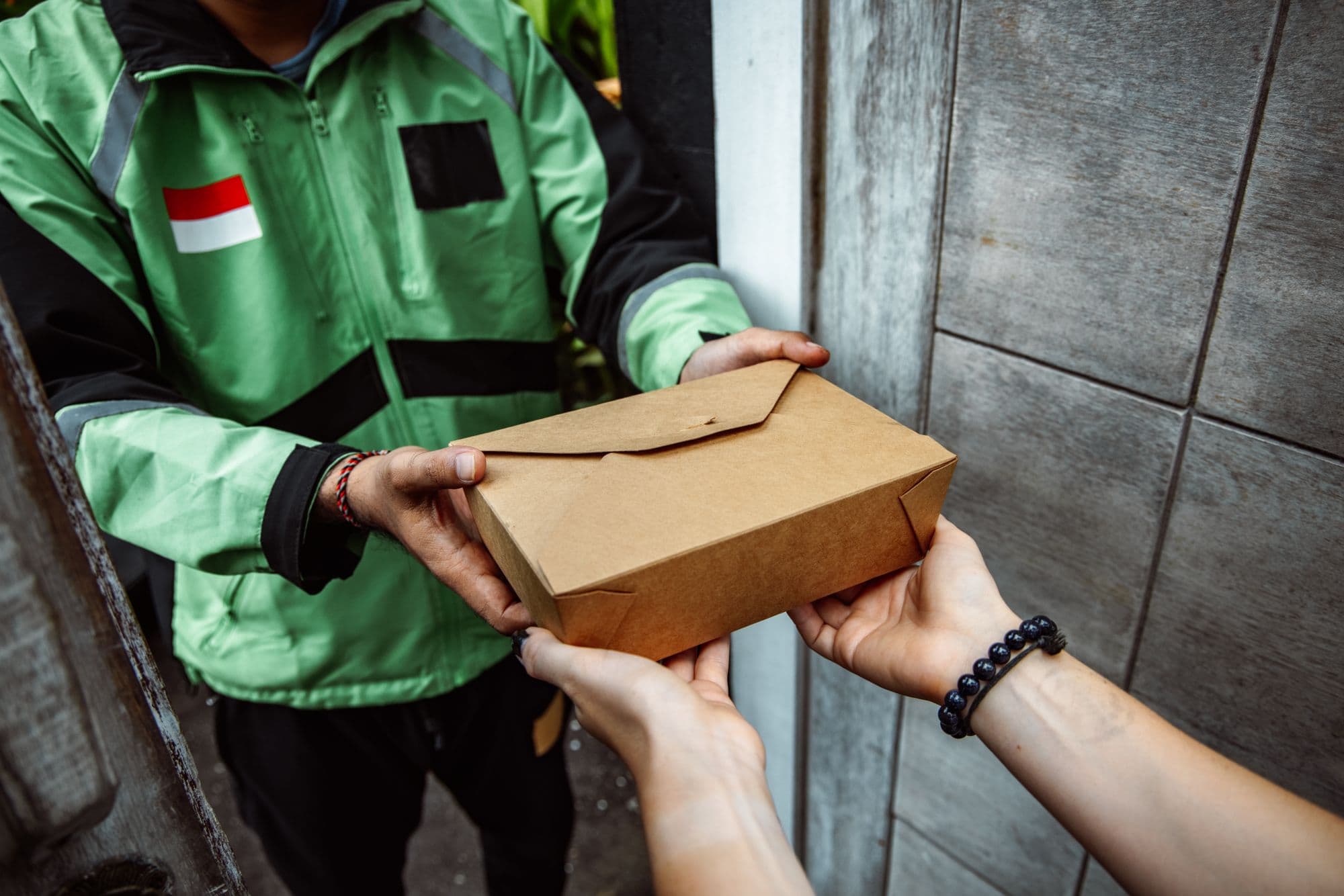
Missouri summers are hot and humid, so pack meals in insulated bags or coolers with ice packs, keep routes short and give customers a delivery window. Build each day's route from that day's orders, and take a photo at each drop.
Price your meals and run the business on one system
Cost each meal from its recipe: ingredients, packaging and the label, then add your kitchen time, delivery and card fees per meal before you set a price. Most meal-prep businesses sell weekly plans with a cut-off for choosing meals, which tells you exactly what to buy and cook before you spend anything.
Once orders arrive every week, the work is keeping the menu, the cut-offs, the kitchen's quantities, the labels and the delivery routes in step. Meal prep software such as Mealforma runs orders, subscriptions, kitchen production, labels and delivery routes for a Missouri business on one system, for a flat monthly price and never a cut of your sales.
Checklist
- Check your menu: meat, dairy and egg meals cannot be sold under the cottage food law.
- Call your local public health agency and ask which permit and code apply.
- Choose a kitchen: time in a shared commercial kitchen or your own approved space.
- Complete plan review if you are building or remodeling.
- Apply for the food permit and pass the pre-opening inspection.
- Make sure the person in charge can demonstrate food safety knowledge; consider a food protection manager certificate.
- Form the business with the Secretary of State and register any fictitious name.
- Register with the Department of Revenue and confirm your sales tax rate.
- In Kansas City, get a business license or convention and tourism license.
- Design labels with ingredients, allergens and nutrition.
- Arrange insurance and cold bags or coolers for delivery.
- Set your plans, prices, cut-off and delivery days, then open orders.
Questions
Can I sell meal prep from home in Missouri?
Not meals with meat, dairy or eggs. The cottage food law covers only baked goods, canned jams or jellies and dried herbs, and DHSS lists meats, dairy and eggs among the foods that cannot be sold under it. Other foods must meet the local agency's rules and may need an approved commercial kitchen.
Who issues a food permit in Missouri?
Your local public health agency, which either adopts the Missouri Food Code or its own stricter ordinance. In Kansas City it is the Kansas City Health Department's Environmental Public Health Program.
Is there an income limit for cottage food in Missouri?
No. DHSS says the $50,000 annual gross income cap was removed on August 28, 2022, and cottage foods may now be sold online when both producer and buyer are in Missouri.
Do I need a food manager certificate in Missouri?
The state code lets the person in charge show food safety knowledge in three ways, one of which is being a certified food protection manager. Local agencies can set stricter rules, so ask yours.
What sales tax applies to meal prep in Missouri?
The state rate is 4.225 percent, reduced to 1.225 percent on qualifying food unless more than 80 percent of the business's receipts come from food it prepared for immediate consumption. Local taxes apply on top. Ask the Department of Revenue how your meals are treated.
Can I sell my meals to gyms or stores?
Selling to businesses that resell your food makes you a manufactured food firm, which DHSS regulates. Contact the DHSS Manufactured Food program before you sign a wholesale deal.
What software do meal prep businesses use?
Many start with spreadsheets and a general online store, then move to meal prep software once weekly orders, cut-offs, labels and routes are hard to keep in step. Mealforma runs them on one system for a flat monthly price.
Sources
- Missouri DHSS — Food safety
- Missouri DHSS — Home-based kitchen food production guidance
- Missouri DHSS — Missouri Food Code
- City of Kansas City, Missouri BizCare — Health permits
- Missouri Department of Revenue — Sales tax reduction on food
- Missouri Department of Revenue — Sales and use tax
- Missouri Department of Revenue — Business registration requirements
- Missouri Secretary of State — Starting a business
- U.S. FDA — Food allergies
- U.S. FDA — Are you storing food safely?
Meal prep software in Missouri
Run your Missouri meal-prep business on one system.
Storefront, subscriptions, kitchen production, labels and delivery routing in one platform — a flat monthly price, never a cut of your sales.
7-day free trial on a real account · from $249/month · never a cut of your sales