Guide · Nevada
How to start a meal prep business in Nevada
Nevada will let you sell granola from your kitchen and will not let you sell a chicken-and-rice bowl from it. It also will not let a cottage food operation take orders over the internet at all. This guide covers what a meal prep business in Nevada needs before its first delivery: whether your menu can come from home, which health authority permits your kitchen, the food handler and food safety manager cards, sales tax on prepared food, labels, and getting chilled meals across a valley that runs hot and around the clock. Fees and rules change, so every section points to the agency that sets them. Check the source before you pay or sign anything.
Last reviewed:
Can you run a meal prep business from home in Nevada?
Nevada's cottage food law began with Senate Bill 206 in 2013 and lets a registered operator make and sell certain foods from the kitchen of their private home. It is a registration, not a permit: the Southern Nevada Health District explains that a cottage food operation is excluded from the definition of a food establishment, so no health permit is issued and the kitchen is not inspected.
The list of allowed foods is short and closed. It runs to nuts and nut mixes, candies, jams, jellies and preserves, vinegar and flavored vinegar, dry herbs and seasoning mixes, dried fruits, cereals, trail mixes and granola, popcorn and popcorn balls, and baked goods that are not potentially hazardous and need no time or temperature control. Baked goods may not carry cream, cream cheese, custard or fresh fruit garnishes, and additions to them must leave a non-potentially hazardous food — animal products are not allowed at all, soft cheeses are not allowed, and frying and steaming are not allowed as cooking methods.
Grilled chicken, beef, salmon, cooked rice, cooked vegetables and anything that lives in a fridge are therefore all outside it. A meal prep menu needs a permitted kitchen from the first cook day. Cottage food registration is currently handled by the health authority for your county; Assembly Bill 352, passed in 2025, moves the program to the Nevada Department of Agriculture on July 1, 2027, under NRS 585.700 to 585.770, and the Southern Nevada Health District remains the registering authority for Clark County until then.
- Allowed: nuts and nut mixes, candies, jams, jellies and preserves, vinegars, dry herbs and seasoning mixes, dried fruits, cereals, trail mixes and granola, popcorn, and baked goods that are not potentially hazardous.
- Gross food sales are limited to $35,000 per calendar year, counted before any deduction for ingredients.
- A cottage food operation is one natural person. Partners and employees are not permitted.
- Every item is packaged in the home and labeled "MADE IN A COTTAGE FOOD OPERATION THAT IS NOT SUBJECT TO GOVERNMENT FOOD SAFETY INSPECTION".
- Registration in Clark County cost $220 in fiscal year 2026/27, on the Environmental Health fee schedule as "MISCPR – COTTAGE FOOD OPERATION REGISTRATION".
Why cottage food cannot be an online meal prep business
There is a second reason the cottage food route does not work here, and it catches people who have already narrowed their menu to fit. Nevada limits cottage food sales to a direct person-to-person transaction — at the operator's home or private property, or at a licensed farmers market, flea market, swap meet, church bazaar, garage sale or craft fair. The health district is explicit that the law prohibits selling food by telephone or via the internet, and that a website or social media account may advertise but may not offer shipping.
There is one narrow opening: food can be ordered by telephone or internet for in-person delivery by the cottage food operator. That is a delivery the operator makes by hand, not a courier, not a third party, and not a doorstep drop. If your plan is a weekly order form, a cut-off and a van, it is a permitted food establishment you are describing, whatever the menu looks like.
Choose where you will cook
Meals built on meat, poultry, fish, rice or dairy have to be prepared in a kitchen that holds a health permit from the authority for its address. For most new businesses that means renting time in a shared commercial kitchen or commissary, where the building already meets the construction and equipment rules and you pay for the hours you use.
Leasing your own space gives you the schedule and the room to grow, and it brings plan review, a build-out and an opening inspection with it. The Southern Nevada Health District's Plan Review program processes new, remodel and change-of-ownership health permit applications for food establishments, and applications go through its Environmental Health portal with the applicable questionnaire attached. Northern Nevada Public Health works the same way in Washoe County: application, fees, then an inspector schedules an opening inspection to check that construction, equipment and intended operations line up with the regulations.
Talk to the health authority before you sign a lease. They will tell you what the space needs to pass, and in Washoe County they tell you something else worth knowing early — a valid health permit is one of the things you must have before your business license is approved.
- Work out a full cook day first: meals, fridge space per meal, and packing time.
- Check that cold storage holds a whole production day before you commit to a kitchen.
- Match the kitchen's access hours to your cook days and your delivery days.
- Ask whether you need your own permit to cook there, and whether you can take supplier deliveries.
Get the right food permit
Nevada does not run food permitting from one desk. Which agency permits your kitchen depends entirely on where the kitchen is, and the list below is the one the health districts publish for each other. Call the one that covers your address first, and say how you will sell: weekly delivery, pickup, a market stall, or all three.
Northern Nevada Public Health says plainly that any business which manufactures, prepares, sells or serves food to the public needs a valid health permit. In Washoe County the first year carries a one-time application fee on top of the annual permit fee, plan review and HACCP applications carry their own one-time fees, and the current figures live on the district's published schedule of fees — check it rather than a number you read somewhere else. Permits are not transferable between owners, so buying an operating kitchen means applying again and passing an opening inspection of your own.
If your process is unusual — cook-chill, reduced oxygen packaging, anything you would call a special process — ask about an operational plan or a HACCP plan review early. Those plans can be submitted at any time and are not needed to get the permit, but they must be approved before you run the process.
- Clark County (Las Vegas, Henderson, North Las Vegas, Mesquite, Boulder City, Laughlin): Southern Nevada Health District.
- Reno, Sparks and Washoe County: Northern Nevada Public Health.
- Carson City: Carson City Health and Human Services.
- Fallon, Churchill, Mineral, Eureka and Pershing counties: Central Nevada Health District.
- Everywhere else: Nevada Division of Public and Behavioral Health.
Food handler and food safety manager cards
Nevada's health cards are issued by the health districts, not by the state, and the Southern Nevada Health District requires one of any person employed in or operating a food establishment as defined in NRS 446.030. That includes you. First-time applicants book an appointment, present valid photo identification and take the test in person at a district office; the card is printed the same day. Every other renewal can be done online, which returns a printable certificate rather than a physical card.
Managers need the second card. The district's Certified Food Safety Manager Card recognizes a food protection manager certification from an ANSI-accredited program — ServSafe, Learn2Serve, StateFoodSafety, Always Food Safe and others are on its published list — and since December 2023 it also requires passing a 10-question test on local food regulations at a district office. The card's expiration matches the ANSI certificate's, up to five years.
Washoe County and the other health authorities run their own card programs with their own rules, so do not assume a card from one covers a kitchen in another. Ask the authority that permits your kitchen which card it accepts and how long it lasts.
- Food Handler Safety Training Card, Clark County: $25 first card, valid three years, 20-question test passed at 70 percent or better, $5 to retest.
- Renewals cost $25; a card that expired within the last two years costs $40 to renew.
- Certified Food Safety Manager Card, Clark County: an ANSI-accredited food protection manager certificate plus a 10-question local test at the district office, $25, valid up to five years.
- Keep a copy of every card at the kitchen — inspectors ask for them.
Register the business
Health registration and business licensing are separate tracks in Nevada, and the health districts say so. The Southern Nevada Health District tells even cottage food operators that additional licenses are required, such as with the Nevada Secretary of State and local business licensing agencies, and that a cottage food operation is not a permitted food establishment — so check with the jurisdictions where you will produce and where you will sell: Clark County, the City of Las Vegas, Henderson, North Las Vegas, Mesquite or Boulder City, as the case may be.
Open a separate business bank account, get an Employer Identification Number from the IRS before you hire anyone, and arrange insurance. Shared kitchens and wholesale customers generally ask to see general and product liability cover, and you need commercial auto cover once meals go out in a vehicle.
Sales tax on meals
The Nevada Department of Taxation's own FAQ lists unprepared food among the non-taxable items. What it does tax is prepared food intended for immediate consumption, and where your meals fall is the question worth settling before you publish a price.
NAC 372.605 is where the line is drawn. It reads "prepared food intended for immediate consumption" as prepared food under NRS 360B.460 that is deemed intended for immediate consumption, and then carves out several things when they are sold without eating utensils provided by the seller: two or more ingredients combined by the seller and sold in an unheated state by weight or volume as a single item, or sold by a seller whose primary NAICS classification is food manufacturing; bakery items; and food sold as a single item that carries four or more servings per container under federal nutrition labeling, provided the seller keeps the records the Department requires. Single-serving chilled meals sit on the other side of most of those carve-outs.
Apply for a sales and use tax permit through the Department's business registration, then ask the Department in writing how your menu is treated. Filing frequency follows your size: monthly is mandatory above $10,000 in taxable sales a month, quarterly below that, and annual if you sold less than $1,500 in the previous year. The Clark County rate has been 8.375 percent since January 1, 2020, and rates differ by county — none of which is tax advice, so get the Department's answer for your own menu.
Labels and allergens
Customers want to know what is in each meal and customers with allergies have to. Federal law names nine major food allergens: milk, eggs, fish, crustacean shellfish, tree nuts, peanuts, wheat, soybeans and sesame, which became the ninth on January 1, 2023. Declare them clearly and consistently on every container.
Cottage foods carry their own rules — prepackaged in the home, labeled to federal requirements, and carrying the "MADE IN A COTTAGE FOOD OPERATION THAT IS NOT SUBJECT TO GOVERNMENT FOOD SAFETY INSPECTION" statement. Since July 1, 2023 the Southern Nevada Health District's label review for cottage food has been voluntary and charged as a fee for service, which means the accuracy of the label is the operator's responsibility. For a permitted kitchen, ask your health authority which labeling rules apply to the way you sell, and print nutrition from the recipe version the kitchen actually cooked rather than from a spreadsheet that has drifted.
Delivery in a valley that runs hot and around the clock
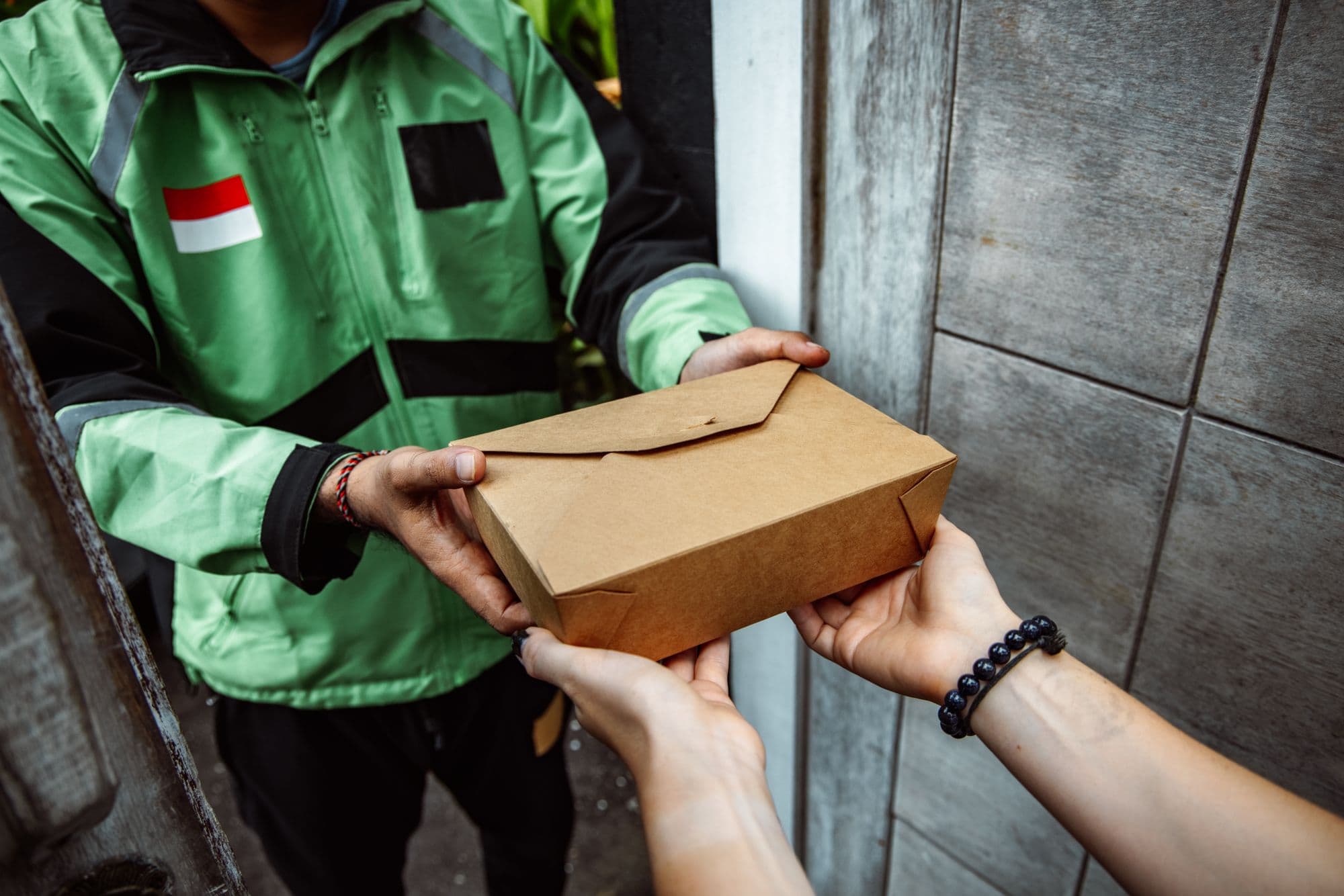
Meals that need temperature control have to stay cold from the kitchen fridge to the customer's hands, and in Las Vegas that is a real engineering problem for four months of the year. Check the cold-holding temperature your health authority's food regulations require and build the route to hold it: insulated bags or coolers with ice packs, short runs, a loading order that matches the stop order, and delivery windows customers can plan around so nobody's lunch sits in a stairwell all afternoon.
The other Nevada condition is the clock. A large share of Las Vegas works swing and graveyard shifts on the Strip, in hospitals and in the warehouses out by the interstate, and those customers cannot take a 2 p.m. doorstep drop. Offer an evening or early-morning window, or a pickup point, and ask at sign-up which one a customer wants. A photo at each drop settles most "it never arrived" messages. Reno and Carson City bring the opposite problem in winter — passes, snow and longer runs between stops — so plan those routes by drive time rather than by distance.
Price and sell your first plans
Most meal prep businesses sell by the week. Customers choose a plan — 10 meals, 15 meals — pick their meals before a cut-off and receive them on set delivery days. The cut-off is what makes the business work: it tells you exactly what to buy and cook before you have spent anything.
Cost each meal from its recipe, including packaging and labels, then add kitchen rent, labor, delivery and card fees per meal before you choose a price. Subscriptions flatten the weekly swings and make purchasing predictable; one-off orders and add-ons fill the gaps. If you decide to advertise a tax-inclusive price, decide it once and apply it everywhere rather than at the checkout.
Run it on one system
Once orders arrive every week, the work is keeping the menu, the cut-offs, the kitchen's quantities, the labels and the delivery routes in step. Mealforma is meal prep software built for that: an online store with weekly subscriptions, production quantities worked out from locked orders, allergens carried from the ingredient through the recipe version onto the printed label, and each day's delivery route with its own zones, fees and cut-off times as settings you control. You pay a flat monthly price and it never takes a percentage of your sales, and each business gets its own database.
What it does not do is get you a permit. Mealforma certifies nothing, obtains no permits, files no taxes and is not legal advice. The health district and the Department of Taxation decide what you must do; the software's job is to make doing it repeatable.
Checklist
- Check whether your menu fits Nevada's cottage food list. Cooked meat, rice, dairy and anything refrigerated do not.
- If you plan to take orders online, plan on a permitted kitchen — cottage food may not be sold by telephone or internet.
- Call the health authority for your kitchen's address and ask which permit covers your model.
- Choose a kitchen: time in a shared commercial kitchen or commissary, or your own permitted space.
- Go through plan review and the opening inspection before you cook for sale.
- Get a food handler card for everyone working in the kitchen, including yourself.
- Get a certified food safety manager card for the person in charge.
- Register with the Nevada Secretary of State and the local business licensing agencies where you produce and sell.
- Apply for a sales and use tax permit and ask the Department of Taxation how your menu is taxed.
- Design labels with ingredients, the nine major allergens and nutrition from the recipe version you cooked.
- Arrange liability insurance and cover for delivery driving, then set your plans, cut-off and delivery windows.
Questions
Can I sell meal prep from my home kitchen in Nevada?
No. Nevada's cottage food law covers a short list of shelf-stable items — nuts and nut mixes, candies, jams and jellies, vinegars, dry herbs and seasoning mixes, dried fruits, cereals and granola, popcorn, and baked goods that are not potentially hazardous. Cooked meat, rice, dairy and anything that needs refrigeration are not on it. The law also limits sales to a person-to-person exchange and specifically prohibits selling food by telephone or over the internet, which is how a meal prep business takes its orders.
Who issues the food permit for a meal prep kitchen in Nevada?
Your health authority does, and which one depends on where the kitchen is. The Southern Nevada Health District covers Clark County, Northern Nevada Public Health covers Reno, Sparks and Washoe County, Carson City Health and Human Services covers Carson City, the Central Nevada Health District covers Churchill, Mineral, Eureka and Pershing, and the Nevada Division of Public and Behavioral Health covers everywhere else. Call the one for your address before you sign a lease.
Do I need a health card to work in a meal prep kitchen in Las Vegas?
Yes. The Southern Nevada Health District requires a Food Handler Safety Training Card of any person employed in or operating a food establishment, including the owner. The first-time card costs $25, is issued after a 20-question test passed at 70 percent or better, and is valid for three years. Washoe County and the other health authorities run their own card programs, so ask the one that covers your kitchen.
Do I need a food safety manager card?
The Southern Nevada Health District issues a Certified Food Safety Manager Card to people who hold a food protection manager certificate from an ANSI-accredited program and then pass a 10-question test on local regulations at the district office. The card is valid for up to five years, matching the expiration of the ANSI certificate, and the first card costs $25. It complies with the rules requiring a person in charge who understands food safety.
Do I charge sales tax on meal prep in Nevada?
It depends on how the meals are sold. Nevada exempts unprepared food from sales tax but taxes prepared food intended for immediate consumption. NAC 372.605 also excludes some things from that term, including food sold as a single item that carries four or more servings per container when the seller keeps the required records. Get a sales and use tax permit and ask the Department of Taxation how your menu is treated before you set prices. This guide is not tax advice.
Can I sell my meals to gyms or stores?
Not under the cottage food law. Cottage foods may be sold only to a person for their own consumption; consignment, wholesale and sales to a permitted food establishment are all prohibited, and a permitted kitchen may not serve food from an unapproved source. A wholesale menu means a permitted kitchen and a conversation with your health authority before you sign anything.
What software do meal prep businesses use?
Most start with spreadsheets and a general online store, then move to meal prep software once weekly orders, cut-offs, labels and routes stop lining up. Mealforma handles all of them in one system: allergens flow from the ingredient to the recipe version to the printed label, tax rates and tax-inclusive pricing are settings, delivery zones, fees and cut-offs are settings, and the price is a flat monthly fee rather than a percentage of your sales.
Sources
- Southern Nevada Health District — Cottage Food Operations
- Southern Nevada Health District — Cottage Food FAQ
- Southern Nevada Health District — Plan Review
- Southern Nevada Health District — Food Handler Safety Training Card Program
- Southern Nevada Health District — Certified Food Safety Manager Card
- Northern Nevada Public Health — Food establishment health permits: FAQ for business owners (PDF)
- Northern Nevada Public Health — Food Safety Services
- Nevada Department of Taxation — Sales Tax & Use Tax
- Nevada Department of Taxation — Sales and use tax FAQs
- Nev. Admin. Code § 372.605 — "Prepared food intended for immediate consumption" interpreted
- U.S. FDA — Food allergies
Meal prep software in Nevada
Run your Nevada meal prep business on Mealforma
Online ordering, weekly subscriptions, kitchen quantities, labels and delivery routes in one system, for a flat monthly price in US dollars and no cut of your sales.
7-day free trial on a real account · from $249/month · never a cut of your sales