Guide · New York
How to start a meal prep business in New York
New York is two states for anyone selling food. Inside the five boroughs the Department of Health and Mental Hygiene permits your kitchen, trains your manager and inspects you. Everywhere else a county health department does it, and the Department of Agriculture and Markets licenses anything that looks like manufacturing. This guide covers what a meal prep business in New York needs before its first delivery: whether you can cook at home, which permit you need and from whom, the certificates, sales tax, the allergen label rule that starts in November 2026, and getting chilled food to customers in a city with nowhere to park. Fees and rules change, so every section names the agency that sets them. Check the source before you pay or sign anything.
Last reviewed:
Can you cook meal prep at home in New York?
New York's version of a cottage food law is the home processor exemption, run by the Department of Agriculture and Markets. You register, there is no fee, and you may then make certain foods in your own kitchen and sell them anywhere in New York State: at farmers markets and farm stands, at craft fairs and flea markets, online, or delivered to the door.
The list of what you may make is the problem. The exemption covers breads and baked goods such as cookies, cakes, brownies and doughnuts, jams and jellies from high-acid fruits, granola, crackers, popcorn and fudge. It excludes dairy products, meat, fish and poultry, cooked vegetables, refrigerated items, raw nuts, alcoholic products and no-bake products. The Department's reasoning is stated plainly: products with no pathogen kill step, products that have been implicated in outbreaks, and anything considered temperature controlled for safety or potentially hazardous do not belong in an unlicensed, uninspected kitchen.
Read that against a normal meal prep menu. Grilled chicken with rice. Beef and sweet potato. Salmon and greens. A yogurt breakfast pot. Every one of them is out. Cooked vegetables are temperature-controlled foods, and a finished product that needs refrigeration is not a home processor product at all. If your menu is chilled meals, you need a permitted kitchen from day one, and the rest of this guide is about getting one.
- Registration is with the Department of Agriculture and Markets, and there is no fee.
- Products must be pre-packaged in the home and sold within New York State.
- Labels carry the product name, ingredients by weight, the net quantity, and the processor's name and address.
- The Department asks home processors to add a line such as "Made at Home by XYZ" or "Made in the Home Kitchen of XYZ".
- Any finished product that requires refrigeration is not allowed under the exemption.
Which rulebook applies to you
Before you compare kitchens or price a meal, work out who your regulator is, because New York has three and they do not overlap the way people assume.
If your kitchen is in Manhattan, Brooklyn, Queens, the Bronx or Staten Island, it is the New York City Department of Health and Mental Hygiene. The city runs its own health code, its own permits and its own food protection course, and a state answer is not a substitute for a city one.
If your kitchen is anywhere else in the state, the permit comes from the county health department for that address, under Subpart 14-1 of the State Sanitary Code. The regulation defines a food service establishment as a place where food is prepared and intended for individual portion service, including the site at which the individual portions are provided, whether consumption occurs on or off the premises. Meals portioned into containers and handed to the person who eats them sit squarely inside that definition. The same section excludes food processing establishments, retail food stores and private homes cooking for the family.
The Department of Agriculture and Markets is the third. It licenses food processing establishments under Article 20-C and retail food stores under Article 28-A, and it says restaurants and food service establishments are regulated by local health departments instead. Which side of that line you land on depends on whether you feed customers or supply other businesses, and that question gets its own section below.
New York City: the permit and the certificate
A meal prep business in the five boroughs that sells to the people who eat the food needs a Food Service Establishment permit from the Health Department. The permit covers a place where food is given to people, whether sold or free, and whether eaten on site or taken away, so a delivery-only kitchen is inside it. The permit is $280 a year and expires after one year on a staggered date. Manufacturing frozen desserts adds $25.
You cannot get the permit without a Food Protection Certificate. The Health Code says a food establishment must have a supervisor holding one on duty during all hours of operation. The certificate comes from the city's own Health Academy. The classroom course runs fifteen hours over five days, three hours a day, and costs $114 including the exam. The online course is free and the exam is $24, taken in person.
The Health Department also asks for proof of a Certificate of Authority to collect sales tax, with the address matching your application, and for workers' compensation and disability insurance listing the department as the certificate holder. Then it inspects before it issues anything.
If you rent time in a shared kitchen, you still need your own Food Service Establishment permit — the city says so in as many words. The shared kitchen itself holds a different permit, a Non-Retail Food Processing Establishment permit at $200 a year, which covers a place where food is processed, prepared, stored or packed for consumption off premises and not given or sold directly to consumers. That is the landlord's permit, not yours. Ask to see it, and ask whether the building has passed its pre-permit inspection, before you sign.
- Food Service Establishment permit: $280 a year, renewed annually, staggered expiry dates.
- Food Protection Certificate: a supervisor holding one must be on duty during all hours of operation.
- Certificate of Authority for sales tax, at the same address as the permit application.
- Workers' compensation and disability insurance naming the Health Department as certificate holder.
- A pre-permit inspection by the Health Department before the permit is issued.
- Renting time in a shared kitchen does not remove your own permit obligation.
Outside the city: your county health department
Everywhere else in New York the permit to operate comes from the county or district health department for the kitchen's address. Counties run the same state regulation with their own forms, fees and lead times, so the first call is to them and not to Albany.
Cattaraugus County's process is a fair picture of what to expect anywhere upstate. The permit to operate is submitted at least thirty days before you intend to open. Plan review and approval are required for all new construction and extensive remodeling of an existing facility. A pre-operational inspection has to pass before the permit is issued. And the facility must be reserved exclusively for food service — home kitchens are not acceptable, which is the same answer the home processor exemption gives by a different route.
Since September 2017 most food service establishments in the state have needed at least one supervisor or manager who has completed an ANSI-accredited certified food protection manager course. That applies to medium and high risk establishments, and a kitchen that cooks, chills and holds meals will be classed in that range. Inspections afterwards are unannounced, at a frequency set by your risk class.
- Call the county health department before you sign a lease or a shared-kitchen contract.
- Allow for plan review if you are building or remodeling, and a pre-operational inspection either way.
- Budget the certified food protection manager course for at least one person on every shift.
Choose where you will cook
For a chilled meal menu the real choice is between renting time in a licensed commercial kitchen and taking a space of your own. Both are legitimate. They fail in different ways.
A shared commercial kitchen gets you cooking in weeks rather than months. The building already passes, and you pay for the hours you use. Before you sign, ask three questions and get the answers in writing: do I need my own permit to cook here (in New York City, yes), how much refrigerated storage comes with the hours, and can I take a supplier delivery on a day I am not cooking? Cold storage is what breaks meal prep businesses in shared kitchens. A hundred meals is more fridge space than anyone estimates.
Your own space means control of the calendar and room to grow, and it means plan review, a build-out and an inspection before you can turn on a burner. Talk to your health authority before you sign the lease rather than after. They will tell you what the room needs, and that conversation is free.
- Work out one full cook day first: meals, fridge space per meal, and packing time.
- Check that cold storage holds an entire production day before you commit.
- Match the kitchen's access hours to your cook days and your delivery days.
Selling to gyms, offices and stores
Selling your meals to a business that resells them is a different activity with a different license. The Department of Agriculture and Markets issues the Article 20-C food processing establishment license, and it covers food manufacturers, processing plants, wholesale bakeries and retail food establishments that do food preparation — cooking, slicing, baking, canning, bottling or repacking. Article 28-A is the retail food store license, for stores selling food for off-premises consumption that do no food processing at all.
The practical version: while you sell direct to the person who eats the meal, you are a food service establishment and your health department permits you. The moment a gym, café or grocer buys your meals to sell on, you are into territory Agriculture and Markets licenses. Ask them before you sign a wholesale contract, not after the first delivery, because the answer can change what your kitchen has to look like.
Register the business
A New York LLC files Articles of Organization with the Department of State, and the filing fee is $200. Then comes the part that surprises people. Under section 206 of the Limited Liability Company Law, most LLCs must publish a copy of the articles, or a notice of formation, in two newspapers for six consecutive weeks. A Certificate of Publication with the newspapers' affidavits attached then goes to the Department of State with a $50 filing fee. Fail to publish and file within 120 days and the LLC's authority to carry on business is suspended. The newspapers set their own rates by county, and downstate that bill can be the largest single number in a startup budget, so price it before you choose where the business is based.
Register for a Certificate of Authority before you begin business. Every person who sells taxable tangible personal property or taxable services in New York has to, including people working from home, and the application goes through New York Business Express. Get an Employer Identification Number from the IRS before you hire, open a separate business bank account, and arrange general and product liability cover — shared kitchens and wholesale buyers ask to see it — plus commercial auto cover once you are driving deliveries.
Sales tax on meals
New York taxes restaurant-type food, which the Tax Department describes as food or drink sold in a form ready to be eaten. Heated food is generally taxable whether a restaurant or a supermarket sells it. Sandwiches are taxable. So is a combination of taxable and exempt items sold together for a single price: the whole of it becomes taxable.
The exception that matters to meal prep is narrow and specific. Unheated food sold for off-premises consumption in the same form, condition, quantities and packaging in which you would normally find it in a supermarket or grocery store is not taxed. A chilled meal in a sealed tray, sold cold and reheated by the customer at home, is arguable. A hot meal handed over ready to eat is not. Do not guess which one you are. Put your actual menu and packaging to the Tax Department, and give the answer to your accountant. How your sales are taxed is between you and them; this guide is not tax advice.
Rates differ by jurisdiction across New York, and New York City is its own. Take the rate for the address you deliver to from the Tax Department rather than from a competitor's checkout page, and decide early whether your listed prices include tax or add it at the end, because changing that later annoys every subscriber at once.
Labels and the 2026 allergen rule
Customers compare protein and calories, so print nutrition from the recipe version the kitchen actually cooked, not the version you meant to cook. Ingredients in descending order of weight, the net quantity, and your business name and address are the baseline for anything prepackaged.
New York then adds something no other state has. Agriculture and Markets Law section 199-G, effective November 12, 2026, requires every food establishment to label all prepackaged food with a written notification on the package, or on a label attached to the package, identifying any ingredient that constitutes a major food allergen. The nine are milk, eggs, fish, crustacean shellfish, tree nuts, wheat, peanuts, sesame and soybeans, along with ingredients containing protein derived from them. Highly refined oils from those sources, and ingredients exempt under the federal Food Allergen Labeling and Consumer Protection Act, are excluded.
For a meal prep business this is less a burden than a data problem. The allergen has to travel from the ingredient you bought, through the recipe version you cooked, onto the label on that tray. Keep those three in separate spreadsheets and sooner or later they will disagree, and the copy that is wrong is the one in the customer's hand.
Delivering in New York
Chilled meals have to stay cold from your fridge to the customer's, and New York hands you three different delivery problems depending on where you sell.
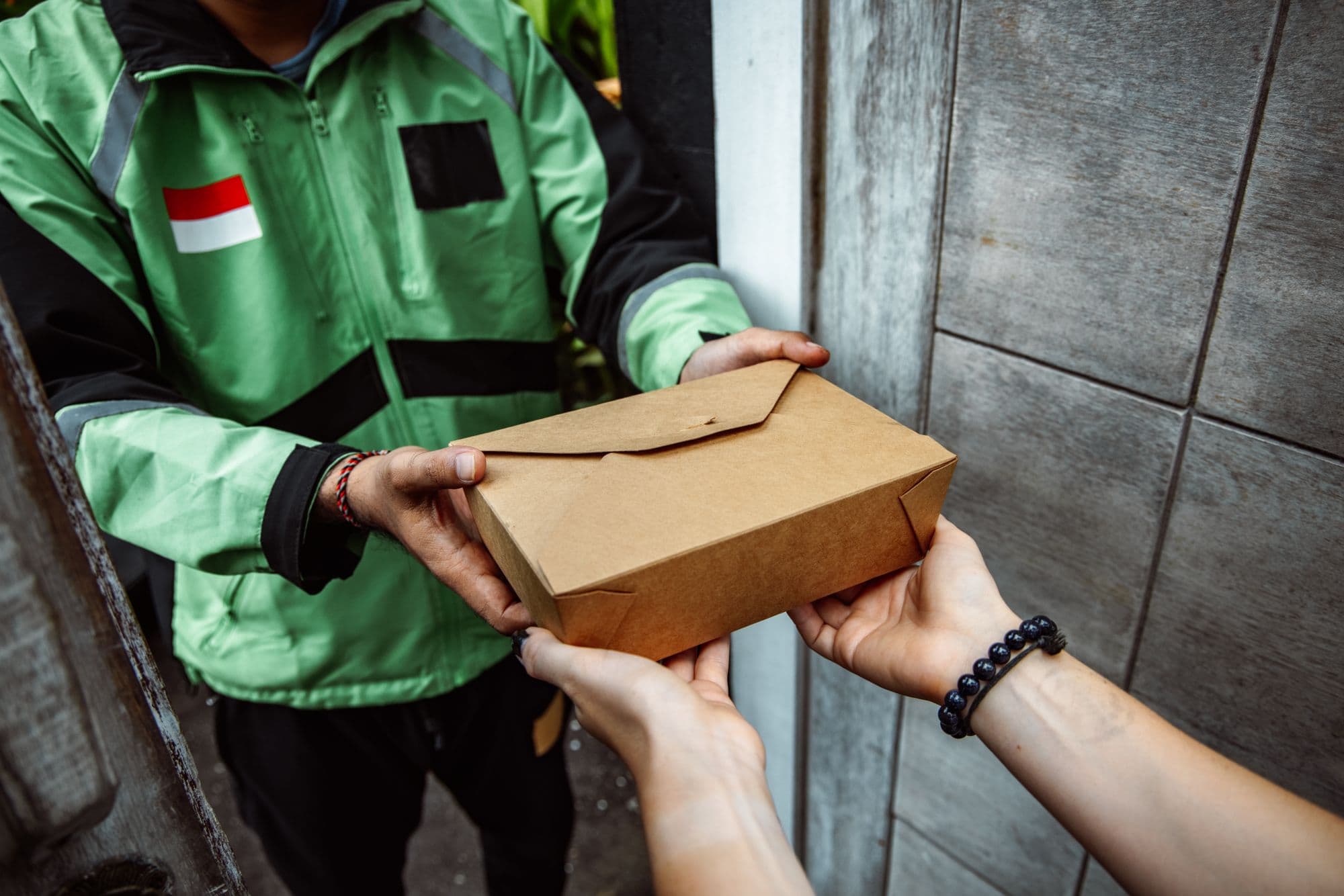
Manhattan has nowhere to park. Commercial metered parking and truck loading zones exist, they are paid or time-limited and meant for active loading, and they are rarely outside your customer's building. Plan for double-parking risk, a long carry and a lobby desk between you and the door. Ask at sign-up who actually receives the delivery and keep it in the customer's record: leave it with the doorman, buzz and wait, and leave it at the door are three different stops, and guessing wrong costs you a meal and a subscriber.
The outer boroughs and Long Island drive better and spread wider, so the day turns on stop density rather than parking. Upstate is a third problem again: real distances between stops, winter weather, and a route that only works if you sell in clusters instead of one customer per town. Whichever you are, build the route from that day's locked orders, load in reverse stop order, use insulated bags with ice packs, give customers a window they can plan around, and take a photo at every drop. It settles almost every message that begins "it never arrived".
Price and sell your first plans
Most meal prep businesses sell by the week. A customer picks a plan, such as ten or fifteen meals, chooses their meals before a cut-off, and receives them on set days. The cut-off is what makes the business work: it tells you exactly what to buy and cook before you have spent anything.
Cost each meal from its recipe first — ingredients, tray, sleeve, label — then add kitchen rent, labor, delivery and card fees per meal before you choose a price. New York's costs are not another state's, and a price that works in Buffalo will not cover a Manhattan route. Subscriptions smooth the weekly swing and make purchasing predictable; one-off orders and add-ons fill the gaps.
Run it on one system
Once orders arrive every week, the work is keeping five things in step: the menu, the cut-off, the kitchen's quantities, the labels and the routes. Mealforma is meal prep software built for that. Customers order and subscribe online, production quantities are worked out from locked orders, labels print from the recipe version the kitchen cooked with allergens carried through from the ingredients, and each delivery day gets a route. Delivery zones, fees, cut-offs, tax rates and whether your prices include tax are settings you change yourself rather than code someone has to edit. The price is a flat monthly fee and never a percentage of your sales, and every business on it gets its own database.
What it does not do: Mealforma does not certify anyone, does not obtain your permit, does not file your taxes and is not legal advice. The Health Department, your county, Agriculture and Markets, the Tax Department and your accountant do those. The software's job starts the week after you have them.
Checklist
- Check your menu against the home processor exemption. Cooked meat, dairy and anything needing refrigeration are out, so plan on a permitted kitchen.
- Work out who regulates you: the NYC Health Department inside the five boroughs, your county health department everywhere else.
- Choose a kitchen — rented time in a licensed commercial kitchen, or your own space — and confirm the cold storage covers a full cook day.
- In New York City, get a Food Protection Certificate before you apply for anything else.
- Outside the city, book the certified food protection manager course and ask the county about plan review and lead times.
- Form the business with the New York Department of State, and budget for the LLC publication requirement.
- Apply for a Certificate of Authority through New York Business Express before your first sale.
- Arrange workers' compensation and disability cover, liability insurance, and commercial auto cover for deliveries.
- Apply for the food establishment permit and pass the pre-permit inspection.
- Design labels with ingredients, nutrition and major allergens, ready for section 199-G on November 12, 2026.
- Set your plans, prices, cut-off and delivery days, then open orders.
Questions
Can I sell meal prep from my home kitchen in New York?
Almost certainly not. The home processor exemption covers shelf-stable food: breads and baked goods, jams and jellies from high-acid fruits, granola, crackers, popcorn, fudge. It excludes meat, fish and poultry, dairy, cooked vegetables, and any finished product that requires refrigeration. A chilled meal menu needs a permitted commercial kitchen from the start.
Do I get my permit from the state or from my county?
From your county health department, unless the kitchen is in Manhattan, Brooklyn, Queens, the Bronx or Staten Island, in which case it is the New York City Department of Health and Mental Hygiene. The state Department of Agriculture and Markets licenses food processing establishments and retail food stores, and says food service establishments are regulated by local health departments instead.
How much does a food permit cost in New York?
In New York City the Food Service Establishment permit is $280 a year, renewed annually, plus $25 if you manufacture frozen desserts. The Food Protection Certificate the permit depends on is $114 in the classroom including the exam, or a free online course with a $24 exam taken in person. Outside the city, fees are set by each county health department, so ask yours.
Do I need a food protection certificate?
New York City requires a supervisor holding a Food Protection Certificate to be on duty during all hours of operation, from the city's own Health Academy course. Outside the city, since September 2017 most food service establishments have needed at least one supervisor or manager who has completed an ANSI-accredited certified food protection manager course.
Do I charge sales tax on meal prep in New York?
It depends on how the meals are sold. Heated, ready-to-eat food is taxable, and so is a mix of taxable and exempt items sold together for one price. Unheated food sold for off-premises consumption in the same form, condition, quantity and packaging you would find in a grocery store is not taxed. Chilled meal prep can fall on either side. Ask the Tax Department about your actual menu and packaging, and take the answer to your accountant. This is not tax advice.
What has to go on a meal label in New York?
Ingredients in descending order of weight, the net quantity, and your name and address for anything prepackaged. From November 12, 2026, Agriculture and Markets Law section 199-G also requires every food establishment to label prepackaged food with written notification of any major food allergen. Software helps here only if the allergen travels from the ingredient, to the recipe version, to the label printed for that batch, so the three cannot drift apart.
What software do meal prep businesses use?
Most start with spreadsheets and a general online store, then move to meal prep software once weekly orders, cut-offs, kitchen quantities, labels and routes stop staying in step. Mealforma handles all of them in one system for a flat monthly price with no percentage of sales, and every business on it gets its own database.
Sources
- NYS Department of Agriculture and Markets — Home processing
- NYS Department of Agriculture and Markets — Food business licensing overview
- 10 NYCRR § 14-1.20 — Definition of food service establishment
- Cattaraugus County Health Department — Public food service permits
- NYC311 — Food Establishment Permit
- NYC Business — Food Service Establishment Permit
- NYC Business — Food Protection Certificate
- NYC Business — Non-Retail Food Processing Establishment Permit
- NYS Tax Department — TB-ST-806, Sales by restaurants, taverns and similar establishments
- NYS Tax Department — Register as a sales tax vendor (Certificate of Authority)
- NY Agriculture and Markets Law § 199-G — Allergen labeling for prepackaged foods
- NYS Department of State — Articles of Organization for a domestic LLC
Meal prep software in New York
Run your New York meal prep business on Mealforma
Online ordering, weekly subscriptions, kitchen quantities, allergen labels and delivery routes in one system, for a flat monthly price in US dollars and no cut of your sales.
7-day free trial on a real account · from $249/month · never a cut of your sales