Guide · Utah
How to start a meal prep business in Utah
This guide covers what a Utah meal prep business needs before its first delivery: what home kitchens can and cannot be used for, the food service permit and its fees in Salt Lake County, certified food safety managers and food handlers, labels, sales tax on prepared food and keeping meals cold. It is guidance, not legal advice. Confirm every fee and rule with the Utah Department of Agriculture and Food (UDAF), your local health department and the Utah State Tax Commission before you pay or sign anything.
Last reviewed:
Licenses and permits
Salt Lake County's health department states that, under Utah law, operating a food service establishment in the county requires a food service permit from the health department. The county regulates restaurants, delis, cafés, mobile food units, cafeterias, caterers and other businesses that prepare and serve food. Outside Salt Lake County, ask the local health department for the county where your kitchen is.
The county lists the usual sequence for a permanent facility: plan review, inspections during any construction or remodel, letters from your city on sewer and water connections for new buildings, a check with the sewer district on grease trap requirements, a business license from the city where the business is located, the food service permit application and fee, registration of your certified food safety manager, and a pre-opening inspection by the health department and other authorities such as the fire marshal.
The county's fee schedule, dated September 2026, sets the annual food establishment permit by risk level: $275 at Risk Level 1, $405 at Level 2, $555 at Level 3 and $770 at Level 4. Plan review is $870 at Risk Level 2, $1,140 at Level 3 and $1,345 at Level 4, and a HACCP food process plan review is $640. The county assigns the risk level, so ask which one applies to a kitchen that cooks, cools and packs meals.
- Permits are not transferable: a new owner applies for a new permit and pays all applicable fees.
- UDAF registers food establishments such as food processors, grocery stores and warehouses; its fiscal year 2027 registration fees run from $250 (small) to $1,250 (super). If you plan to sell through stores or other businesses, ask UDAF whether registration applies to you.
Where to cook: cottage food, home kitchens and commercial kitchens
Utah's cottage food program, run by UDAF, lets a person with a valid food handler permit make certain foods at home after UDAF inspects and registers the kitchen. The foods must be shelf-stable and not potentially hazardous. Refrigerated or frozen foods, products containing meat or poultry, and foods that need time and temperature control, such as dairy, eggs and cut fruits and vegetables, are excluded. Cottage registration costs $100 in fiscal year 2027, labels must say "Home Produced", and products may be sold only within Utah, directly to consumers or to stores.
A microenterprise home kitchen is a separate route, permitted by the local health department under Utah Administrative Code R392-106. It does allow cooked meals, but with conditions that matter for meal prep: food that needs time and temperature control must be prepared, cooked and served on the same day, food must be picked up by the customer or delivered directly to them, sales must be direct to consumers, and customers must be told the kitchen may not meet all the requirements of a commercial retail food establishment. Permits are renewed every year. Salt Lake County charges $350 for the permit and $95 to renew.
Because a weekly meal prep box is cooked once and eaten over several days, the same-day rule rules out most meal prep models from a home kitchen. Plan on a permitted commercial kitchen: rented time in a shared kitchen, or your own space after plan review.
- Cottage food: shelf-stable foods only; no meat, poultry, refrigerated or frozen products.
- Microenterprise home kitchen: same-day preparation and service for food that needs temperature control.
- Weekly meals: a permitted commercial kitchen.
Food safety: managers, food handlers and the Food Code
Salt Lake County requires at least one full-time certified food safety manager at every food service establishment and mobile food unit, with exemptions for Risk Level 1 establishments, child care facilities and health care facilities. The manager completes a course approved by the State of Utah, generally about eight hours, passes the exam and registers with the county health department. Certification is valid for three years, and if your certified manager leaves you have 60 days to employ a new one.
Food workers get a food handler card by taking a training course approved by the Utah Department of Health and Human Services; Salt Lake County currently lists online providers rather than in-person classes. The county charges $15 for a food handler card or replacement.
Utah's food service sanitation rule, R392-100, incorporates the 2022 edition of the FDA Food Code, chapters 1 through 8, so that code is the standard your kitchen is inspected against. Read the parts on cooking, cooling and cold holding before you design your production day.
- Certified food safety manager: valid three years, registered with the county.
- Food handlers: an approved course, available online.
Labeling packed meals
Packaged meals must identify the nine major food allergens: milk, eggs, fish, crustacean shellfish, tree nuts, peanuts, wheat, soybeans and sesame, which became the ninth on January 1, 2023. The FDA allows the allergen's food source in parentheses after the ingredient or in a Contains statement.
Utah's microenterprise home kitchen rule requires ready-to-eat food that needs temperature control to be marked with its preparation date, and putting a date on every meal is good practice in any kitchen; ask your health department what your labels must show. Many small food businesses are exempt from the Nutrition Facts panel: the FDA's retailer exemption covers annual gross sales of not more than $500,000, or food sales to consumers of not more than $50,000, and its low-volume exemption does not cover products that carry nutrition claims. Customers who buy meals for macros expect the numbers anyway, so print nutrition from the recipe you actually cooked.
Insurance
None of the state or county pages reviewed for this guide lists liability insurance as a condition of a food permit. Shared kitchens, event organizers and business customers may ask for it in their own contracts, and a vehicle used for deliveries needs cover that suits business use. Ask a licensed insurance agent what your kitchen, products and deliveries need.
Registering the business and sales tax
Get a business license from the city where your kitchen is; Salt Lake County lists it as a step before the food service permit. If the business is an LLC or corporation, the county's permit application asks for its Utah Department of Commerce entity number.
Every seller with an established presence in Utah must have a Utah sales tax license, applied for online at tap.utah.gov. The Tax Commission's Publication 25 sets out how food is taxed. Grocery food is taxed at a combined 3% throughout Utah. Prepared food is taxed at the full combined rate, and it means food sold heated or heated by the seller, two or more food ingredients mixed or combined by the seller for a single sale, or food sold with an eating utensil the seller provides.
A packed meal of protein, grains and vegetables is two or more ingredients combined into one sale, so expect it to be prepared food. Counties may also levy a restaurant tax of up to 1.0% on food sold by a restaurant, which the publication defines as a retail establishment whose business is the sale of food and beverages for immediate consumption. Ask the Tax Commission how your menu and your business are treated before you set prices.
- Sales tax licenses are not transferable.
- Food that a seller only cuts, repackages or pasteurizes is not prepared food.
Keeping meals cold on delivery
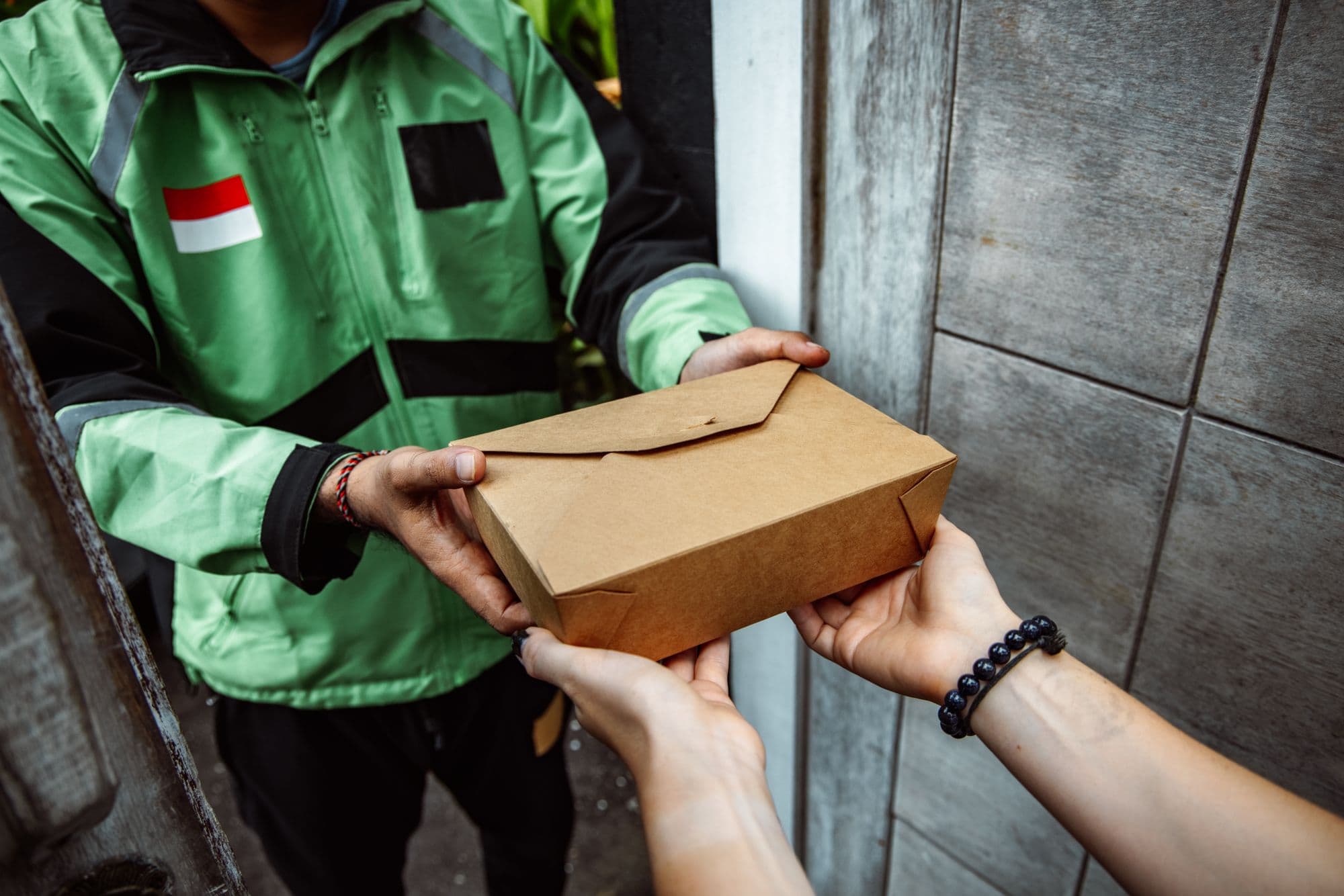
Utah's temperature rule for microenterprise home kitchens sets cold holding at 41°F or lower for food that needs temperature control. Hold meals to that standard from the kitchen fridge to the customer. Use insulated bags or coolers with ice packs, load the vehicle in reverse stop order and keep routes short.
Utah's dry summer heat shortens the time a meal can sit in a vehicle, and winter snow slows every stop. Give customers a delivery window, ask for a safe place to leave the box, and take a photo at each drop.
Pricing your meals and running the week
Price each meal from its real cost: ingredients, packaging and labels, then kitchen rent, labor, delivery and card fees per meal, and decide whether sales tax is added to your price or included in it. Weekly plans with a cut-off tell you exactly what to buy and cook before you spend anything.
Once orders arrive every week, the work is keeping the menu, the cut-off, the kitchen's quantities, the labels and the delivery routes in step. Meal prep software such as Mealforma runs orders, subscriptions, kitchen production, labels and delivery routes on one system, for a flat monthly price and never a cut of your sales.
Checklist
- Check your menu: meals with meat, poultry or dairy cannot be made under cottage food rules.
- Decide whether a microenterprise home kitchen's same-day rule fits; for weekly meals it usually does not.
- Choose a commercial kitchen: rented time in a shared kitchen or your own space.
- Contact the local health department for the kitchen's county and start plan review.
- Get a business license from your city.
- Get a certified food safety manager and register them with the health department.
- Make sure every food worker has a food handler card.
- Apply for the food service permit and pass the pre-opening inspection.
- Register for a Utah sales tax license and confirm how your meals are taxed.
- Design labels with ingredients, the nine major allergens and a date on every meal.
- Arrange insurance for the kitchen, the products and the delivery vehicle.
- Set your plans, prices, cut-off and delivery days, then open orders.
Questions
Can I sell meal prep from home in Utah?
Not under cottage food rules, which exclude refrigerated foods and products containing meat or poultry. A microenterprise home kitchen permit allows cooked meals, but food that needs temperature control must be prepared, cooked and served the same day, which does not suit meals eaten over a week.
How much does a food permit cost in Salt Lake County?
The county's September 2026 fee schedule sets the food establishment permit at $275 to $770 depending on risk level, with plan review from $870 at Risk Level 2 to $1,345 at Level 4. A microenterprise home kitchen permit is $350, and $95 to renew.
Do I need a certified food safety manager?
In Salt Lake County, yes, unless your establishment is Risk Level 1. At least one full-time certified food safety manager is required, registered with the health department and recertified every three years.
Do my workers need food handler cards?
Food workers take a food handler course approved by the Utah Department of Health and Human Services, available online. Cottage food operators also need a valid food handler permit before UDAF will register them.
Is meal prep taxed at the grocery food rate in Utah?
Usually not. Grocery food is taxed at 3%, but food the seller mixes or combines from two or more ingredients for a single sale is prepared food, taxed at the full combined rate. Ask the Utah State Tax Commission how your menu is treated.
Can I sell cottage foods online or ship them?
UDAF allows cottage food products to be sold only within Utah, directly to consumers or to stores for resale. Ask UDAF how that applies to the way you plan to sell.
What software do meal prep businesses use?
Most start with spreadsheets and a general online store, then move to meal prep software once weekly orders, cut-offs, labels and routes get hard to keep in step. Mealforma handles all of them in one system for a flat monthly price.
Sources
- Utah Department of Agriculture and Food — Cottage food production
- Utah Department of Agriculture and Food — Fee schedule
- Salt Lake County Health Department — Food protection
- Salt Lake County Health Department — Food-related permits
- Salt Lake County Health Department — Permanent-facility permits
- Salt Lake County Health Department — Fee schedule, September 2026
- Salt Lake County Health Department — Certified food safety manager
- Salt Lake County Health Department — Food handler cards
- Utah Admin. Code R392-106-5 — Microenterprise home kitchen permit requirements
- Utah Admin. Code R392-106-11 — Food temperature requirements
- Utah Admin. Code R392-100-4 — Food Code incorporated by reference
- Utah State Tax Commission — Publication 25, Sales and use tax general information
- U.S. FDA — Food allergies
- U.S. FDA — Small business nutrition labeling exemption
Meal prep software in Utah
Run your Utah meal-prep business on one system.
Storefront, subscriptions, kitchen production, labels and delivery routing in one platform — a flat monthly price, never a cut of your sales.
7-day free trial on a real account · from $249/month · never a cut of your sales