Guide · Washington
How to start a meal prep business in Washington
Washington has a home-kitchen permit and a food worker card, and neither of them adds up to permission to sell a chicken-and-rice bowl from your house. This guide covers what a meal prep business in Washington needs before its first delivery: whether your menu can come from home, which agency permits the kitchen, the food worker card and the certified food protection manager, prepared food sales tax and the destination rate that follows every delivery address, the B&O tax nobody budgets for, labels, and getting chilled meals across a state divided by water and one very busy interstate. Fees and rules change, so every section points to the agency that sets them. Check the source before you pay or sign anything.
Last reviewed:
Can you run a meal prep business from home in Washington?
Washington has had a cottage food law since 2011, and unlike most states it inspects the kitchen. A WSDA Cottage Food Permit lets a resident make food that is not potentially hazardous in their primary residential kitchen — baked goods, candies, jams, jellies, preserves and fruit butters, dry spice and tea blends, small-batch roasted coffee, vanilla extract. Household appliances are fine; a three-compartment sink is not required.
The prohibited list is where a meal prep plan ends. WSDA names fresh or dried meat and meat products including jerky, fresh or dried poultry, fish and shellfish products, products made with meat, poultry or fish, milk and dairy products including cheeses and yogurt, cut fresh fruits or vegetables, food products made from fresh fruits or vegetables, canned or pickled products, and bakery goods that require refrigeration. WSDA's own explanation of why is the clearest statement of the problem: cooked vegetables have to be held hot, above 135°F, or cold, below 41°F, and cannot be stored at room temperature, which makes them ineligible for a cottage food operation.
WSDA answers the obvious follow-up itself: if the products you want to make are not allowed under the cottage food rule, consider a WSDA Food Processor's License. For a business selling meals directly to the people who eat them, the more usual answer is a commercial kitchen permitted by the local health jurisdiction. Either way, the kitchen is not your house.
- Prohibited: fresh or dried meat, poultry, fish and shellfish, anything made with them, dairy, cut fresh fruits or vegetables, and bakery goods needing refrigeration.
- The permit costs $355 and runs for two years; gross sales of cottage food products may not exceed $35,000 a year.
- Your home kitchen is inspected by a WSDA representative before the permit is issued, and the application takes 6 to 8 weeks on average.
- Products may only be sold directly to the consumer, never wholesale, and the permit covers up to 50 master products.
- Every label you plan to use must be submitted with the application, and everyone named on the application needs a signed food worker card.
Choose where you will cook
Meals built on meat, poultry, fish, rice or dairy have to be prepared in a commercial kitchen with a permit from the local health jurisdiction. For most new businesses that means renting time in a shared commercial kitchen or commissary — Public Health — Seattle & King County lists commercial commissary kitchens among the permanent food businesses it permits — and moving into your own space later.
Either way there is plan review first. King County requires food business owners to submit plans for review before construction, remodeling or a change of ownership takes place, and warns that because of current volumes it may take 8 to 10 weeks for a plan reviewer to complete the initial review. Only after the plans are approved do you apply to operate, pay the operating fee, and schedule the pre-operational inspection. The operating permit is issued after that inspection passes, and King County is blunt about opening early: it may result in closure of the business and fees, including 50 percent of the annual permit fee.
Two things catch people out on the build. A food business on a septic system needs approval from the health department's septic program, and adding so much as a sink means a plumbing, gas or backflow permit. Ask about both before you cost the build-out.
- Work out a full cook day first: meals, fridge space per meal, and packing time.
- Check that cold storage holds a whole production day before you commit to a kitchen.
- Ask whether you need your own permit to cook there, and whether you can take supplier deliveries.
- Plan review is the long pole — in King County the initial review alone has been running 8 to 10 weeks.
Which agency licenses you
Washington splits food oversight between two authorities and the split follows who buys the food. Retail food establishments — anyone serving or selling food to the public at a fixed location — are permitted and inspected by the local health jurisdiction under the Washington State Retail Food Code, Chapter 246-215 WAC. That is Public Health — Seattle & King County, Tacoma-Pierce County, Snohomish, Spokane Regional and so on, one for each county or group of counties.
WSDA licenses food processors, and its definition is broad: you need a Food Processor License if you cook, bake, freeze, slice, dehydrate, smoke, roast coffee beans, bottle water or repackage any type of food, or if you process or package food for someone else. If a gym, a café or a grocery store is going to resell your meals, that is the licence to ask about. WSDA schedules an inspection of the facility once it has the completed application and fee, and the initial visit normally takes one to two hours.
A meal prep business that grows into both — weekly boxes direct to customers, plus a wholesale account — can end up dealing with both authorities. Ask each of them, in writing, which side of the line your specific plan sits on before you print anything.
- Selling meals to the people who eat them: local health jurisdiction permit, under WAC 246-215.
- Cooking, baking, freezing, slicing or repackaging food for someone else to resell: WSDA Food Processor License.
- A WSDA licence covers only the products, processes and operations on the application — adding a product means an amendment.
- WSDA licences expire on June 30 every year, whatever date yours was issued, and are not transferable.
The Washington food worker card
This is the requirement people most often get wrong, because Washington's card is specific and the internet is full of near-misses. The Department of Health requires all food workers to hold a valid Washington State food worker card, obtained by taking a food safety class and passing the state exam. You are a food worker if you work with unpackaged food, food equipment or utensils, or with any surface where people put unwrapped food — which in a meal prep kitchen is everyone on the line.
The card costs $10 and the only authorized online training is www.foodworkercard.wa.gov; the Department says other websites that appear to offer a similar card online are not valid in Washington. Keep the card or a copy at work, because the health department checks for it during inspections. A new hire can work up to 14 days before getting the card if you train them on food safety yourself, and the study guide — the Washington State Food Worker Manual — is published in thirteen languages.
Note the renewal ladder, because it is worth money and time: the first card lasts two years, a renewal lasts three, and a renewal lasts five if the worker can show "additional food safety training" completed within the two years before the renewal.
- Required of every food worker by Chapter 246-217 WAC — anyone working with unpackaged food, food equipment, utensils or food-contact surfaces.
- $10, from your local health department or the only authorized online course, foodworkercard.wa.gov.
- First card: two years. Renewal: three years, or five with additional food safety training taken in the previous two years.
- Valid anywhere in Washington and it moves with you between counties and jobs.
- Other states' cards are not accepted, and neither are lookalike cards from unofficial websites.
Certified food protection manager and active managerial control
On top of the food worker card, the Department of Health says most food establishments are required to have at least one employee with a Certified Food Protection Manager certificate under WAC 246-215-02107. The certificate comes from an ANSI-accredited program, and the role is a real one: the CFPM has to make sure managers are trained, procedures are developed, and food safety requirements are understood and followed. They do not have to be on the premises, and one person can be the CFPM for several locations of the same business.
Underneath that sits active managerial control — the deliberate use of written policies and procedures to control the things that actually make people ill. The Department publishes a toolkit of templates for it: employee health and illness logs, date marking, bare hand contact, time as a public health control, and vomit and diarrhea clean-up plans. Washington also requires food workers to be trained on the major food allergens, the symptoms of a reaction, how to talk to customers about allergens, and how to prevent cross-contact. For a business whose customers pick meals by macro and by allergy, that is not paperwork — it is the product.
Register the business
Washington runs business registration through the Department of Revenue's Business License Application, which issues a Unified Business Identifier — the number you will use for taxes and for every change you make afterwards. You must register if you collect sales tax, hire employees within 90 days, trade under a name other than your own legal name, need city, county or state endorsements, or expect gross income of $12,000 a year or more. All of those describe a meal prep business.
If you are forming a Washington corporation, partnership, LLC or limited liability partnership, file with the Secretary of State before you file the Business License Application. The application fee varies and each endorsement carries its own, so use the Business Licensing Wizard to get the list for your situation. Online applications take about 10 business days, and city or state endorsements can add another two to three weeks; by mail it can take up to six. Start it before you need it.
Then the ordinary things: a separate business bank account, an EIN from the IRS before you hire, general and product liability cover that shared kitchens and wholesale customers will ask to see, and commercial auto cover once meals go out in a vehicle.
Sales tax on meals, and the destination rate
Washington exempts most grocery-type food from retail sales tax but does not exempt prepared food. The Department of Revenue defines prepared food as food where the seller combines two or more food ingredients and sells it as a single item, sells the food in a heated state or heats it, or sells it with eating utensils such as a plate, fork, knife, spoon or cup — noting that containers and packaging used for transporting food are not utensils.
Then comes the rule that decides it for most meal prep businesses. A retailer whose prepared food is more than 75 percent of its total food sales must collect retail sales tax on all sales of food and food ingredients, except items sold as four or more servings packaged and sold as a single item for a single price. Below 75 percent, and only if you properly segregate taxable from non-taxable sales, some categories can be sold exempt — including two or more ingredients combined by the seller and sold in an unheated state by weight or volume, so long as no utensils are provided. Work out honestly which side of 75 percent your menu sits on, and ask the Department rather than guessing. This is not tax advice.
The second Washington-specific thing is the rate. Sales tax collection is based on where the customer receives the goods, so every delivery address carries its own combined state and local rate and its own location code. The Department provides the tools to handle it: an address, ZIP+4 and map rate lookup, a URL interface you can wire into a checkout, downloadable rate databases updated quarterly, and a free service that takes your customer address file and returns the location code and rate for each one. A business delivering across Seattle, Bellevue and Everett is reporting under several location codes, so set that up before the first week's orders, not after.
The B&O tax you have to budget for
Washington has no personal income tax and a business tax structure the Department of Revenue itself calls unique. Most businesses owe business and occupation tax: a gross receipts tax calculated on the total value of products sold or total income earned, with no deduction for labor, materials, taxes or any other cost of doing business. It is not collected from customers. You pay it out of your own revenue, whether or not the week was profitable.
There are more than 50 B&O classifications and you report under the ones matching what you actually do — a business that sells retail and wholesales to a gym reports under both. Credits exist, including the Small Business B&O Tax Credit and the Multiple Activities Tax Credit, and the rates and classification definitions are published by the Department. Cities including Seattle levy their own B&O tax on top of the state one, so check the city as well as the state. Put a percentage of gross aside from week one; a meal prep business with thin margins and high turnover is exactly the shape that gets caught out by a tax on revenue.
Labels and allergens
Federal law names nine major food allergens: milk, eggs, fish, crustacean shellfish, tree nuts, peanuts, wheat, soybeans and sesame, which became the ninth on January 1, 2023. Declare them clearly and in the same place on every container, and train the people who answer customer messages to give the same answer the label does.
Food you package for customer self-service carries labeling requirements that depend on the type of food, and the Department of Health publishes examples alongside a plain instruction: contact your local health department for additional information and to make sure your labels are correct. Do that before you order 5,000 printed sleeves. Meal prep customers compare calories and protein between meals, so print nutrition from the recipe version the kitchen actually cooked rather than from an older spreadsheet — a label that disagrees with the pan is worse than no label.
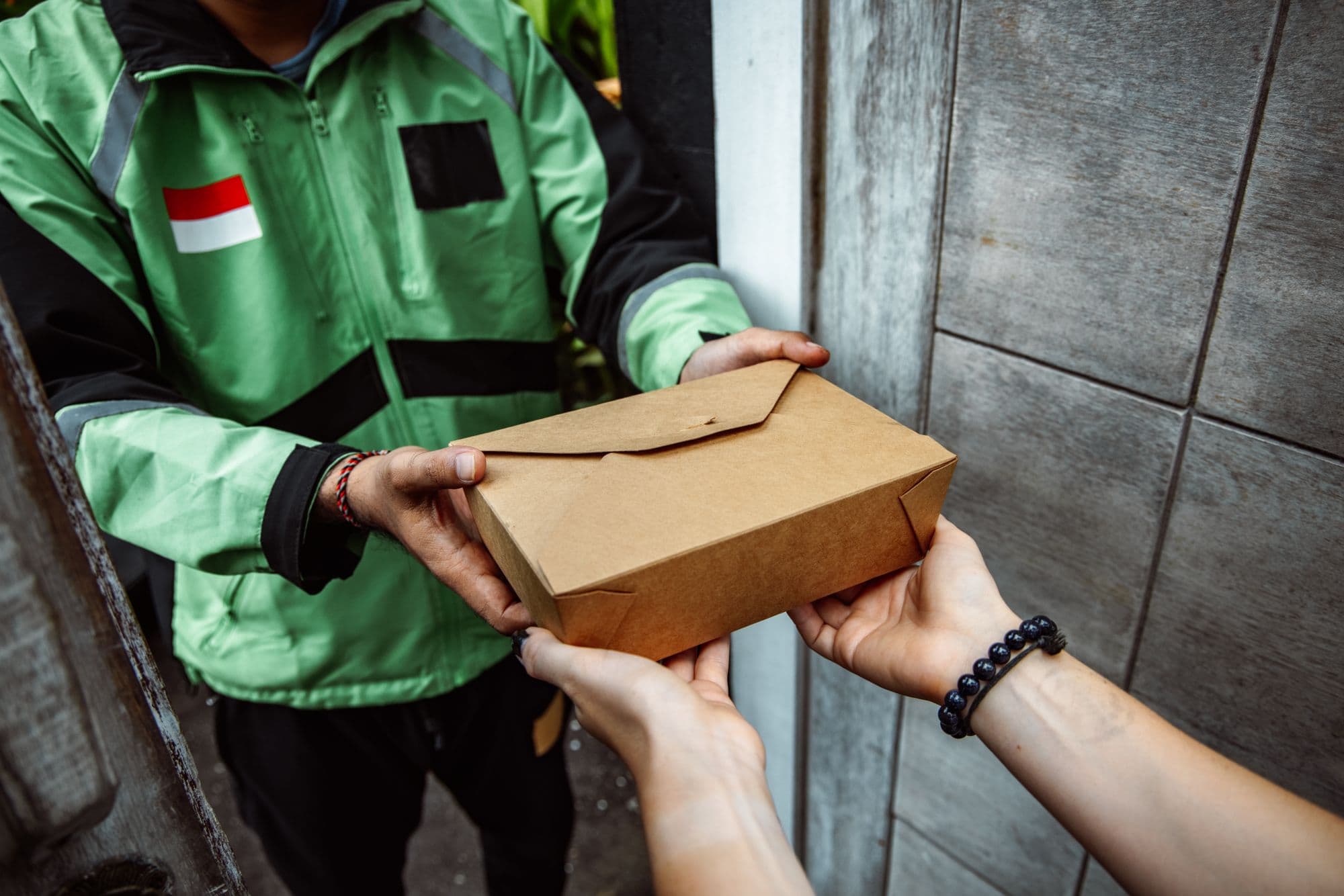
Delivery: I-5, the bridges and the ferries
Meals that need temperature control have to stay cold from the kitchen fridge to the customer, and WSDA's own line for potentially hazardous food is held hot above 135°F or cold below 41°F. Washington's weather makes that easier than most states for most of the year; its geography makes the routing harder than almost any of them.
Plan by drive time, never by distance. The I-5 corridor between Everett, Seattle, Tacoma and Olympia is one long congestion event at the wrong hours, and a route that works at 10 a.m. does not work at 4 p.m. Lake Washington gives you two bridges and no third option, so an Eastside run and a Seattle run are different routes, not one loop. Anything on Bainbridge, Vashon, Whidbey or the Kitsap Peninsula is on a ferry timetable, which means the sailing, not the stop, sets the delivery window — build those days around the boat and price the crossing into the delivery fee. Across the Cascades, add weather: passes close.
Build each day's route from that day's locked orders, load the vehicle in reverse stop order, and tell customers a window they can plan around. A photo at each drop settles most "it never arrived" messages.
Price and sell your first plans
Most meal prep businesses sell by the week. Customers choose a plan — 10 meals, 15 meals — pick their meals before a cut-off and receive them on set delivery days. The cut-off is what makes the business work: it tells you exactly what to buy and cook before you have spent anything.
Cost each meal from its recipe, including packaging and labels, then add kitchen rent, labor, delivery and card fees per meal. In Washington add two more lines before you choose a price: the B&O tax on gross receipts, and the sales tax you may or may not be able to pass on cleanly given the destination rate. Subscriptions flatten the weekly swings and make purchasing predictable; one-off orders and add-ons fill the gaps.
Run it on one system
Once orders arrive every week, the work is keeping the menu, the cut-offs, the kitchen's quantities, the labels and the delivery routes in step. Mealforma is meal prep software built for that: an online store with weekly subscriptions, production quantities worked out from locked orders, allergens carried from the ingredient through the recipe version onto the printed label, tax rates and tax-inclusive pricing as settings rather than code, and each day's delivery route with its own zones, fees and cut-off times. You pay a flat monthly price and it never takes a percentage of your sales, and each business gets its own database.
What it does not do is get you a permit. Mealforma certifies nothing, obtains no permits, files no taxes and is not legal advice. Your local health jurisdiction, WSDA and the Department of Revenue decide what you must do; the software's job is to make doing it repeatable.
Checklist
- Check your menu against the WSDA cottage food prohibited list. Meat, poultry, fish, dairy and anything refrigerated are on it.
- Call your local health jurisdiction and confirm which permit covers the way you plan to sell.
- Choose a kitchen: time in a shared commercial kitchen or commissary, or your own permitted space.
- Submit plan review early — in King County the initial review alone has been taking 8 to 10 weeks.
- Pass the pre-operational inspection and get the operating permit before you cook a single sellable meal.
- Get a Washington State food worker card for everyone in the kitchen, including yourself.
- Get a certified food protection manager certificate from an ANSI-accredited program.
- File with the Secretary of State if you are forming an entity, then complete the Business License Application and get your UBI.
- Register for sales tax and set up destination-based rates for every delivery address you serve.
- Work out your B&O classification and put a share of gross receipts aside from the first week, including any city B&O.
- Design labels with ingredients, the nine major allergens and nutrition from the recipe version you cooked, and have your health department check them.
- Arrange liability insurance and cover for delivery driving, then set your plans, cut-off and delivery windows.
Questions
Can I sell meal prep from my home kitchen in Washington?
No. A WSDA Cottage Food Permit covers food that is not potentially hazardous — baked goods, candies, jams and jellies, dry mixes, small-batch roasted coffee. The prohibited list names fresh or dried meat, poultry, fish and shellfish, anything made with them, dairy products, cut fresh fruits or vegetables, and bakery goods that need refrigeration. A meal prep menu is on that list, so it needs a commercial kitchen.
Do I need a food worker card in Washington?
Yes, and Washington's is specific. Chapter 246-217 WAC requires every food worker to hold a valid Washington State food worker card. It costs $10, comes from your local health department or the only authorized online course at foodworkercard.wa.gov, and is valid statewide. Your first card lasts two years; renewals last three, or five if you show additional food safety training taken within the previous two years. You can work up to 14 days before you get it if your employer trains you first, and a card from another state does not count.
Do I need a certified food protection manager?
Most food establishments also need at least one employee with a Certified Food Protection Manager certificate under WAC 246-215-02107. The Department of Health says the CFPM does not have to be on the premises but is expected to make sure managers are trained and food safety procedures are developed and followed, and that one person may be the CFPM for several locations. The certificate comes from an ANSI-accredited program.
Who permits a meal prep kitchen in Washington?
Your local health jurisdiction permits and inspects it under the Washington State Retail Food Code, Chapter 246-215 WAC. In Seattle and King County, that means a plan review followed by an operating permit application and a pre-operational inspection. WSDA licenses food processors — the wholesale side — so if you cook, bake, freeze, slice or repackage food for someone else to resell, that is a WSDA Food Processor License instead or as well.
Do I charge sales tax on meal prep in Washington?
Generally yes. Washington exempts most grocery food from retail sales tax but does not exempt prepared food, and prepared food is defined as food the seller combines from two or more ingredients, sells heated or heats, or sells with eating utensils. Retailers whose prepared food is more than 75 percent of their food sales must collect sales tax on all food sales except items sold as four or more servings. The rate follows the delivery address, not your kitchen. Ask the Department of Revenue about your own menu; this is not tax advice.
What is the B&O tax and does it apply to me?
Sales tax is collected from the customer. B&O tax is not — it is a gross receipts tax paid by the business on total income, with no deduction for labor, materials or other costs. There are more than 50 classifications and you report under the ones that match what you do, which for a meal prep business usually means retailing. Cities including Seattle levy their own B&O tax on top. Budget for it from the first month.
What software do meal prep businesses use?
Most start with spreadsheets and a general online store, then move to meal prep software once weekly orders, cut-offs, labels and routes stop lining up. Mealforma handles all of them in one system: allergens flow from the ingredient to the recipe version onto the printed label, destination tax rates and tax-inclusive pricing are settings, delivery zones, fees and cut-offs are settings, and the price is a flat monthly fee rather than a percentage of your sales.
Sources
- Washington State Department of Agriculture — Cottage Food Operation
- Washington State Department of Agriculture — Food Processors
- Washington State Department of Health — Food Worker Card
- Washington State Department of Health — Food Safety Rules and Regulations
- Public Health — Seattle & King County: Permanent food service business permit
- Washington Department of Revenue — Retail sales tax for retailers of prepared food
- Washington Department of Revenue — Sales & use tax rates
- Washington Department of Revenue — Destination-based sales tax tools
- Washington Department of Revenue — Business & occupation tax
- Washington Department of Revenue — Apply for a business license
- U.S. FDA — Food allergies
Meal prep software in Washington
Run your Washington meal prep business on Mealforma
Online ordering, weekly subscriptions, kitchen quantities, labels and delivery routes in one system, for a flat monthly price in US dollars and no cut of your sales.
7-day free trial on a real account · from $249/month · never a cut of your sales