Guide · Queensland
How to start a meal prep business in Queensland
Queensland is direct about the first question. Under the Food Act 2006 you need a food business licence from your local council if your business manufactures food — making food by combining ingredients — or sells unpackaged food by retail. A meal prep business does both, so the licence is not optional and trading without one is illegal. This guide covers what comes after that: whether a domestic kitchen will be approved, when an accredited food safety program is required, the food safety supervisor, the 2-hour/4-hour rule and the cooling clock, labels and allergen declarations, an ABN and GST on prepared meals, and holding food at or below 5 °C in a state where a parked van hits 35 °C before morning tea. Fees are set by each council. Nothing here is legal, food safety or tax advice.
Last reviewed:
Can you cook meal prep at home in Queensland?
Queensland recognises home-based food businesses. Handling food for sale at a domestic premises is a food business, and Queensland Health's guidance treats it as one that may need a licence rather than one that is banned outright. That is a real difference from most of the United States, where a cottage food law would rule out a menu built on chicken and beef.
The decision belongs to your local government, and the warning in the state's own guidance is plain: before a food business can commence operating, approval from the local government is needed, and some local governments may not permit particular food businesses to operate from a domestic kitchen or premises. Speak to town planning, building, plumbing and environmental health staff before you commit — zoning, trade waste and waste disposal all come into it, not only food safety.
The premises must still meet Standard 3.2.3 of the Food Standards Code, and Queensland Health points at Australian Standard AS 4674-2004 for design, construction and fit-out. Several requirements catch home kitchens specifically. Food handlers need a dedicated hand wash basin with warm running water from a single spout, soap and disposable paper towel, located in the food preparation area — not in a neighbouring toilet, bathroom or laundry — and used for nothing else. Business food and equipment must be stored separately from the household's, and a garage or shed is not recommended unless it is sealed and vermin proof.
Two more practical ones decide most cases. A domestic dishwasher only counts as a sanitiser if it has a properly functioning temperature-activated sanitising cycle that senses 65.6 °C or higher before advancing, or an inlet water temperature above 68 °C — otherwise you sanitise chemically. And a domestic refrigerator, as the guidance says, is not designed for commercial purposes and may struggle to cool food to or hold it at 5 °C when it is overloaded or the door is opened frequently. A meal prep cook day overloads it by definition.
- Local government approval before you commence; some will not permit it at all.
- Dedicated hand wash basin in the preparation area, single spout, warm water, soap, paper towel, no other use.
- Business food stored separately from household food; not in a shed unless sealed and vermin proof.
- Domestic dishwasher only sanitises if it senses 65.6 °C, or inlet water is above 68 °C.
- A probe thermometer accurate to ±1 °C must be in the kitchen at all times.
Get a food business licence from your council
Under the Food Act 2006 most food businesses need a licence from their local council, and Queensland Health sets out who: businesses that manufacture food, meaning making food by combining ingredients, and businesses that sell unpackaged food by retail, such as a café, restaurant, bar or takeaway. A meal prep kitchen combines ingredients into meals and sells them unpackaged or freshly packaged to the people who eat them, so plan on a licence from the first day.
The exemption list is worth reading only to confirm you are not on it. It covers primary produce under an accreditation issued under the Food Production (Safety) Act 2000, the sale of unpackaged snack food such as cakes and biscuits without cream or custard, whole fruit or vegetables, seeds, spices, dried herbs, tea leaves and coffee beans, grinding coffee, the sale of drinks other than juice processed at the place of sale, the sale of ice, and certain non-profit sales. Chilled ready meals are not on it.
Fees are the council's. Local councils licence food businesses in their area and may charge fees to recover their costs, the structure varies from council to council, and any fee charged must not be greater than the cost of providing the service or taking the action. Councils factor in the cost of assessing the application, issuing the licence, inspections, maintaining the register, and accrediting and reviewing audits of food safety programs. Ask your council for its schedule; anyone quoting you a state-wide figure is guessing.
Two structural points. If you also want to trade from a van, a mobile food business needs only one licence to operate anywhere in the state, though a second local government may charge fees for any service it provides to you. And if you ever move into producing primary produce — butchering, making cheese or yoghurt, processing milk, eggs and egg products — that is accreditation with Safe Food Production Queensland, a different regulator entirely.
- Manufacturing food or selling unpackaged food by retail means a licence; a meal prep business does both.
- Operating a licensable food business without a current licence is illegal.
- Fees are set by each council on a cost-recovery basis and cannot exceed the cost of the service.
- One mobile licence covers the whole state; other councils may still charge for services.
- Primary produce is accredited by Safe Food Production Queensland, not the council.
Choose where you will cook
The realistic options are a licensed domestic kitchen, hired time in a commercial kitchen, and a lease of your own. Each changes the fit-out cost, the licence conversation and how many meals a day is possible.
A shared commercial kitchen rents cooking time and cold storage by the hour, the shift or the month, and the building already meets the premises and equipment standard, which is the expensive part. Before signing, ask whether you hold the licence at that address in your own name or trade under theirs, how much refrigerated and frozen space is exclusively yours, and whether suppliers can deliver to you on your cook days.
Your own space gives you the schedule and the room to grow. Talk to the council's environmental health officers before you sign the lease, not after. They will tell you what the space needs to pass — flooring, coving, hand basins, exhaust, a cleaner's sink — and that conversation is free where the rebuild is not.
Size the kitchen on cold storage and cooling, not burners. Queensland Health's own guidance for home kitchens makes the point that applies everywhere: if food is cooked in bulk and then cooled for later use, you need enough refrigerated space to bring it from 60 °C to 21 °C in two hours and from 21 °C to 5 °C in a further four, in small shallow containers that are not stacked together. That is the real constraint on how many meals you can cook in a day.
- Ask a shared kitchen whose licence you operate under at that address.
- Get the council's fit-out requirements before signing a lease.
- Size the chiller for a whole cook day's cooling, not just storage.
- Shallow containers, unstacked, is the cheapest way to meet the cooling times.
Do you need an accredited food safety program?
Under the Food Act 2006, certain licensable food businesses must have a food safety program accredited by their local government, and there are significant penalties for not having one when it is required. The two triggers most relevant here are catering. A licensee must have an accredited program if the food business involves off-site catering, or if its primary activity is on-site catering at the licensed premises to 200 or more people on 12 or more occasions within a twelve-month period.
The definition of off-site catering is where a meal prep business usually escapes. Off-site catering means serving potentially hazardous food at a place other than the principal place of business — and Queensland Health states explicitly that it does not include delivering food under an arrangement with, or on the order of, a consumer, such as delivering pizzas from a takeaway pizza shop. A meal prep business that cooks at a licensed kitchen and delivers meals people ordered is delivering, not catering off site.
The moment you take a corporate function, a wedding or a sports team's event lunch — preparing food at your kitchen and serving it somewhere else — you are in off-site catering and the program is required. Queensland Health's examples are a spit-roast company finishing food at a hired hall, a charter boat company serving a buffet it prepared onshore, and a business serving food from tents at a film set. If that is where you want the business to go, budget for the program before you take the booking.
Ask your council whether your particular operation is a prescribed food business for this purpose, because the catering rules sit alongside other prescribed categories. Queensland Health publishes a food safety program template for catering and retail premises, but the program must fit your business, not the other way round.
- Off-site catering, or on-site catering to 200+ people on 12+ occasions a year, requires an accredited program.
- Delivering meals a consumer ordered is not off-site catering.
- Serving food you prepared elsewhere at an event is off-site catering.
- The local government accredits the program; ask them before you assume you are outside it.
Appoint a food safety supervisor
Every licensed food business in Queensland must have a food safety supervisor. The role is defined by authority as much as by knowledge: the supervisor must be able to recognise the business's food safety hazards and make sure the risks are prevented or managed, and must have the authority to supervise and give directions about food safety to the other food handlers.
Reasonably available is the phrase that governs the day-to-day. Queensland Health explains it as generally meaning the supervisor physically works on site and oversees day-to-day food handling, and should be on the premises whenever high-risk unpackaged food is being handled, or easily contactable by phone if established procedures are in place. A short absence of up to 30 days needs documented standard operating procedures so directions on food safety are still available; an extended absence needs another supervisor appointed.
Training follows your sector, and pre-prepared meals is named in the food processing sector, alongside airline caterers, wholesale bakers and packers. The competencies for that sector are FBPFSY2002 Apply food safety procedures, or FBPFSY1002 Follow work procedures to maintain food safety. If your business reads as retail and hospitality — caterers for private functions, takeaways, cafes — the competencies are SITXFSA005 and SITXFSA006, or SIRRFSA001. If you are unsure which sector you are in, ask the council before anyone enrols.
On renewal, Standard 3.2.2A of the Food Standards Code requires food safety supervisors for category one and category two businesses to obtain certification at least every five years, and a complete course must be repeated every five years unless an RTO offers a refresher for existing holders. Queensland Health recommends every other licensed business do the same. Keep the certificate where an authorised officer can be shown it.
- Every licensed food business needs a supervisor with real authority over food handling.
- On site when high-risk unpackaged food is handled, or easily contactable with procedures in place.
- Pre-prepared meals sits in the food processing sector: FBPFSY2002 or FBPFSY1002.
- Certification every five years for category one and two businesses under Standard 3.2.2A.
- Absence over 30 days means appointing another supervisor.
The 2-hour/4-hour rule and the cooling clock
Queensland Health states the requirement without softening it: potentially hazardous food must be kept at or below 5 °C or at or above 60 °C at all times, unless the business can demonstrate that another temperature for a specific length of time will not adversely affect the microbiological safety of the food — and it adds that it is very difficult for most businesses to demonstrate that scientifically. Treat 5 °C as the number.
Where food does spend time between 5 °C and 60 °C, the 2-hour/4-hour guide applies, and the total across the whole life of the food is four hours before it must be thrown away. Total means the sum of every period in the danger zone after the food was cooked or otherwise processed to make it safe — not four hours per step. Portioning on a bench, waiting for a chiller and sitting in a van all draw from the same four hours.
Cooling is the other clock and the one meal prep businesses lose. Cooked potentially hazardous food must be cooled from 60 °C to 21 °C within two hours and from 21 °C to 5 °C within a further four. Large roasts and deep trays will not do that on their own. Divide bulk into smaller shallow containers, cut large pieces down, and leave space between items for cold air to move.
If you buy in food that another business cooked, you need its temperature history before you can use time as a control, because any danger-zone time already spent counts against your four hours. If you cannot get that history, the food has to be kept at or below 5 °C or at or above 60 °C. Keep a temperature control log and a 2-hour/4-hour record; they are the evidence an authorised officer asks for, and they cost nothing but the habit.
- At or below 5 °C, or at or above 60 °C, at all times.
- Four hours total in the danger zone across the food's whole life, then discard.
- Cool 60 °C to 21 °C in two hours, 21 °C to 5 °C in four more.
- No temperature history from a supplier means no use of time as a control.
- Keep a temperature control log and a 2-hour/4-hour record.
Labels and allergen declarations
Labelling standards are set nationally by the Australia New Zealand Food Standards Code, and Queensland Health publishes Label Buster, a step-by-step guide and web application for building a compliant food label or product sheet, plus a short quiz for working out whether your food needs a label at all. Exemptions from full labelling exist for unpackaged food and in certain other circumstances, but some information must still reach the consumer.
Allergen declaration changed on 25 February 2024 under Plain English Allergen Labelling. Standard 1.2.3 and Schedule 9 require declared allergens to be named in the ingredient list in bold, in a font no smaller than the other ingredients, and repeated in a separate bold summary statement beginning with the word Contains, placed directly next to the statement of ingredients. Plain words are the point: milk, not casein or whey.
The declarable list covers wheat, fish, crustacean, mollusc, egg, milk, lupin, peanut, soy, sesame and nine tree nuts named individually — almond, Brazil nut, cashew, hazelnut, macadamia, pecan, pistachio, pine nut and walnut. Barley, oats and rye must be declared where they contain gluten, and sulphites at 10 mg/kg or more.
Where food does not require a label — food provided at a café or takeaway, for instance — the allergen declaration must still be displayed in connection with the food or provided to the purchaser on request, using the required names. A chilled meal that a customer reheats on Thursday deserves a label anyway: the use-by date, the ingredients and the allergens should travel with the tray, not live in a founder's memory.
- Bold allergens in the ingredient list plus a bold Contains statement beside it.
- Tree nuts, molluscs and cereals named individually, in plain words.
- Unpackaged or exempt food still needs the declaration, in connection with the food or on request.
- Label Buster from Queensland Health builds a compliant label or product sheet.
ABN and GST on prepared meals
Start with an Australian Business Number. It is free from the Australian Business Register, a successful application issues the 11-digit number immediately, and you need one before you can register for GST. Not everyone is entitled to an ABN, and the Registrar can review entitlement and ask for evidence that you started, or took steps to start, the enterprise.
Most basic food in Australia is GST-free; prepared meals generally are not. The ATO's taxable food list includes food of a kind marketed as a prepared meal, but not including soup, and the GST-free list makes the same point from the other side: raw, fresh or frozen meats for human consumption are GST-free except prepared meals. Marketing counts — how the product is promoted, named, labelled, packaged and displayed all feed into the classification — so a weekly menu of ready-to-heat meals should be assumed taxable until your accountant or the ATO says otherwise.
You must register for GST within 21 days of being required to, and the threshold is $75,000 of GST turnover, which is gross business income rather than profit. Once registered you lodge a business activity statement. Below the threshold registration is optional, and if you choose to register you generally stay registered for at least twelve months.
Registration, pricing and lodgement are between you and your accountant. Mealforma holds the tax rate and tax-inclusive pricing as settings, which is how a Queensland menu shows GST-inclusive prices to customers, and it reports what you sold. It does not lodge anything and gives no tax advice.
- ABN first, free, issued immediately on a successful application.
- Food marketed as a prepared meal is taxable; soup is the ATO's stated exception.
- Register for GST within 21 days of reaching $75,000 turnover.
- Tax rate and tax-inclusive pricing are settings in Mealforma; lodgement is not.
Delivery in Queensland heat
Everything above about temperature applies in a van, and Queensland is the hardest place in the country to hold 5 °C in one. A closed vehicle parked in the sun in Brisbane in February is well above 35 °C inside within half an hour, and the humidity means condensation on every cold surface the moment a bag is opened. Insulated bags, gel packs frozen solid overnight, the doors closed between drops, and a route short enough that the last meal is still cold.
Remember that the four hours in the danger zone is a total across the food's whole life. Time spent portioning and waiting for the van comes out of the same budget as time on the road. If the run is long, the answer is chilled transport or a shorter run — not a faster driver.
Distance is the Queensland tax. Brisbane to the Gold Coast is a serious commitment down the M1, and it is the commitment that looks smallest on a map: an hour each way on a good afternoon, considerably more on a Friday or in a summer storm. Ipswich, Redlands, the northern bayside and the Sunshine Coast are each their own run for the same reason. Pick the days each zone is served, publish them, and let the cut-off do the work.
Wet season adds the thing routes cannot plan around. Afternoon storms close roads, flood underpasses and stop a driver dead. Decide in advance what happens to an undelivered chilled meal — it does not go back in the chiller and out again the next day — and say in writing what happens when nobody is home, because in this climate a bag left on a doorstep is a health risk rather than an inconvenience.
- Insulated bags, gel packs frozen overnight, doors shut between drops.
- Time on the road comes out of the same four hours as time in the kitchen.
- Make the Gold Coast, Ipswich, Redlands and the Sunshine Coast separate runs on separate days.
- Write the rule for undelivered meals and for storms before the first wet season.
Price and sell your first plans
Most meal prep businesses sell by the week. Customers pick a plan — say 10 or 15 meals — choose their meals before a cut-off and receive them on set days. The cut-off is what makes the business work: it tells you exactly what to buy and cook before you have spent anything.
Cost each meal from its recipe at the prices you actually pay, including the tray, the film and the label, then add kitchen rent, labour, delivery and card fees per meal before you choose a price. If your meals are taxable, decide at the start whether advertised prices include GST rather than changing it later in front of existing subscribers.
Subscriptions smooth the weekly swing and make purchasing predictable; one-off orders and add-ons fill the gaps. Set a delivery fee per zone, because a Fortitude Valley drop and a Gold Coast drop are not the same delivery, and write the skip, pause and cancel rules before the first customer asks.
- A weekly cut-off before you buy anything.
- Cost from the recipe, then add rent, labour, delivery and card fees per meal.
- Decide up front whether advertised prices include GST.
- Charge delivery per zone; the M1 is not free.
Run it on one system
Once orders arrive every week, the work is keeping the menu, the cut-off, the kitchen's quantities, the labels and the delivery runs in step. Mealforma is meal prep software built for that: an online store with weekly subscriptions, production quantities worked out from locked orders, labels printed at real physical size from the recipe version the kitchen actually cooked, and each day's delivery run. Delivery zones, fees and cut-offs are settings you change yourself, as are the tax rate and tax-inclusive pricing that show a Queensland customer a GST-inclusive price.
Be clear about what it does not do. Mealforma does not certify anything, does not obtain your council licence, does not write or accredit a food safety program, does not lodge tax, and is not legal advice. Allergens flow from ingredient to recipe version to label because a person entered and approved them — the software carries the data, it does not judge what is safe. You pay a flat monthly price in Australian dollars, it never takes a percentage of your sales, and each business gets its own database.
Checklist
- Ring your local council, describe the menu and the premises, and confirm the licence you need and what it costs.
- If you plan to cook at home, get the council's approval in principle from town planning, building, plumbing and environmental health before you spend anything.
- Check the premises against Standard 3.2.3 and AS 4674-2004, including a dedicated hand wash basin in the preparation area.
- Ask the council whether your operation needs an accredited food safety program, and assume yes if you will cater events off site.
- Confirm your food sector, then have the food safety supervisor complete the right competencies and keep the certificate on hand.
- Buy a probe thermometer accurate to ±1 °C and start the temperature control log and the 2-hour/4-hour record on day one.
- Size the chiller so a full cook day can go from 60 °C to 5 °C inside the required times.
- Apply for an ABN, then register for GST if you have reached or expect to reach $75,000 turnover.
- Build labels with Label Buster: use-by date, ingredients, bold allergens, a Contains statement and a Nutrition Information Panel.
- Arrange public and product liability cover, and commercial cover for the delivery vehicle.
- Set zones, delivery fees, plans, prices and the weekly cut-off, then open orders.
Questions
Do I need a food business licence for meal prep in Queensland?
Yes. Under the Food Act 2006 most food businesses need a licence from their local council, and Queensland Health lists manufacturing food — making food by combining ingredients — and selling unpackaged food by retail among the activities that require one. A meal prep business does both. The exemptions cover things like unpackaged snack food, whole fruit and vegetables, coffee and drinks, and primary produce accredited under separate legislation; chilled ready meals are not among them. Operating a licensable food business without a current licence is illegal.
How much does a food business licence cost in Queensland?
It depends entirely on your council, and no state-wide figure exists. Local councils licence food businesses in their area and may charge fees to recover their costs, considering the cost of assessing the application, issuing the licence, inspections, maintaining the register, and accrediting and reviewing audits of food safety programs. Any fee charged must not be greater than the cost of providing the service or taking the action. Ask your own council for its fee schedule before you budget.
Can I cook meal prep in my home kitchen in Queensland?
Sometimes, and the local government decides. Queensland Health says approval from the local government is needed before a food business commences, and that some local governments may not permit particular food businesses to operate from a domestic kitchen or premises. If yours does, the kitchen still has to meet Standard 3.2.3: a dedicated hand wash basin in the preparation area with warm water from a single spout, soap and paper towel, used for nothing else; business food stored separately from household food; and sanitising that actually works — a domestic dishwasher only counts if it senses 65.6 °C or its inlet water is above 68 °C. Refrigeration capacity is usually the real limit.
Do I need an accredited food safety program?
Only some licensable businesses do. The catering triggers are the ones to check: a program is required if the business involves off-site catering, or if its primary activity is on-site catering to 200 or more people on 12 or more occasions in a twelve-month period. Queensland Health states that off-site catering does not include delivering food under an arrangement with, or on the order of, a consumer — so a meal prep business delivering meals people ordered is generally outside it. Cater a wedding or a corporate function with food you prepared at your own kitchen and you are inside it. Ask your council rather than assuming.
Do I need a food safety supervisor?
Yes — every licensed food business in Queensland must have one. They must be reasonably available, which generally means physically working on site and overseeing day-to-day food handling, or easily contactable by phone where established procedures are in place. Pre-prepared meals is listed in the food processing sector, whose competencies are FBPFSY2002 or FBPFSY1002; a retail or hospitality operation uses SITXFSA005 and SITXFSA006, or SIRRFSA001. Under Standard 3.2.2A, category one and two businesses must obtain certification at least every five years.
Do I charge GST on meal prep in Queensland?
Assume yes and check. The ATO lists food of a kind marketed as a prepared meal, but not including soup, as taxable food, and notes that marketing — the name, labelling, packaging and advertising — affects classification. You must register for GST within 21 days of reaching the $75,000 GST turnover threshold, and you need an ABN first. Registration, pricing and BAS lodgement are between you and your accountant. Mealforma holds the tax rate and tax-inclusive pricing as settings so your menu shows GST-inclusive prices, but it does not lodge anything and gives no tax advice.
How do allergens get onto every label without retyping them?
In Mealforma, declarable allergens are recorded against each ingredient, carried into the recipe version, and printed on the label for the version the kitchen actually cooked — so changing a marinade changes the labels rather than leaving them stale. Labels preview at real physical size, so the bold ingredient names and the Contains statement can be checked before the print run instead of after it. The software does not decide what is safe: a person approves each ingredient's allergen data, and no free-from claim should rest on software alone.
What software do meal prep businesses use?
Most start on spreadsheets and a general online store, then move once the cut-off, the kitchen's quantities, the labels and the delivery runs stop agreeing with each other. Mealforma does all of those in one system: subscriptions and one-off orders, production quantities from locked orders, labels from the cooked recipe version, and delivery zones, fees and cut-offs you set yourself. Flat monthly price in Australian dollars, never a percentage of sales, and each business gets its own database.
Sources
- Queensland Government — Do I need a food business licence?
- Queensland Government — Food business licence fees
- Queensland Government — Home-based food businesses
- Queensland Government — Food safety supervisors
- Queensland Government — Food safety programs for caterers
- Queensland Government — Temperature control
- Queensland Government — Food labelling and Label Buster
- Food Standards Australia New Zealand — Allergen labelling for food businesses
- Food Standards Australia New Zealand — Standard 3.2.2A Food safety management tools
- Australian Taxation Office — Taxable food
- Australian Taxation Office — Registering for GST
- Australian Business Register — Applying for an ABN
Meal prep software in Queensland
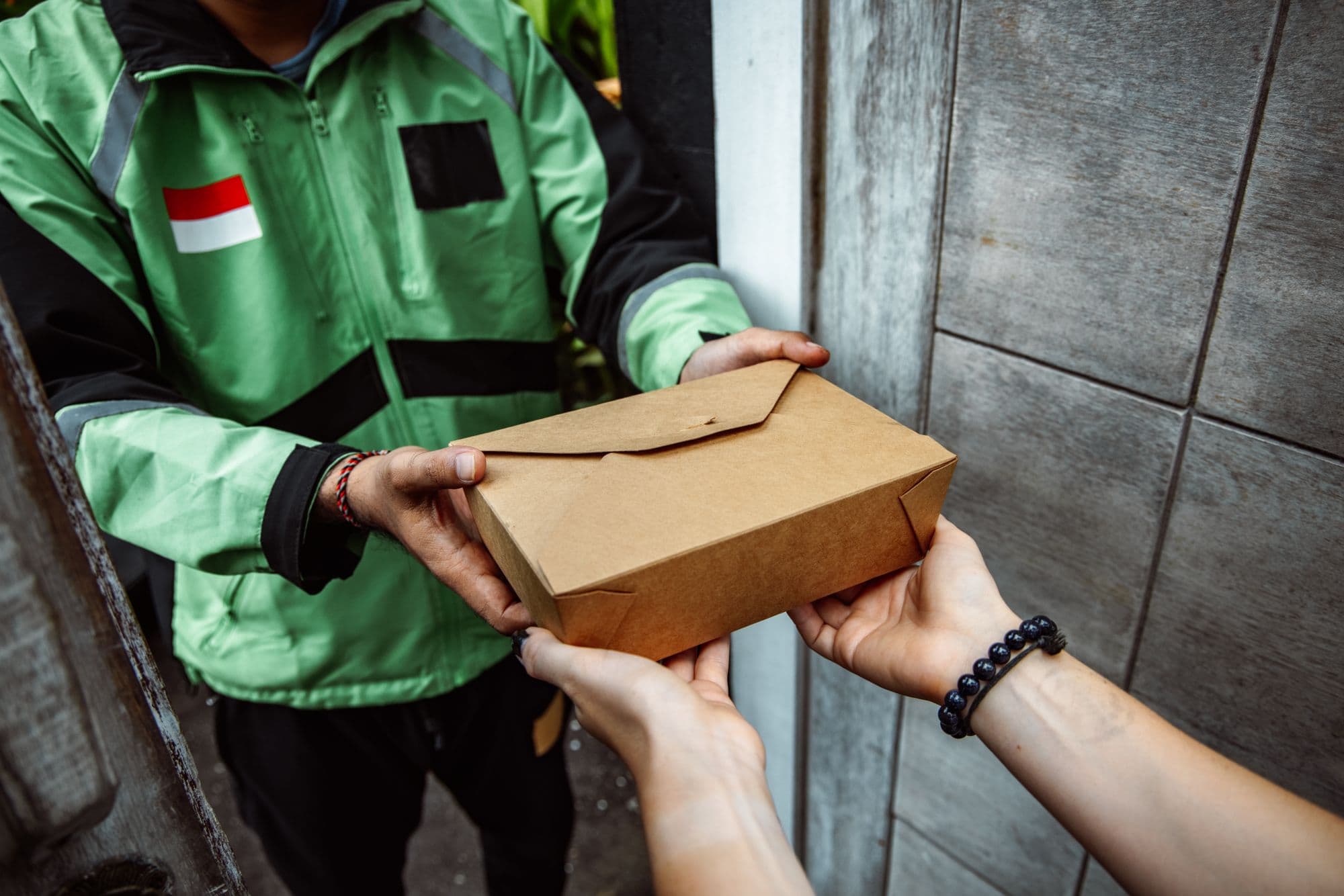
Run your Queensland meal prep business on Mealforma
Online ordering, weekly subscriptions, kitchen quantities, labels and delivery runs in one system, for a flat monthly price in Australian dollars and no cut of your sales.
7-day free trial on a real account · from $249/month · never a cut of your sales