Guide · Victoria
How to start a meal prep business in Victoria
Victoria sorts food businesses into classes before it does anything else, and almost every meal prep business lands in class 2. That single word decides whether you need a food safety program, whether an auditor visits once a year, whether you need a food safety supervisor, and what your council charges you. This guide covers what a meal prep business in Victoria needs before its first delivery: who registers you, which class you are, the food safety program, the supervisor, labels and allergen declarations, an ABN and GST on prepared meals, and getting chilled food across a city that sprawls. Registration fees are set by each council, so every section points at the authority that sets the rule. Nothing here is legal, food safety or tax advice.
Last reviewed:
Can you cook meal prep at home in Victoria?
Victoria does register home-based food businesses, which is why so many jam, chutney and protein-ball businesses start in a domestic kitchen. Safe Food Victoria's class list names home-based businesses directly: hot-filled chutneys, relishes and sauces made at a home or hired kitchen are class 3A, and protein balls made from nuts, dried fruit and protein powder are class 3.
Chilled ready meals are a different animal. Any premises where unpackaged potentially hazardous food is handled or manufactured is class 2, and Safe Food Victoria's examples put cook-chill and cook-frozen pre-prepared meals, pasta, rice, soups and sauces squarely there. Nothing in the class system says a class 2 premises cannot be a house — but your council classifies your premises and registers it, and a domestic kitchen has to satisfy the same Food Standards Code requirements for premises and equipment as any other class 2 kitchen.
So the honest answer for Victoria is: ask your council's environmental health officers, and ask them about class 2 specifically, before you spend anything. Some will work with you on a fit-out; some will not register a class 2 premises in a dwelling at all. Either way you want that answer in writing before you buy a chest freezer.
The practical constraint is the same one that ends most home meal prep businesses everywhere: a domestic fridge cannot cool a cook day's output, and cooked potentially hazardous food has to come down through the danger zone on a clock. If your plan needs a blast chiller, it needs a kitchen built for one.
- Hot-filled chutneys and sauces from a home kitchen are class 3A; protein balls are class 3.
- Cook-chill and cook-frozen pre-prepared meals are class 2, wherever they are made.
- Your council classifies and registers the premises, and decides what it will accept in a dwelling.
- Get the council's answer on class 2 in writing before you buy equipment.
Council or Safe Food Victoria?
Two regulators, and the line between them matters. Local councils are responsible for registering and regulating most food businesses in Victoria — hospitals, cafés, restaurants, supermarkets, manufacturers and caterers. Safe Food Victoria, which commenced on 1 July 2026 under the Safe Food Victoria Act 2026, licenses meat, poultry, seafood and dairy businesses as well as businesses producing food with new or emerging technologies.
Safe Food Victoria states the test plainly: if your business mainly handles meat, poultry, seafood or dairy, you will require a Safe Food Victoria licence; if not, register with your local council. Its list of who registers what puts a manufacturer of ready meals, pre-prepared meals, soups and sauces with the local council, and a caterer working on and off site with the local council.
The same list puts a further meat processing facility — where the majority of products manufactured are meat, poultry or seafood — with Safe Food Victoria. A meal prep menu of chicken, beef and salmon bowls sits uncomfortably between those two rows, and the wording that decides it is what the majority of your product is and how you describe your business. Do not guess. Ring your council and Safe Food Victoria, describe the menu, and ask which of them registers you.
Getting this wrong is expensive in both directions: an unregistered business cannot legally trade, and a business licensed by the wrong authority pays for the wrong regime. It is a ten-minute phone call and it should be the first one you make.
- Councils register most food businesses, including manufacturers of ready meals and caterers.
- Safe Food Victoria licenses businesses that mainly handle meat, poultry, seafood or dairy.
- A meat-heavy meal prep menu sits near that line — ask both, before you trade.
- Temporary and mobile food premises use the state's FoodTrader system for their registration.
Your class decides everything else
Victoria has five classes of food premises, from class 1 at the highest risk to class 4 at the lowest. Your council classifies every premises in its municipal district according to the highest-risk food-handling activity that happens there. You do not choose your class, and two businesses with the same owner can be classified differently.
Class 2 is the one to expect: a premises at which any unpackaged potentially hazardous food is handled or manufactured. Safe Food Victoria's published examples make it concrete for this trade. Cook-chill food with a short or extended shelf life — pre-prepared meals, pasta, rice, soups and sauces — is class 2. So is cook-frozen processing of pre-prepared packaged meals. So is a caterer working on or off site, and so is a fast food outlet pre-preparing potentially hazardous ready-to-eat food to hold cold or hot.
Within class 2 there is a second split worth understanding, because it changes what your food safety program has to be. Safe Food Victoria describes retail premises as businesses that sell direct to the public and may process from raw ingredients, but only for sale within the immediate local area; a manufacturer produces products for distribution beyond the local area — regional, national or international — typically sold on to wholesalers or retailers. A meal prep business delivering to its own customers across one city reads as the first; one freighting chilled meals interstate reads as the second.
Class 3A covers home-based and accommodation premises doing specific things, including hot-filled acidified products; class 3 covers low-risk handling and the sale of pre-packaged potentially hazardous food; class 4 is pre-packaged low-risk food and notifies rather than registers. If your activities are not on Safe Food Victoria's example list, your council's environmental health officer determines the class on the highest-risk activity.
- Five classes; the council assigns yours on the highest-risk activity at the premises.
- Cook-chill and cook-frozen pre-prepared meals: class 2.
- Caterers, on and off site: class 2.
- Retail sells locally direct to the public; a manufacturer distributes beyond the local area.
- Class 4 premises notify rather than register, and are not charged a fee.
Register with your council
Contact your council before you start. Safe Food Victoria's instruction is that the council tells you your registration requirements, any associated fees and your food business classification — in that order, because the class sets the rest. Some businesses notify rather than register, and the council tells you which applies.
If you register, the council charges a registration fee and you renew every year. Fees are set by each council and vary, so the only honest number is the one on your own council's schedule; class 4 businesses that notify are not charged. Expect an inspection before your first registration and an annual inspection after it.
Plan for the fit-out conversation to happen before the lease, not after. Councils assess premises against the Food Standards Code's requirements for food premises and equipment, and a space that needs new flooring, coving, a dedicated hand wash basin in the preparation area or mechanical exhaust is far cheaper to walk away from than to rebuild.
If you also want to trade at markets, festivals or from a van, that is a temporary or mobile food premises, and Victoria requires those to be managed through the state's FoodTrader system rather than a separate application at every council. Ask your council how the fixed premises and the stall fit together before you book a market.
- Ring the council first and ask for your classification, requirements and fees.
- Registration is annual; the fee is set by each council and is not a state-wide figure.
- Expect an inspection before the first registration and annually afterwards.
- Market stalls and vans are temporary or mobile premises, managed through FoodTrader.
The food safety program and the annual audit
This is the part of Victorian regulation that surprises people, and it is worth reading twice. Safe Food Victoria states that all class 1 food businesses and class 2 manufacturers must have a food safety program: prepared specifically for your operations, covering all food handling and processing, assessed for adequacy by a food safety auditor, and audited every year. It is sometimes called an independent or non-standard program, and it is a real cost with a real annual bill attached.
Class 2 retail and food service businesses need a program only if they carry out one of the listed processes — and several of them are common in meal prep. Sous vide cooking below 75 °C under controlled time and temperature in vacuum-sealed packages is on the list. So is handling potentially hazardous food without temperature control. So is off-site catering, where ready-to-eat potentially hazardous food is prepared or part-prepared in one place and transported to another for service. So is packaging food where oxygen is removed or replaced with other gases to improve safety or extend shelf life — which is exactly what a vacuum sealer or a modified-atmosphere tray sealer does.
If none of those apply, a class 2 retail or food service business may be able to use FoodSmart, the free food safety program template Safe Food Victoria publishes for food retail and food service businesses, tailored to your own activities.
Read that list against your actual plan before you buy equipment. A tray sealer that extends shelf life from four days to ten is a sensible thing for a meal prep kitchen to want, and in Victoria it may also be the thing that moves you from a free template to an audited program. Better to know that while it is still a quote.
- Class 1 and class 2 manufacturers: independent program, auditor assessment, yearly audit.
- Sous vide below 75 °C in vacuum-sealed packages triggers a program.
- Vacuum or modified-atmosphere packaging to extend shelf life triggers a program.
- Off-site catering triggers a program.
- Otherwise, FoodSmart is free and can be tailored to your business.
Appoint a food safety supervisor
Class 1, most class 2 and class 3A food premises must have a food safety supervisor. For a small business, Safe Food Victoria says it may be most appropriate for the owner to be the supervisor. They can also be an employee or someone external, provided they can recognise and prevent the hazards at your premises, hold the required Statement of Attainment, and have the ability and authority to supervise everyone else handling food.
The supervisor does not have to be on the premises at all times, but must know how food is being handled when they are not there. One person can be the supervisor across several premises if each registering council is satisfied with the arrangement.
The training depends on your sector, so confirm the sector with your council before anyone enrols. Food processing, which covers food product manufacturers, needs FBPFSY2002 Apply food safety procedures. Retail needs SIRRFSA001 Handle food safely in a retail environment. Hospitality needs SITXFSA005 and SITXFSA006, and the retail and hospitality units can be interchanged. A registered training organisation issues the Statement of Attainment, which the supervisor must be able to produce for an environmental health officer.
On renewals, two rules point in different directions and you should ask your council which applies to you. Safe Food Victoria says there is no Victorian requirement for a food safety supervisor to train beyond the minimum competencies, and that certificates with superseded course codes remain valid. Standard 3.2.2A of the Food Standards Code, which applies nationally, requires category one and category two businesses to appoint a certified supervisor whose certificate was obtained within the past five years. Treat five years as the working assumption and confirm it locally.
- Class 1, most class 2 and class 3A premises need a supervisor; the owner can be it.
- Confirm your food sector with the council before enrolling in any course.
- Food processing: FBPFSY2002. Retail: SIRRFSA001. Hospitality: SITXFSA005 and SITXFSA006.
- Victoria sets no retraining interval of its own; Standard 3.2.2A expects certification within five years.
Labels and allergen declarations
All packaged food sold in Australia must meet the Food Standards Code's labelling requirements, and under the Food Act 1984 it is an offence to sell food that does not comply. The supplier is responsible, and that includes manufacturers, distributors, importers and retailers.
Victoria publishes a useful list of when a label is not required: food made and packaged at the premises where it is sold, packaged in front of the person buying it, delivered at the express order of the person buying it, sold at a fundraising event, or displayed in an assisted service display cabinet. A meal prep business taking orders and delivering them may well fall inside one of those. That does not make the allergen obligation go away — where food does not carry a label, the declaration must still be provided in connection with the food or to the purchaser on request — and it does not make a label a bad idea. Customers reheating a meal on Thursday want to know what is in it and how long it keeps.
Allergen declaration changed on 25 February 2024 under Plain English Allergen Labelling. Standard 1.2.3 and Schedule 9 require declared allergens to be named in the ingredient list in bold, in a font no smaller than the other ingredients, and repeated in a bold summary statement beginning with the word Contains, directly next to the statement of ingredients. Plain words: milk, not casein. Tree nuts, molluscs and cereals are named individually.
Shelf life is your call and your responsibility. Safe Food Victoria says the processor, packer or retailer determines it, using product history, testing or industry guidelines, and the Code sets the date-marking rules. Chilled ready meals carry a use-by date. If your program requires it, your labelling requirements belong in the food safety program as well.
- Bold allergens in the ingredient list plus a bold Contains statement beside it.
- Tree nuts, molluscs and cereals named individually, in plain words.
- Food delivered at the express order of the buyer may not need a full label — but allergens must still be declared.
- You determine shelf life; chilled meals carry a use-by date.
ABN and GST on prepared meals
Start with an Australian Business Number. It is free from the Australian Business Register, a successful application issues the 11-digit number immediately, and you need one before you can register for GST. Not everyone is entitled to an ABN, and the Registrar can review entitlement and ask for evidence that you started or took steps to start the enterprise.
Most basic food in Australia is GST-free; prepared meals generally are not. The ATO's taxable food list includes food of a kind marketed as a prepared meal, but not including soup, and its GST-free list says raw, fresh or frozen meats are GST-free except prepared meals. Marketing counts: how the product is promoted, named, labelled, packaged and displayed all feed into the classification. A weekly menu of ready-to-heat meals should be assumed taxable until your accountant or the ATO says otherwise.
You must register for GST within 21 days of being required to, and the threshold is $75,000 of GST turnover — gross business income, not profit. Once registered, you lodge a business activity statement. Below the threshold registration is optional, and if you register you generally stay registered for at least twelve months.
Registration, pricing decisions and BAS lodgement are between you and your accountant. Mealforma holds the tax rate and tax-inclusive pricing as settings, which is how a Victorian menu shows GST-inclusive prices to customers, and it reports what you sold. It does not lodge anything and it gives no tax advice.
- ABN first, free, issued immediately on a successful application.
- Food marketed as a prepared meal is taxable; soup is the ATO's stated exception.
- Register for GST within 21 days of reaching $75,000 turnover.
- Tax rate and tax-inclusive pricing are settings in Mealforma; lodgement is not.
Delivery across Melbourne and the regions
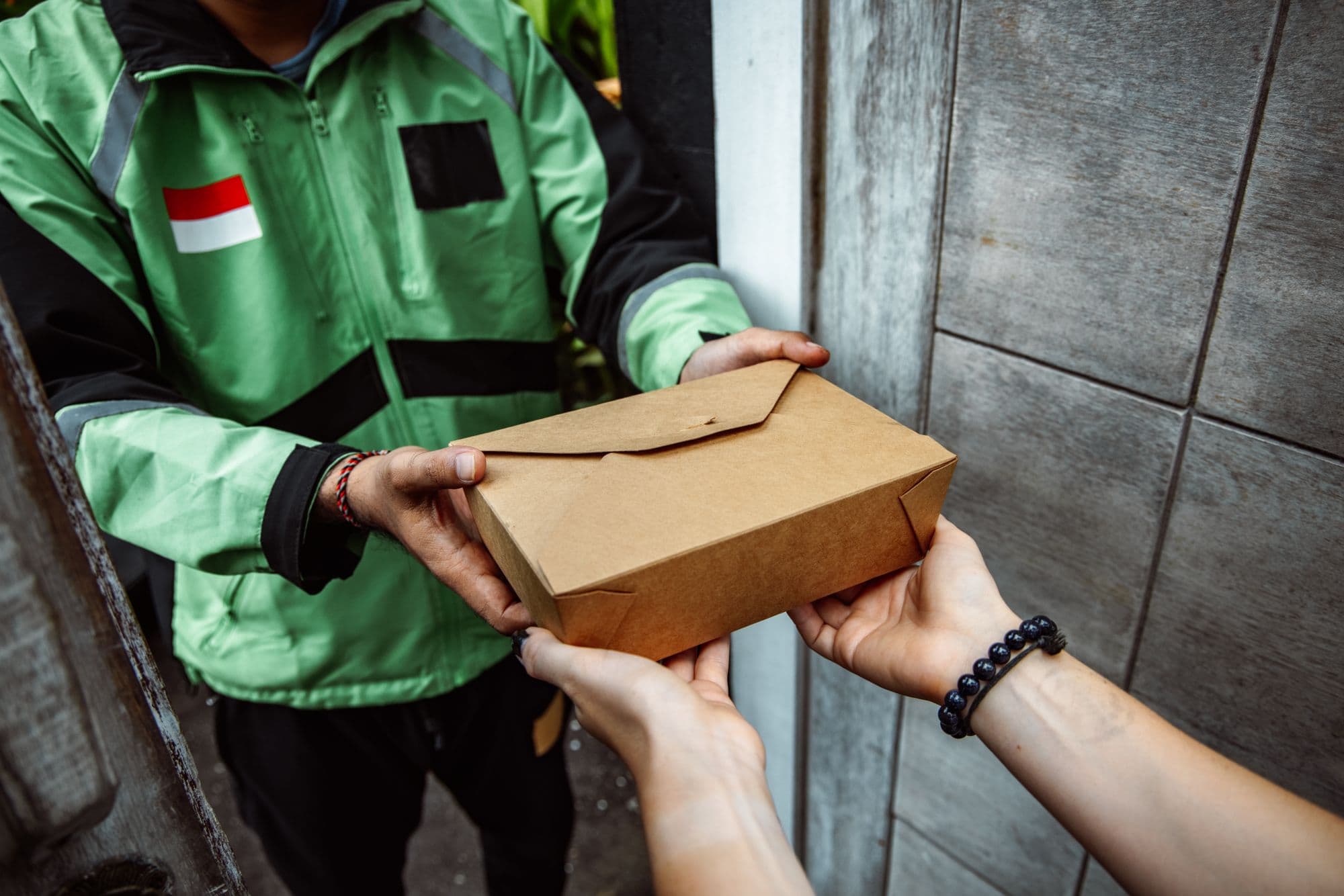
Victoria publishes a home delivery guide, and it is worth reading even though it does not cover you: it is written for unrefrigerated delivery of perishable food other than ready-to-eat meals. Its numbers are a sensible floor. Total delivery time should not exceed four hours unless the food was refrigerated beforehand or ice bricks are used, transport time should be under 30 minutes, ice blocks can keep food under 5 °C, peak traffic should be avoided because it pushes the transport time out, and drivers should understand the temperature danger zone. Ready meals are potentially hazardous food and belong under temperature control the whole way.
Melbourne makes that harder than its weather suggests. The city is wide rather than dense, so a single run that takes in Werribee, Brunswick and Ringwood is three separate afternoons pretending to be one. Build zones that a driver can finish inside the guide's timings, price each zone honestly, and be willing to say no to an address that breaks the route.
The inner north is its own problem. Sydney Road, Lygon Street and Brunswick Street move at tram speed for most of the afternoon, the tram lanes take a car lane with them, hook turns cost a signal cycle each, and 40 km/h zones apply across large parts of the inner suburbs. A Fitzroy round that looks like six kilometres on a map is an hour. Run it early, or run it after the evening peak.
Then there is the weather. A 38 °C northerly in February turns a parked van into an oven in twenty minutes, and the same week can end at 16 °C. Do not let the cool days set your habits: gel packs frozen solid overnight, insulated bags closed between drops, the van loaded in reverse stop order, a photo at every door, and a written rule about what happens when nobody is home. Safe Food Victoria's advice is not to leave food unattended unless the customer has agreed, and to tell them plainly that safety cannot be guaranteed if it is left.
- Keep ready meals under temperature control; the delivery guide's four-hour and 30-minute figures are a floor, not a licence.
- Zone the city so each run finishes inside those timings, and price the zones.
- Avoid the inner north in the afternoon peak; trams, hook turns and 40 km/h zones eat the clock.
- Agree in writing what happens when a customer is not home.
Price and sell your first plans
Most meal prep businesses sell by the week. Customers pick a plan — say 10 or 15 meals — choose their meals before a cut-off and receive them on set days. The cut-off is the thing that makes the business work: it tells you exactly what to buy and cook before you have spent anything.
Cost each meal from its recipe at the prices you actually pay, including the tray, the film and the label, then add kitchen rent, labour, delivery and card fees per meal before choosing a price. If your meals are taxable, decide at the start whether advertised prices include GST; changing that later in front of existing subscribers is a bad week.
Subscriptions make purchasing predictable and smooth out the weekly swing; one-off orders and add-ons fill the gaps. Write the skip, pause and cancel rules before the first customer asks, and set a delivery fee per zone rather than one figure for a state that runs from Docklands to Mildura.
- A weekly cut-off before you buy anything.
- Cost from the recipe, then add rent, labour, delivery and card fees per meal.
- Decide up front whether advertised prices include GST.
- Set delivery fees per zone, not one figure for the whole state.
Run it on one system
Once orders arrive every week, the work is keeping the menu, the cut-off, the kitchen's quantities, the labels and the delivery runs in step. Mealforma is meal prep software built for that: an online store with weekly subscriptions, production quantities worked out from locked orders, labels printed at real physical size from the recipe version the kitchen actually cooked, and each day's delivery run. Delivery zones, fees and cut-offs are settings you change yourself, as are the tax rate and tax-inclusive pricing that show a Victorian customer a GST-inclusive price.
What it does not do matters as much. Mealforma does not certify anything, does not register your premises or obtain a licence, does not write or audit your food safety program, does not lodge tax, and is not legal advice. Allergens flow from ingredient to recipe version to label because a person entered and approved them. You pay a flat monthly price in Australian dollars, it never takes a percentage of your sales, and each business gets its own database.
Checklist
- Ring your council and Safe Food Victoria, describe the menu, and confirm which of them registers or licenses you.
- Ask the council for your food business classification, your registration requirements and its fees.
- Check the class 2 process list against your plan — sous vide, vacuum packing and off-site catering each trigger an audited food safety program.
- Write the food safety program, or tailor FoodSmart if your business qualifies, and book the auditor if one is required.
- Confirm your food sector with the council, then get the food safety supervisor's Statement of Attainment from a registered training organisation.
- Have the premises inspected and registered before you trade, and diarise the annual renewal.
- Buy a probe thermometer and start the temperature and cooling records on day one.
- Apply for an ABN, then register for GST if you have reached or expect to reach $75,000 turnover.
- Design labels with a use-by date, ingredients, bold allergens, a Contains statement and a Nutrition Information Panel.
- Arrange public and product liability cover, and commercial cover for the delivery vehicle.
- Set zones, delivery fees, plans, prices and the weekly cut-off, then open orders.
Questions
What class is a meal prep business in Victoria?
Almost certainly class 2. A class 2 premises is one at which any unpackaged potentially hazardous food is handled or manufactured, and Safe Food Victoria's published examples put cook-chill food with short or extended shelf life — pre-prepared meals, pasta, rice, soups and sauces — in class 2, along with cook-frozen pre-prepared packaged meals and caterers working on or off site. Your council makes the actual determination, based on the highest-risk food activity at the premises, so confirm it with them rather than assuming.
Do I register with my council or with Safe Food Victoria?
Local councils register and regulate most food businesses in Victoria, and Safe Food Victoria's list puts a manufacturer of ready meals, pre-prepared meals, soups and sauces, and a caterer, with the council. Safe Food Victoria licenses businesses that mainly handle meat, poultry, seafood or dairy — including a further meat processing facility where the majority of products manufactured are meat, poultry or seafood. A meat-heavy meal prep menu sits near that line, so ring both, describe what you actually make, and get the answer before you trade.
Do I need a food safety program?
If you are a class 1 business or a class 2 manufacturer, yes: an independent program written for your operations, assessed by a food safety auditor and audited every year. If you are class 2 retail or food service, you need one if you do any of the listed processes, which include sous vide below 75 °C in vacuum-sealed packages, handling potentially hazardous food without temperature control, off-site catering, and packaging food where oxygen is removed or replaced to improve safety or extend shelf life. If none apply, the free FoodSmart template may suit. Check the list before you buy a vacuum sealer.
Do I need a food safety supervisor, and how often do they retrain?
Class 1, most class 2 and class 3A premises need one, and for a small business Safe Food Victoria says the owner is often the right choice. They need a Statement of Attainment from a registered training organisation in the units for your food sector — FBPFSY2002 for food processing, SIRRFSA001 for retail, or SITXFSA005 and SITXFSA006 for hospitality. On renewals, Safe Food Victoria says Victoria sets no requirement to train beyond the minimum competencies, while Standard 3.2.2A requires category one and two businesses to hold a certificate obtained within the past five years. Ask your council which applies to you.
Do my meals need a label?
Sometimes not, and that surprises people. Safe Food Victoria lists food delivered at the express order of the person buying it, and food made and packaged at the premises where it is sold, among the cases where a label is not required. The allergen obligation does not disappear with it: where food carries no label, the declaration must be provided in connection with the food or to the purchaser on request. Most meal prep businesses label anyway, because a customer reheating on Thursday needs the use-by date, the ingredients and the allergens in front of them.
Do I charge GST on meal prep in Victoria?
Assume yes and check. The ATO lists food of a kind marketed as a prepared meal, but not including soup, as taxable, and says marketing — the name, labelling, packaging and advertising — affects classification. You must register for GST within 21 days of reaching the $75,000 GST turnover threshold, and you need an ABN first. Registration, pricing and BAS lodgement are between you and your accountant. Mealforma holds the tax rate and tax-inclusive pricing as settings so your menu shows GST-inclusive prices, but it does not lodge anything and gives no tax advice.
How do allergens get onto every label without retyping them?
In Mealforma, declarable allergens are recorded against each ingredient, carried into the recipe version, and printed on the label for the version the kitchen actually cooked — so changing a sauce changes the labels rather than leaving them stale. Labels preview at real physical size, so the bold ingredient names and the Contains statement can be checked before the print run. The software does not decide what is safe: a person approves each ingredient's allergen data, and no free-from claim should rest on software alone.
What software do meal prep businesses use?
Most start on spreadsheets and a general online store, then move once the cut-off, the kitchen's quantities, the labels and the delivery runs stop agreeing with each other. Mealforma does all of those in one system: subscriptions and one-off orders, production quantities from locked orders, labels from the cooked recipe version, and delivery zones, fees and cut-offs you set yourself. Flat monthly price in Australian dollars, never a percentage of sales, and each business gets its own database.
Sources
- Safe Food Victoria — Classifications for food businesses
- Safe Food Victoria — Local council registered food businesses: what you need to know
- Safe Food Victoria — Who should I be registered with?
- Safe Food Victoria — Food safety programs
- Safe Food Victoria — Food safety supervisor
- Safe Food Victoria — Food labelling and shelf life
- Safe Food Victoria — Food business home delivery guide
- Food Standards Australia New Zealand — Allergen labelling for food businesses
- Food Standards Australia New Zealand — Standard 3.2.2A Food safety management tools
- Australian Taxation Office — Taxable food
- Australian Taxation Office — Registering for GST
- Australian Business Register — Applying for an ABN
Meal prep software in Victoria
Run your Victoria meal prep business on Mealforma
Online ordering, weekly subscriptions, kitchen quantities, labels and delivery runs in one system, for a flat monthly price in Australian dollars and no cut of your sales.
7-day free trial on a real account · from $249/month · never a cut of your sales