Guide · Illinois
How to start a meal prep business in Illinois
Illinois rewrote its home kitchen law in 2022 and is now one of the easier states in which to sell food from home — as long as the food is not meat, poultry or fish. That single exclusion decides most meal prep businesses before they start. This guide covers what a meal prep business in Illinois needs before its first delivery: whether your menu can come from home, who licenses your kitchen and why the answer is local, the manager and food handler certificates, the state's split rate on prepared food, labels, and getting chilled meals across a Chicago winter. Fees and rules change, and they change by county. Every section names the agency that sets them, so check the source before you pay or sign anything.
Last reviewed:
Can you run a meal prep business from home in Illinois?
Illinois replaced its old home kitchen law with the Home-to-Market Act, in force since January 2022, and the effect was to invert the question. Instead of a short list of what you may make, there is a list of what you may not, and a cottage food operator may sell any food or drink that is not on it, as approved by the local health department. A cottage food operation is a home-based food business producing food in a kitchen in the operator's primary residence, or in an appropriately designed kitchen on a farm, selling directly to the consumer.
Meat, poultry, fish, seafood and shellfish are prohibited flatly. So are dairy and eggs, except as ingredients in baked goods, candies or frostings that are not potentially hazardous; cheesecakes, custard pies, crème pies, pumpkin and sweet potato pies, and pastries with potentially hazardous fillings or toppings; low-acid canned foods; garlic in oil unless acidified; cut leafy greens unless dehydrated, acidified, or blanched and frozen; fresh cut or puréed tomatoes and melons; and kombucha.
Illinois is unusual in allowing any temperature-controlled foods at all. Fermented and acidified products that are not canned may be sold if they go into a container that is new, clean and seals properly, and are stored, transported and sold at or below 41 degrees. Baked goods containing cheese may need commercial laboratory results before a health department will approve them, and fresh-cut produce carries extra guidance of its own. None of that rescues a chicken-and-rice menu. If you cook meat for sale, you are not a cottage food operation, and you need a licensed kitchen.
- Register with the local health department where you live, and renew annually. DuPage County charges $50 a year.
- Everyone who prepares or packages the product needs an ANSI-accredited certified food protection manager certificate before you register.
- Products must be packaged and labeled with ingredients and allergens, and health departments ask to see the labels at registration.
- You may sell at farmers markets, fairs, festivals and public events, online, from your own home or farm, from third-party property with the owner's consent, and by delivering to the customer.
- You may not sell for resale or through a retail food establishment.
Choose where you will cook
A meal prep menu with meat in it has to be cooked in a licensed food establishment. In practice that means renting time in a commercial kitchen or taking a space of your own, and the trade is speed against control.
A shared commercial kitchen is the usual start. The building already meets the code, you pay by the hour or the month, and you can be cooking in weeks. Before signing, ask whether you need your own license to cook there, how much refrigerated and frozen storage comes with the hours, and whether you can take a supplier delivery on a day you are not cooking. Cold storage is the constraint nobody sizes correctly: a week of meals for fifty subscribers is a great deal more fridge than it sounds.
Your own space means plan review before you build, a build-out, and an inspection before you open. It also means you can cook on Sunday night and pack on Monday morning without asking anyone. Speak to the health department for the address before you sign the lease. The conversation costs nothing and it is the cheapest way to find out what the room will need.
- Estimate one full cook day: meals, fridge space per meal, and packing time.
- Confirm the cold storage holds a whole production day, not an average one.
- Match the kitchen's access hours to your cook days and your delivery days.
Who licenses your kitchen
Illinois does not license food establishments from Springfield. The Department of Public Health writes the rules, gives technical assistance and adopted the 2022 FDA Food Code for the whole state, but retail food establishments — restaurants, bakeries, grocery stores, food trucks and the kitchen you are about to rent — are regulated by the local health department serving the jurisdiction where the establishment is located.
That is the most important sentence on this page for planning, because it means your rules come from a county or a city department and the neighboring one may do things differently. A typical process, as run by Peoria City/County, goes like this. Download the plan review packet. Submit a completed application with a scale drawing of the establishment, your proposed menu, cleanup procedures for vomiting and diarrhea incidents, proof of certified food protection manager certification and allergen awareness training documentation, together with the plan review fee, which is $235 there. Allow up to thirty business days for review once everything has been received. Then a final inspection when construction is finished, annual license fees paid before you are approved to operate, and a routine inspection about thirty days after you open.
Inspections after that are risk-based and follow the Food Code's structure, with violations recorded as Priority, Priority Foundation or Core items. A kitchen that cooks, cools and holds meat sits at the high-risk end, which means more visits rather than fewer, and a higher fee band in most departments.
- Find the local health department by the kitchen's address, not by your home address.
- Ask for the plan review packet before you commit to a space.
- Ask what risk category a cook-chill meal prep operation gets, because it sets both your inspection frequency and your fee.
Chicago is its own jurisdiction
If the kitchen is inside the city limits, the local health department is the Chicago Department of Public Health, and that is the body whose answers you will be inspected against. Neither a county page nor a state page is a substitute. The city runs its own licensing and its own food protection program, and a shared kitchen in Chicago will expect you to arrive with the city's paperwork already in order.
So ask the city early, and ask it three specific things: which license covers a meal prep kitchen that cooks and delivers with no dining room, what it requires of somebody renting space in a licensed shared kitchen, and which manager certificate it accepts. Get those answers before you sign a kitchen contract rather than after, because they can decide whether a given kitchen is usable at all.
The suburbs are not Chicago. A kitchen in Evanston, Oak Park, Naperville or Schaumburg answers to that municipality's or that county's health department, with its own forms, fees and lead times. And note which address decides it: delivering across the city line does not change your regulator. The kitchen's address does.
Manager and food handler certificates
Illinois wants a certified food protection manager on staff at a food establishment, and health departments check for the certificate before they approve your plans — Peoria asks for proof of certification, and for allergen awareness training documentation with it, as part of the plan review submission.
Everybody else who handles food needs food handler training. The Department of Public Health says employees should be trained within thirty days of hire and may be required to renew every three years, from an ANSI-accredited program or from an internal program the Department has approved, which it only approves for non-restaurants. Somebody who is already a certified food protection manager does not need the food handler course on top. Keep the records: local health department officials ask for them at inspections.
- Certified food protection manager: on staff, and named at plan review.
- Food handler training: every other food employee, within thirty days of hire.
- Keep the certificates and the training records where an inspector can see them.
Register the business
Form the business with the Illinois Secretary of State — an LLC files Articles of Organization — and take the current filing fee from the Secretary of State's own fee schedule rather than from a summary elsewhere.
Then register with the Illinois Department of Revenue before you make any purchases, sales, or hire an employee. The fastest route is MyTax Illinois, using Register a New Business (Form REG-1), which takes about one to two business days; the paper form takes four to six weeks, first come first served. Get an Employer Identification Number from the IRS before you hire, open a separate business bank account, and arrange general and product liability insurance — shared kitchens and wholesale buyers ask to see it — plus commercial auto cover once you are driving deliveries.
Sales tax on meals
Illinois taxes food at two rates. The high rate is the 6.25 percent state rate plus local taxes, and it applies to alcoholic beverages, soft drinks, candy, cannabis-infused food, and food that has been prepared for immediate consumption. The low rate covers groceries: food for human consumption to be consumed off the premises where it is sold.
Where a chilled meal falls is a real question rather than a rhetorical one. The Department of Revenue's own examples put hot food, and items prepared to an individual customer's order, at the high rate, while a sandwich placed in a deli case or other storage unit counts as groceries at the low rate. Meal prep sits between those two pictures and the answer depends on how you actually sell. Put your menu and your packaging to the Department of Revenue, and give the answer to your accountant. How your sales are taxed is between the two of you; this guide is not tax advice.
The grocery side moved on January 1, 2026. The state's one percent tax on groceries was eliminated, and municipalities and counties were authorized to impose a local grocery tax of exactly one percent by ordinance, so in many places the rate a customer pays did not change at all.
Chicago adds a layer. Parts of the city — an area near O'Hare, an area near Midway, and a large downtown and lakefront area that includes Navy Pier — sit inside the Metropolitan Pier and Exposition Authority boundaries, where a one percent food and beverage tax applies to prepared food, alcoholic beverages and soft drinks. Retailers inside the boundaries collect it, and the Department of Revenue names food delivery services among them; an establishment with more than half its gross receipts from prepared food and beverages collects it even on sales for consumption off the premises. Check the exact address in the MyTax Illinois Tax Rate Finder instead of assuming, because the boundaries follow streets, not neighborhoods.
Labels and allergens
Whatever license you hold, the label is what the customer reads. Ingredients in descending order of weight, the net quantity, your business name and address, and nutrition printed from the recipe version the kitchen actually cooked. Illinois requires cottage food products to be packaged and labeled with ingredients and allergens, and health departments ask to see the labels when you register.
Federal law names nine major food allergens: milk, eggs, fish, crustacean shellfish, tree nuts, peanuts, wheat, soybeans and sesame, which became the ninth on January 1, 2023. The declaration goes either in parentheses after the ingredient or in a "Contains" statement next to the ingredient list, and you have to name which tree nut, which species of fish and which species of crustacean shellfish.
For meal prep the hard part is not the rule, it is keeping the chain intact. The allergen belongs to the ingredient, the ingredient belongs to a version of the recipe, and the label belongs to the batch of that version the kitchen cooked. Keep those three in different places and they will eventually disagree.
Delivering through an Illinois winter
Chilled meals have to stay cold from your fridge to the customer's, and Illinois tests the route from both ends of the thermometer. July heat is the obvious problem. January is the quiet one: a tray left on a porch in a Chicago cold snap does not stay chilled, it freezes solid, and a customer who thaws out a brick of chicken and rice is as unhappy as one whose lunch went warm.
Downtown is a parking problem. The Loop and the neighborhoods around it mean loading zones, no easy curb, long carries and a desk between you and the door. The bungalow belt and the suburbs are a distance problem instead: the lakefront and the far western suburbs are a long drive apart in traffic, and a route that crosses the whole metro twice in a day is a route that will run late.
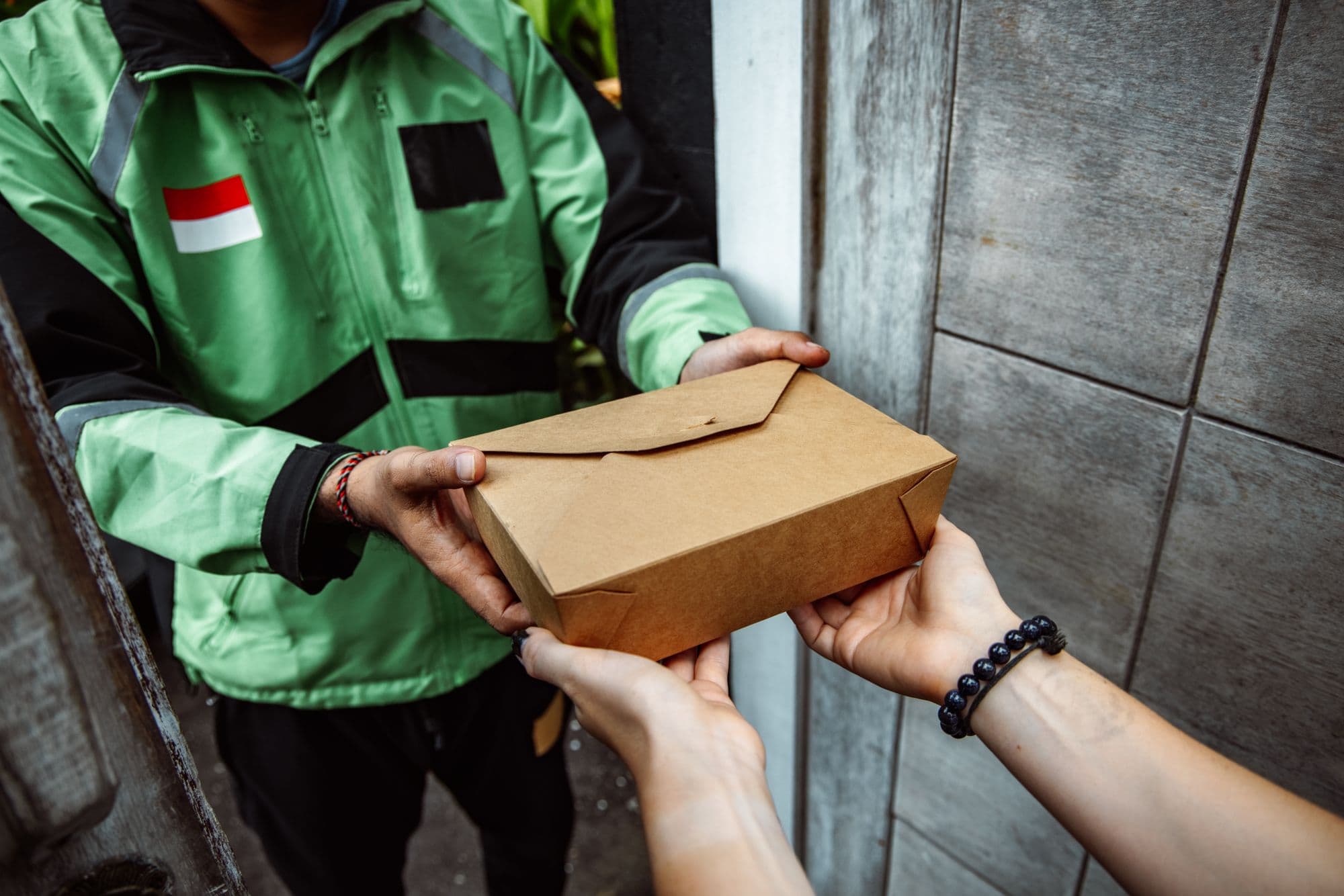
Sell in clusters, build each day's route from that day's locked orders, load the van in reverse stop order, use insulated bags with ice packs, and give customers a window they can plan around. Take a photo at every drop; it settles nearly every message that begins "it never arrived".
Price and sell your first plans
Most meal prep businesses sell by the week. A customer picks a plan, such as ten or fifteen meals, chooses before a cut-off, and receives on set days. The cut-off is what makes the business work: it tells you exactly what to buy and cook before you have spent anything.
Cost each meal from its recipe first — ingredients, tray, sleeve, label — then add kitchen rent, labor, delivery and card fees per meal before you choose a price. Subscriptions smooth the weekly swing and make purchasing predictable, and one-off orders and add-ons fill the gaps. Decide early whether your listed price includes sales tax or adds it at checkout, because changing that later annoys every subscriber at once.
Run it on one system
Once orders arrive every week, the work is keeping five things in step: the menu, the cut-off, the kitchen's quantities, the labels and the routes. Mealforma is meal prep software built for that. Customers order and subscribe online, production quantities are worked out from locked orders, labels print from the recipe version the kitchen cooked with allergens carried through from the ingredients, and each delivery day gets a route. Delivery zones, fees, cut-offs, tax rates and whether your prices include tax are settings you change yourself rather than code someone has to edit. The price is a flat monthly fee and never a percentage of your sales, and every business on it gets its own database.
What it does not do: Mealforma does not certify anyone, does not obtain your license, does not file your taxes and is not legal advice. Your local health department, the Department of Public Health, the Department of Revenue and your accountant do those. The software's job starts the week after you have them.
Checklist
- Check your menu against the prohibited cottage food list. Meat, poultry, fish, seafood and shellfish cannot come from a home kitchen.
- Find the local health department for the kitchen's address — in Chicago, the Chicago Department of Public Health — and ask which license covers your model.
- Choose a kitchen: rented time in a licensed commercial kitchen, or your own space with plan review and a build-out.
- Request the plan review packet and budget for both the plan review fee and the wait before you commit to a lease.
- Get an ANSI-accredited certified food protection manager certificate for at least one person, before plan review.
- Arrange food handler training for every other food employee, within thirty days of hire, and keep the records.
- Form the business with the Illinois Secretary of State and take the filing fee from their own fee schedule.
- Register with the Illinois Department of Revenue through MyTax Illinois before you buy, sell or hire.
- Ask the Department of Revenue how your meals are taxed, and check the kitchen's address in the MyTax Illinois Tax Rate Finder.
- Design labels with ingredients, nutrition and the nine major allergens.
- Set your plans, prices, cut-off and delivery days, then open orders.
Questions
Can I sell meal prep from my home kitchen in Illinois?
Only if there is no meat in it. The Home-to-Market Act lets a registered cottage food operation sell almost anything that is not on the prohibited list, but meat, poultry, fish, seafood and shellfish are prohibited outright, and dairy and eggs are allowed only as ingredients in baked goods, candies or frostings that are not potentially hazardous. A plant-based or baked menu can work from home. A chicken-and-rice menu cannot.
Who licenses a meal prep kitchen in Illinois?
The local health department serving the jurisdiction where the kitchen is. The Department of Public Health writes the Illinois Food Code and adopted the 2022 FDA Food Code statewide, but it does not license or inspect retail food establishments itself. In Chicago that department is the Chicago Department of Public Health; in a suburb it is that municipality's or that county's.
Do I need a food manager certificate?
Yes. An Illinois food establishment needs a certified food protection manager, and health departments check for the certificate at plan review before they approve your plans. Every other food employee needs food handler training within thirty days of hire, from an ANSI-accredited program or an internal program the Department of Public Health has approved, and the training records have to be available to inspectors.
How much does it cost to register a cottage food operation?
It is set and collected by your local health department and renewed annually. DuPage County, for example, charges $50 a year. Ask yours for its current figure, and budget separately for the ANSI-accredited certified food protection manager course, which everyone preparing or packaging the product must hold before you register.
Do I charge sales tax on meal prep in Illinois?
Food prepared for immediate consumption is taxed at the high rate, the 6.25 percent state rate plus local taxes, while groceries sit at the low rate. Chilled meals can arguably fall either way depending on how you sell them, so ask the Department of Revenue about your actual menu and packaging and take the answer to your accountant. Parts of Chicago add the 1 percent MPEA food and beverage tax on prepared food as well. This is not tax advice.
Can I deliver cottage food to customers in Illinois?
Yes. Illinois allows a cottage food operator to sell online and deliver to the customer, alongside farmers markets, fairs, festivals and public events, pickup from your own home or farm, and sales from third-party property with the owner's consent. What you cannot do is sell for resale or through a retail food establishment.
What software do meal prep businesses use?
Most start with spreadsheets and a general online store, then move to meal prep software once weekly orders, cut-offs, kitchen quantities, labels and routes stop staying in step. Mealforma does all of them in one system: allergens flow from the ingredient to the recipe version to the printed label, delivery zones, fees and cut-offs are settings you change yourself, the price is a flat monthly fee rather than a percentage of your sales, and every business on it gets its own database.
Sources
- Illinois Department of Public Health — Cottage food
- University of Illinois Extension — Cottage food: prohibited foods
- University of Illinois Extension — Cottage food: allowed foods
- University of Illinois Extension — Cottage food: where you can sell
- DuPage County Health Department — Cottage food operation laws
- Illinois Department of Public Health — Retail food
- Illinois Department of Public Health — Food handler training
- Peoria City/County Health Department — How to open a new food establishment
- Illinois Department of Revenue — PIO-115, tax rates for retail sales of food and medicine
- Illinois Department of Revenue — MPEA food and beverage tax
- Illinois Department of Revenue — Register your business
- U.S. FDA — Food allergies
Meal prep software in Illinois
Run your Illinois meal prep business on Mealforma
Online ordering, weekly subscriptions, kitchen quantities, allergen labels and delivery routes in one system, for a flat monthly price in US dollars and no cut of your sales.
7-day free trial on a real account · from $249/month · never a cut of your sales