Guide · North Carolina
How to start a meal prep business in North Carolina
North Carolina will inspect your home kitchen and let you sell jam from it. It will not let you cook chicken and rice in it for sale, and the county says so in plain words. This guide covers what a meal prep business in North Carolina needs before its first delivery: what the Department of Agriculture's home processing inspection actually covers, why your county health department is the agency that matters, the certified food protection manager, prepared food sales tax plus the local meals tax some counties add on top, labels, and getting chilled meals across metros that sit a long way apart. Fees and rules change, so every section points to the agency that sets them. Check the source before you pay or sign anything.
Last reviewed:
Can you run a meal prep business from home in North Carolina?
North Carolina does not call it cottage food. It runs a home processing program through the Department of Agriculture and Consumer Services, and the rule is simple: if you want to produce and sell food for human consumption from your home, the kitchen has to be inspected first. That applies whether you sell to retail stores, to restaurants or directly to consumers, and it applies even if all you do is open and repackage food you bought somewhere else.
Only low-risk food qualifies — items that are shelf stable and need no refrigeration or freezing. High-risk products are not permitted from a home kitchen at all, and NCDA&CS lists them: refrigerated or frozen products, low-acid canned foods, dairy, seafood, bottled water and juice, and bakery products with cream or cream cheese fillings. Under the program you are treated as a food manufacturing facility, so the kitchen has to meet federal Good Manufacturing Practices under 21 CFR 117 Subpart B as well as the N.C. Food, Drug and Cosmetic Act: smooth cleanable food-contact surfaces, hand washing in a sink other than the kitchen sink, thermometers in the refrigerator and freezer, shielded or shatter-proof light bulbs, and no pests, which the department explicitly extends to household pets.
You submit a business plan, proof of a municipal water bill or a well test for coliform and E. coli taken within the past year, and your labels. At the end of it there is no permit — NCDA&CS gives you the inspection report and a Notice of Inspection showing you have been inspected. Useful for a jam business. It will not carry a meal prep menu.
- Allowed: baked goods that need no refrigeration, jams, jellies and preserves, candies, dried mixes and spices, some liquids and sauces, acid and acidified foods, freeze-dried candies.
- Not allowed: refrigerated or frozen products, low-acid canned foods, dairy, seafood, bottled water and juice, and bakery products with cream or cream cheese fillings, including cheesecakes.
- If a pet comes into the home at any time, even only at night, you cannot manufacture food there.
- The kitchen must be your home kitchen. A garage, a basement or a separate building on your property makes it a commercial business instead.
- Expect 8 to 12 weeks for a Food Regulatory Specialist to contact you to arrange the inspection, and sometimes longer.
The foods a meal prep menu is actually made of
Wake County's environmental health division puts the crux better than any statute does. It regulates time and temperature control for safety foods, and says it is against the law for producers to make these foods for sale in their homes. Its examples are meats, including fish and eggs; cooked vegetables; products containing cut tomatoes; cut leafy greens; cut melons; and sprouts. Then the sentence that ends the argument: dishes that often contain these regulated foods include most entrees, cooked side dishes and appetizers, as well as many desserts.
That is a meal prep menu, line by line. Grilled chicken over rice with roasted vegetables is three regulated foods in one tray. The county's own answer is equally direct — if food producers want to make these foods, they need to find a commercial space, go through the regular plan review process and obtain a permit, after which the county inspects the business like any other food establishment. Every county in North Carolina takes the same position because they are all applying the same state rules.
Choose where you will cook
The usual first step is renting time in a permitted commercial kitchen. Wake County notes that while many small home-based producers cannot afford their own commercial facility, the use of commissaries, or shared kitchens, is on the rise — clean, permitted facilities where food entrepreneurs rent space to make their food, and a go-to for chefs, caterers and other producers facing the cost of their own licensed kitchen. NCDA&CS links a directory of North Carolina shared-use and business incubator kitchens from its home processor page.
Shared kitchens are permitted formally, not informally. Wake County publishes separate shared-kitchen applications for the primary permittee — the operator who holds the permit for the facility — and for secondary permittees, the businesses cooking in it. Find out which you will be, and get it in writing before your first production day, because an inspector arriving mid-shift will ask.
Leasing your own space gives you the schedule and the room to grow, at the cost of plan review, a build-out and an opening evaluation. Talk to your county environmental health office before you sign a lease; they will tell you what the space needs to pass, and Wake County's advice is worth repeating in every county — contact the plan review section before you buy, build or remodel.
- Work out a full cook day first: meals, fridge space per meal, and packing time.
- Check that cold storage holds a whole production day before you commit to a kitchen.
- In a shared kitchen, ask who holds the primary permit and what a secondary permittee has to file.
- Match the kitchen's access hours to your cook days and your delivery days.
Get the right food permit
Food establishment permits in North Carolina are issued locally. Your county health department's environmental health division permits and inspects the facilities that provide food service, under the state rules at 15A NCAC 18A .2600 and the North Carolina Food Code Manual that interprets them. In the Triangle that is Wake, Durham and Orange counties; in Charlotte it is Mecklenburg County; each has its own office, its own portal and its own fees.
The sequence is plan review, then permit, then inspections. A health and safety plan review must be performed and approval granted before the construction and operation of any new or remodeled establishment, and Wake County now takes the application and fee online at the same time as you submit plans to your municipality for building permits. Ask which submittal guide applies to you — food service is a different guide from a mobile food unit or a pushcart.
Two practical warnings. Permits are not transferable, so buying a running kitchen means going through evaluation yourself; you may qualify for a transitional permit if what is outstanding is construction or equipment rather than a public health risk, but that is the regulator's call, not yours. And the permit is not the only box: your county's own checklist points you at the prepared food and beverage tax, business personal property taxes, and your municipality's zoning, building and public utilities departments.
- Plan review comes before construction and operation of any new or remodeled establishment, and is filed alongside the municipal building permit application.
- Permits do not transfer when a business is sold; a buyer applies again and is evaluated again.
- A transitional permit may be issued where the outstanding items are construction or equipment problems that are not a threat to public health.
- Wake County inspects restaurants one to four times a year, depending on menu items and food processes.
- Bakery establishments are not regulated by the local health department — those go to NCDA&CS.
Certified food protection manager
North Carolina's requirement sits on the manager rather than on a card for every worker. Under 15A NCAC 18A .2600, the person in charge demonstrates the required food safety knowledge by being a certified food protection manager who has shown proficiency by passing a test that is part of an accredited program, and the rules add a standing requirement: at least one employee who has supervisory and management responsibility and the authority to direct and control food preparation and service shall be a certified food protection manager, certified through a program accredited by the American National Standards Institute.
The rules give a new permit holder a period after the permit is issued to meet the certified manager requirement, and they allow a transitional permit where no certified food protection manager is on the premises yet. Ask your county environmental health office exactly how long you have, because that is the number that decides whether you book the exam this month or next.
North Carolina does not run a state food handler card program of the kind Nevada's health districts and Washington's health department operate. That does not mean the rest of the crew needs no training — it means the state writes down the manager requirement and leaves the rest to you and your inspector. Ask your county what it expects to see, and train to it.
Register the business
NCDA&CS sets out the tax and naming steps for a new food business: a Sales and Use Tax number, applied for on Form NC-BR, if the business is going to have sales; a federal Employer Identification Number on Form SS-4 and a North Carolina withholding tax number if it is going to have employees.
Where you register the name depends on the structure. A sole proprietorship or partnership files a Certificate of Assumed Name with the Register of Deeds in each county where it plans to operate. A corporation or limited liability company registers its name with the North Carolina Secretary of State's Corporations Division; the Secretary of State currently quotes 10 to 15 business days for entity creation, faster online. One warning from the Secretary of State worth passing on: vendors aggressively push "priority" or "early" annual report filing and charge fees on top of the statutory filing fee. File the annual report yourself, online, after the first of the year.
Then the ordinary things: a separate business bank account, general and product liability cover that shared kitchens and wholesale customers will ask to see, and commercial auto cover once meals go out in a vehicle.
Sales tax on meals
North Carolina taxes food in two tiers and the difference is large. Qualifying food — ordinary groceries — carries a 2 percent local rate of sales and use tax and nothing else; the state, transit and other local rates do not apply to it. Prepared food is specifically excluded from qualifying food, so it takes the general state rate plus the applicable local and transit rates instead.
The Department of Revenue defines prepared food as food meeting at least one of three conditions: it is sold in a heated state or heated by the retailer; it consists of two or more foods mixed or combined by the retailer for sale as a single item; or it is sold with eating utensils provided by the retailer. Two exclusions matter to a meal prep menu. Food containing raw eggs, fish, meat or poultry that requires cooking by the consumer as the FDA recommends is not prepared food, and neither is food the retailer only slices, repackages or pasteurizes. A cooked, chilled, single-serving meal does not fit either exclusion; a raw meal kit might. The Department's Sales and Use Tax Bulletin 32 covers the definition, how eating utensils are counted, and how sales are sourced for retailers delivering food and for caterers — read it, and ask the Department about your own menu rather than guessing. None of this is tax advice.
Rates differ by county and they move. The Department's own rate table notes that Mecklenburg County levied an additional 1 percent local rate effective July 1, 2026. If you deliver across county lines — and in the Triangle you will, most weeks — you are dealing with more than one rate.
The local prepared food and beverage tax
This is the North Carolina line item most new food businesses miss, because it is not on the state's rate tables at all. The Department of Revenue's county rate list carries an explicit note: these rates do not include any prepared meal taxes imposed and administered by local jurisdictions. Only some counties have one, and they run it themselves.
Wake County's is the clearest example. The Board of Commissioners levied a Prepared Food and Beverage tax of 1 percent of the sale price effective January 1, 1993, on all prepared food and beverages sold at retail for consumption, on or off the premises, by any retailer with sales in Wake County that are subject to state sales tax under G.S. 105-164.4(a)(1). The merchant collects it in addition to state sales tax and remits it to the county monthly. A prepared food or beverage, for this tax, is anything altered other than solely by cooling — by preparing, combining, dividing, heating or serving — to make it available for immediate human consumption.
The mechanics are county mechanics, not state ones. You register with a Gross Receipts Tax Application to get an account number, the county mails you a PIN you need for online filing, and a return is due on or before the twentieth day of the month after the tax accrues — including a zero-due return in a month with no sales. Since April 2025 the Wake return also has a line to deduct sales a marketplace facilitator already reported and collected, which matters if a third party takes orders and delivers for you. Check every county you deliver into, and do it before you set a price, not after the first return.
Labels and allergens
Federal law names nine major food allergens: milk, eggs, fish, crustacean shellfish, tree nuts, peanuts, wheat, soybeans and sesame, which became the ninth on January 1, 2023. NCDA&CS asks for the same list on home processed products and is specific about how — all allergens must appear in the ingredient statement or in a "Contains" statement immediately after it, naming the specific tree nut and the specific species of fish.
The label itself carries the product name, the manufacturer's name and address, the net weight, and a complete list of ingredients in descending order of predominance, with sub-components in parentheses after the ingredient that contains them. Nutrition is not required under the home processing program unless you make a claim such as low fat or sugar free — but meal prep customers buy on calories and protein, so you will be printing it anyway, and it should come from the recipe version the kitchen actually cooked rather than an older spreadsheet.
There is a narrow exemption from an affixed label when the product is sold on demand directly to the consumer, including orders picked up from your home or delivered to the consumer, provided ingredient information is available on request. Do not lean on it. A meal in a customer's fridge on Thursday, four days after it was handed over, is a meal nobody can identify without a label. For a permitted commercial kitchen, ask your county environmental health office which labeling rules apply to the way you sell before you order printed sleeves.
Delivery across a state with several centers
Meals that need temperature control have to stay cold from the kitchen fridge to the customer, which in a North Carolina July means insulated bags or coolers with ice packs, short runs, a loading order that matches the stop order, and a delivery window customers can plan around. Check the cold-holding temperature in your county's food rules and build the route to hold it.
The routing problem here is that North Carolina has no single center. The Triangle alone is three cities and three counties — Raleigh in Wake, Durham in Durham, Chapel Hill in Orange — which means three environmental health offices and, for tax, at least one county boundary that changes what you collect. Charlotte is another two and a half hours down I-85, the Triad sits between them, and Wilmington and Asheville are further still. A route that makes sense inside the Beltline does not scale to a second metro; a second metro is a second cook site, a second commissary agreement or a courier, not a longer van run.
Start with one metro and one or two delivery days. Build each day's route from that day's locked orders, and tell customers a window rather than a day. A photo at each drop settles most "it never arrived" messages.
Price and sell your first plans
Most meal prep businesses sell by the week. Customers choose a plan — 10 meals, 15 meals — pick their meals before a cut-off and receive them on set delivery days. The cut-off is what makes the business work: it tells you exactly what to buy and cook before you have spent anything.
Cost each meal from its recipe, including packaging and labels, then add kitchen rent, labor, delivery and card fees per meal. In North Carolina add the tax lines carefully, because there may be two: the state and local sales tax on prepared food, and a county prepared food and beverage tax on top of it. Decide once whether your advertised price includes tax and apply it everywhere. Subscriptions flatten the weekly swings and make purchasing predictable; one-off orders and add-ons fill the gaps.
Run it on one system
Once orders arrive every week, the work is keeping the menu, the cut-offs, the kitchen's quantities, the labels and the delivery routes in step. Mealforma is meal prep software built for that: an online store with weekly subscriptions, production quantities worked out from locked orders, allergens carried from the ingredient through the recipe version onto the printed label, tax rates and tax-inclusive pricing as settings rather than code, and each day's delivery route with its own zones, fees and cut-off times. You pay a flat monthly price and it never takes a percentage of your sales, and each business gets its own database.
What it does not do is get you a permit. Mealforma certifies nothing, obtains no permits, files no taxes and is not legal advice. Your county environmental health office, NCDA&CS, the Department of Revenue and your county tax administration decide what you must do; the software's job is to make doing it repeatable.
Checklist
- Check your menu against the NCDA&CS home processing program. Refrigerated, frozen, dairy and seafood products cannot be made at home.
- Accept early that entrees and cooked side dishes are time and temperature control for safety foods and need a commercial kitchen.
- Call your county environmental health office and confirm which permit covers the way you plan to sell.
- Choose a kitchen: time in a shared or incubator kitchen, or your own permitted space, and settle whether you are a primary or a secondary permittee.
- Submit plan review at the same time as the municipal building permit application, before any construction or remodeling.
- Pass the evaluation and get the permit before you cook a single sellable meal.
- Get a certified food protection manager certificate from an ANSI-accredited program, and ask the county how long you have to do it.
- Register the business name — Register of Deeds for a sole proprietorship, the Secretary of State for a corporation or LLC.
- Apply for a Sales and Use Tax number on Form NC-BR, and an EIN and withholding number if you will hire.
- Ask the Department of Revenue how your menu is taxed, and read Sales and Use Tax Bulletin 32.
- Check every county you deliver into for a local prepared food and beverage tax and register with its tax administration if there is one.
- Design labels with ingredients, allergens in a Contains statement and nutrition from the recipe version you cooked, then set your plans, cut-off and delivery days.
Questions
Can I sell meal prep from my home kitchen in North Carolina?
No. North Carolina has no cottage food licence; it has a home processing inspection through the Department of Agriculture and Consumer Services, and that program covers low-risk foods only — items that are shelf stable and need no refrigeration or freezing. Refrigerated and frozen products, dairy, seafood and cream-filled bakery goods are expressly not permitted from a home kitchen. Wake County puts the same point from the other side: it is against the law to make time and temperature control for safety foods for sale in a home, and that covers most entrees and cooked side dishes.
Who inspects a food business in North Carolina?
Two different agencies, depending on the food. NCDA&CS inspects home kitchens producing low-risk shelf-stable foods, and also regulates bakery establishments. Your county health department's environmental health division permits and inspects restaurants, food stands and other food establishments — which is what a meal prep kitchen is. Call the county environmental health office where the kitchen will be before you sign anything.
Do I need a food handler card or a manager certificate?
North Carolina's food establishment rules, 15A NCAC 18A .2600, require the person in charge to demonstrate food safety knowledge by being a certified food protection manager, and require at least one employee with supervisory and management responsibility and the authority to direct and control food preparation and service to hold that certification, earned by passing a test in an ANSI-accredited program. The state does not run a food handler card scheme the way Nevada's health districts or Washington's health department do, so ask your county environmental health office what training it expects of the rest of the crew.
What is the cheapest way to get a legal kitchen?
Rent time in a permitted commercial kitchen. Wake County notes that the use of commissaries, or shared kitchens, is on the rise and that they are permitted facilities where food entrepreneurs rent space, and it publishes separate shared-kitchen applications for the primary permittee and for secondary permittees. NCDA&CS also links a list of North Carolina shared-use and business incubator kitchens. It is the normal first step before leasing your own space.
Do I charge sales tax on meal prep in North Carolina?
Almost certainly. North Carolina taxes qualifying food — groceries — at a 2 percent local rate only, but prepared food is not qualifying food, so it carries the general state rate plus the applicable local and transit rates. Prepared food means food sold heated or heated by the retailer, two or more foods mixed or combined by the retailer and sold as a single item, or food sold with eating utensils. Read the Department of Revenue's Sales and Use Tax Bulletin 32 and ask them about your own menu; this is not tax advice.
Is there an extra local tax on prepared food?
In some counties, yes, and it is separate from state sales tax. Wake County has levied a 1 percent Prepared Food and Beverage tax since January 1, 1993 on prepared food and beverages sold at retail for consumption on or off the premises by any retailer with sales in the county. The merchant collects it on top of state sales tax and remits it to the county monthly, by the twentieth, after registering with a Gross Receipts Tax Application. The Department of Revenue's published rate tables do not include prepared meal taxes imposed and administered by local jurisdictions, so check every county you deliver into.
What software do meal prep businesses use?
Most start with spreadsheets and a general online store, then move to meal prep software once weekly orders, cut-offs, labels and routes stop lining up. Mealforma handles all of them in one system: allergens flow from the ingredient to the recipe version onto the printed label, tax rates and tax-inclusive pricing are settings, delivery zones, fees and cut-offs are settings, and the price is a flat monthly fee rather than a percentage of your sales.
Sources
- NCDA&CS Food and Drug Protection Division — Home Processor
- Wake County Environmental Health & Safety — Home-Based Food Production Guidelines
- Wake County Environmental Health & Safety — Plan Review & Permits
- Wake County Environmental Health & Safety — Restaurants and Meat Markets
- Wake County Environmental Health & Safety — Rules and Resources
- Alamance County Environmental Health — 15A NCAC 18A .2600, Rules Governing the Food Protection and Sanitation of Food Establishments (PDF)
- North Carolina Department of Revenue — Food, Non-Qualifying Food, and Prepaid Meal Plans
- North Carolina Department of Revenue — Current Sales and Use Tax Rates
- Wake County Tax Administration — Prepared Food & Beverage Tax
- North Carolina Secretary of State — Business Registration
- U.S. FDA — Food allergies
Meal prep software in North Carolina
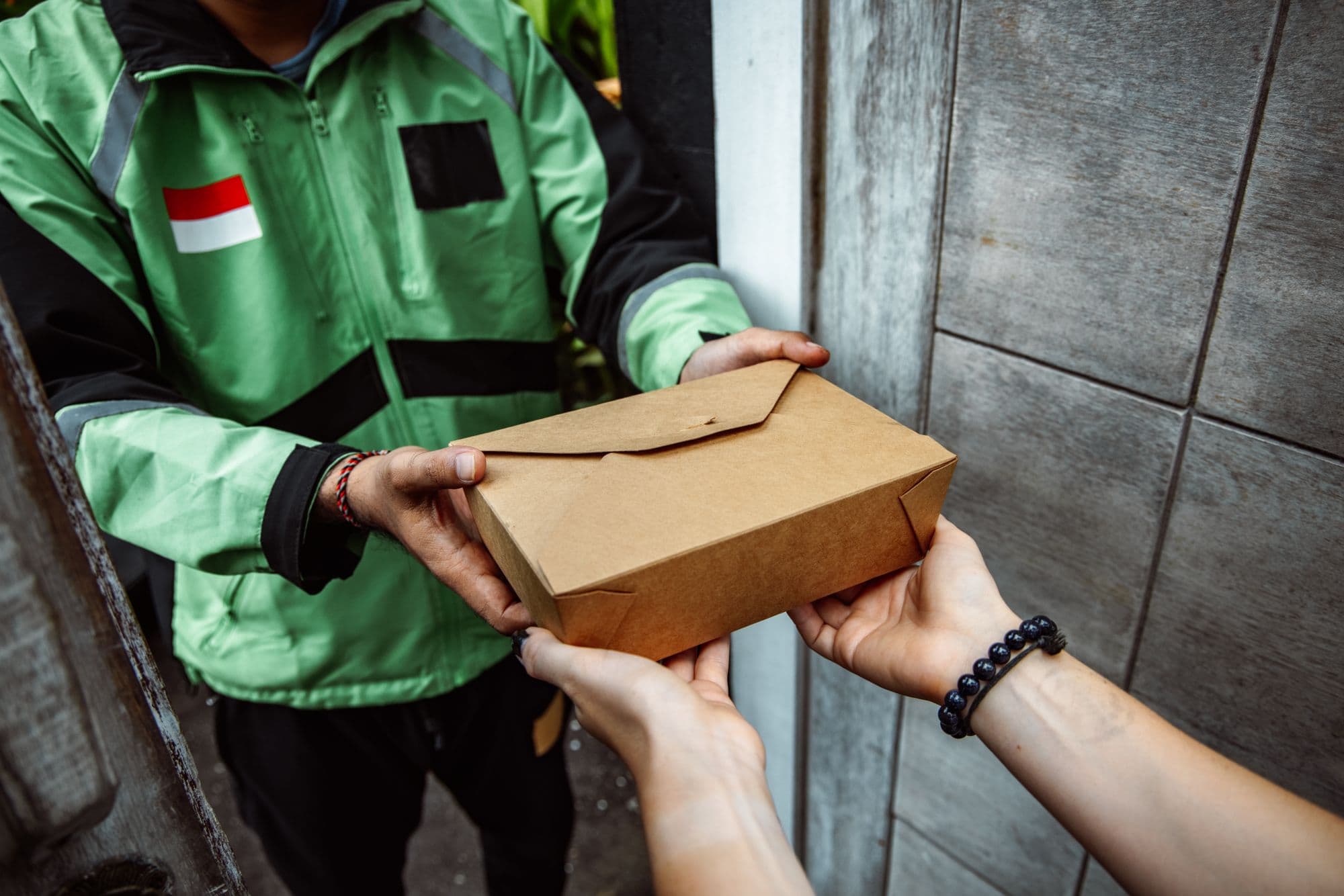
Run your North Carolina meal prep business on Mealforma
Online ordering, weekly subscriptions, kitchen quantities, labels and delivery routes in one system, for a flat monthly price in US dollars and no cut of your sales.
7-day free trial on a real account · from $249/month · never a cut of your sales