Guide · Texas
How to start a meal prep business in Texas
Texas makes it easy to sell cookies from your kitchen and much harder to sell a chicken-and-rice bowl. This guide covers what a meal prep business in Texas needs before its first delivery: whether the food you plan to cook can come from home, the kitchen and the permit, the food manager and food handler certificates, sales tax, labels, and getting chilled meals to customers through a Texas summer. Fees and rules change, so every section points to the agency that sets them. Check the source before you pay or sign anything.
Last reviewed:
Can you run a meal prep business from home in Texas?
Texas has one of the broadest cottage food laws in the country. Since Senate Bill 541 took effect on September 1, 2025, a cottage food production operation can earn up to $150,000 a year in gross income selling food made in a private home directly to consumers, including online orders the operator delivers.
For meal prep, the list of excluded foods matters more than the limit. The Texas Department of State Health Services (DSHS) says a cottage food operation may not sell meat or meat products, poultry or poultry products, seafood or fish, ice cream and other frozen desserts, low-acid canned goods, raw milk products, or products containing CBD or THC. A typical meal prep menu of grilled chicken, beef, salmon and turkey is on that list.
Home production therefore suits a narrow kind of business: plant-based meals, baked goods, granola, snacks, sauces and dressings. Foods that need time and temperature control for safety are allowed only if the operator registers with DSHS and adds safe-handling instructions to the label. If your menu has meat or fish in it, plan on a permitted kitchen from the start.
- Income limit: $150,000 a year in gross income from cottage foods.
- The operator must complete an accredited food handler course.
- Every label carries the statement "THIS PRODUCT WAS PRODUCED IN A PRIVATE RESIDENCE THAT IS NOT SUBJECT TO GOVERNMENTAL LICENSING OR INSPECTION."
- Registering with DSHS lets you print a registration number instead of your home address.
- Cities and counties may not require a permit or charge a fee for a cottage food operation selling directly to consumers.
Choose where you will cook
Meals made with meat, poultry or fish have to be prepared in a kitchen that meets the Texas Food Establishment Rules and holds a permit from the health authority for its location. DSHS guidance does not allow food to be made or held for sale in living or sleeping quarters unless the area is completely partitioned from the home, so for most new businesses the choice is between a shared commercial kitchen and a space of their own.
A shared-use commercial kitchen, sometimes called a commissary or kitchen incubator, rents cooking time and storage by the hour or the month. It is the usual starting point: the building already meets the construction and equipment rules, and you pay for the hours you cook. Before you sign, ask whether you need your own permit to cook there, how much cold storage you get, and whether you can receive supplier deliveries.
Leasing your own space gives you control of the schedule and room to grow. It usually means plan review before you build or remodel, a pre-opening inspection and the cost of the build-out. Talk to the health department before you sign a lease; they can tell you what the space will need to pass.
- Estimate a full cook day: meals, fridge space per meal and packing time.
- Check that cold storage holds a whole production day before you commit.
- Match the kitchen's access hours to your cook and delivery days.
Get the right food permit
Who issues your permit depends on where the kitchen is. Many Texas cities, counties and public health districts run their own food permitting; Austin Public Health is one. Where there is no local program, DSHS permits retail food establishments itself.
DSHS charges $258 a year for gross annual sales under $50,000, $515 from $50,000 to $149,999.99, and $773 at $150,000 and above. Local fees differ. In Austin the annual operational permit is $309, $618 or $927 across the same sales bands, the pre-opening inspection is $178, and plan review for new construction is $312.
A meal prep business that sells to the people who eat the food is normally permitted as a food establishment, but confirm it with the health authority, and say how you will sell: delivery, pickup, a market stall or all three. Selling to businesses that resell your meals, such as gyms, cafés or grocery stores, is manufacturing and wholesale. It can call for a DSHS food manufacturer license instead, with fees based on your gross annual food sales.
- Call the health department for the kitchen's address first and ask which permit covers your model.
- Budget for plan review and a pre-opening inspection if you are building or remodeling.
- Permits renew every year, and the fee moves with your sales band.
Buying and selling meat
Buy meat and poultry only from licensed suppliers whose products carry a USDA or Texas inspection mark, and keep the invoices. Food establishment rules require food from approved sources, and inspectors ask where it came from.
Producing meat products for sale normally needs a grant of inspection. DSHS Meat Safety Assurance exempts products made strictly for retail sale to an end consumer, for use in that consumer's own household, when the sale happens at the establishment or with the owner or their designee physically present, and it allows a limited amount of sales to hotels, restaurants and similar institutions. Ask Meat Safety Assurance how delivered orders fit that exemption, and ask again before you take on wholesale accounts.
Food manager and food handler certificates
The Texas Food Establishment Rules require a certified food protection manager to be present at the food establishment during all hours of operation, with the original certificate posted where customers can see it. The exemptions cover places that handle only prepackaged food or do not prepare exposed foods that need temperature control. A meal prep kitchen does prepare those foods, so it needs a certified manager on shift.
Every other food employee must complete an accredited food handler course within 30 days of employment, and the establishment keeps a certificate for each of them on the premises. Both certificates come from accredited courses, available online and in person.
- Certified food protection manager: present whenever you operate.
- Food handler certificate: every food employee, within 30 days of starting.
- Keep the certificates on site for inspections.
Register the business
Decide how the business is set up. A limited liability company files a certificate of formation (Form 205) with the Texas Secretary of State, and the filing fee is $300. If you trade under a name other than your own or your company's legal name, you also file an assumed name certificate. The Secretary of State's formation FAQ explains where each kind of business files it.
Open a separate business bank account, get an Employer Identification Number from the IRS before you hire anyone, and arrange insurance. Shared kitchens, event organizers and wholesale customers usually ask to see general and product liability cover, and you need commercial auto cover once you deliver.
Sales tax on meals
Texas taxes prepared food, and Comptroller Rule 3.293 defines it broadly: food ready for immediate consumption, food sold heated or heated by the seller, food sold with eating utensils, and two or more ingredients mixed or combined by the seller and sold as a single item.
The same rule leaves out refrigerated food that is typically reheated before eating, and food the seller only cuts, repackages or pasteurizes. Chilled meal prep can fall on either side of that line depending on how you sell it: cold and reheated at home, or hot and ready to eat with a fork. Apply for a Texas sales and use tax permit (there is no fee, though the Comptroller can ask for a security bond) and ask the Comptroller how your menu is treated before you set prices. The answer decides whether tax goes on top of your price or comes out of it.
Labels and allergens
Customers want to know what is in each meal, and customers with allergies have to. Federal law names nine major food allergens: milk, eggs, fish, crustacean shellfish, tree nuts, peanuts, wheat, soybeans and sesame, which became the ninth on January 1, 2023.
For packaged food, DSHS lists the four main parts of a label: the common name of the product, the net quantity, the name and address of the manufacturer, and the ingredients in descending order of predominance. Meal prep customers compare calories and protein, so print nutrition from the recipe you actually cooked. Ask your permitting authority which labelling rules apply to the way you sell.
Delivery in Texas heat
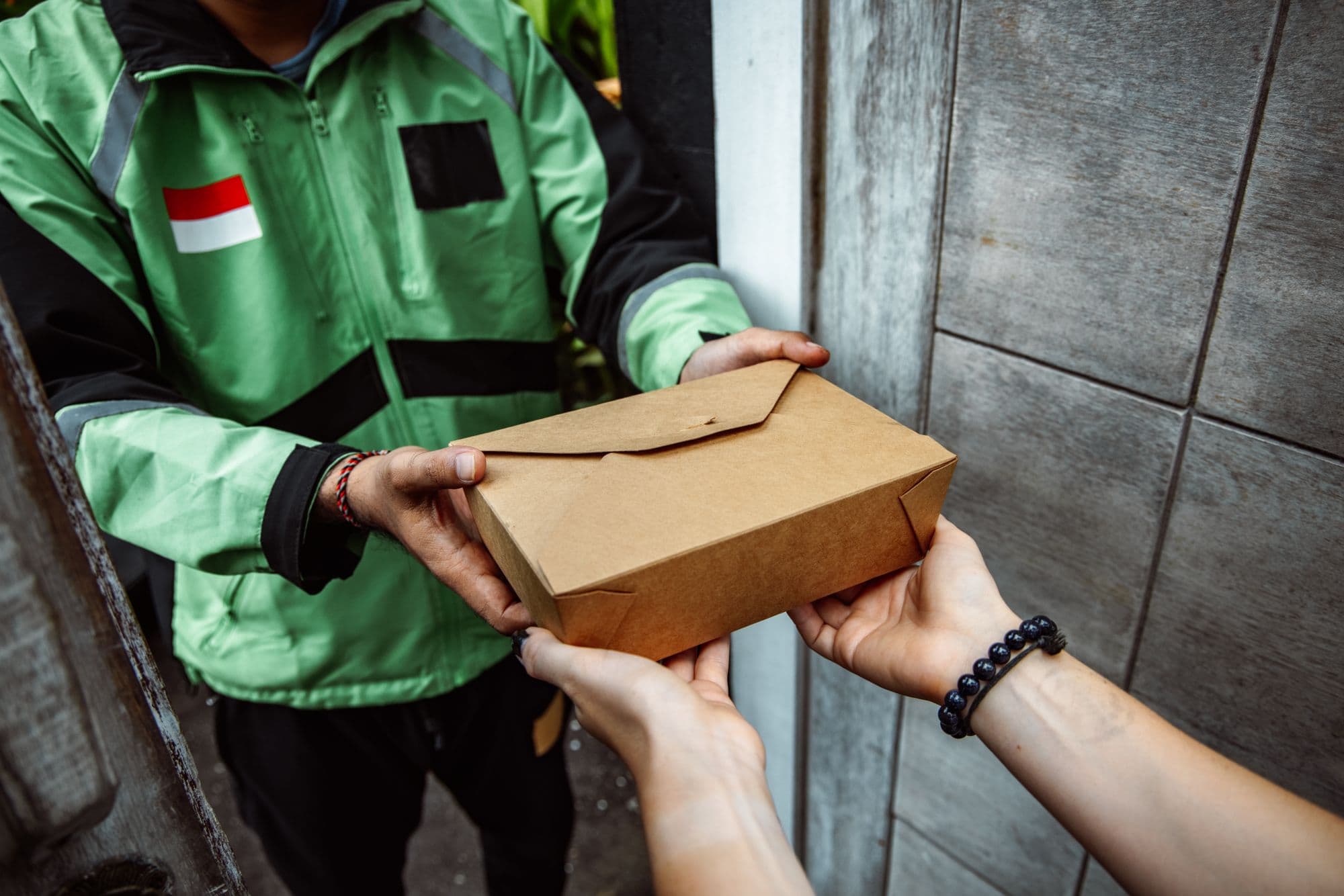
Meals that need temperature control have to stay at 41°F or below from the kitchen fridge to the customer. Through a Texas summer that means insulated bags or coolers with ice packs, short routes and delivery windows customers can plan around, so nobody's lunch sits on a doorstep all afternoon.
Build each day's route from that day's orders, load the vehicle in reverse stop order and tell customers when to expect you. A photo at each drop settles most "it never arrived" messages.
Price and sell your first plans
Most meal prep businesses sell by the week. Customers choose a plan, such as 10 or 15 meals, pick their meals before a cut-off and receive them on set delivery days. The cut-off makes the business work: it tells you exactly what to buy and cook before you spend anything.
Cost each meal from its recipe (ingredients, packaging and labels), then add kitchen rent, labour, delivery and card fees per meal before you choose a price. Subscriptions smooth out the weekly swings and make purchasing predictable, and one-off orders and add-ons fill the gaps.
Run it on one system
Once orders arrive every week, the work is keeping the menu, the cut-offs, the kitchen's quantities, the labels and the delivery routes in step. Mealforma is meal prep software built for that: an online store with weekly subscriptions, production quantities worked out from locked orders, labels printed from the recipe version the kitchen cooked, and each day's delivery route. You pay a flat monthly price and it never takes a percentage of your sales.
Checklist
- Check whether your menu fits Texas cottage food law. Meat, poultry and seafood cannot come from a home kitchen.
- Choose a kitchen: time in a shared commercial kitchen, or your own permitted space.
- Call the health department for the kitchen's location and confirm which permit you need.
- If you are building or remodeling, complete plan review and the pre-opening inspection.
- Get a certified food protection manager certificate, and food handler training for every employee.
- Form the business with the Texas Secretary of State, or file an assumed name.
- Apply for a Texas sales and use tax permit and confirm how your meals are taxed.
- Set up inspected meat and poultry suppliers and keep the invoices.
- Design labels with ingredients, the nine major allergens and nutrition.
- Arrange liability insurance and cover for delivery driving.
- Set your plans, prices, cut-off and delivery days, then open orders.
Questions
Can I sell meal prep from my home kitchen in Texas?
Only if the menu fits the cottage food law. Meat, poultry, fish and seafood are excluded, so meals built around them must be prepared in a permitted kitchen. Plant-based meals, baked goods and snacks can be sold from home up to $150,000 a year in gross income, with food handler training and the required label statement.
How much does a food permit cost in Texas?
It depends on who permits your kitchen. DSHS charges $258, $515 or $773 a year depending on gross annual sales. Local programs set their own fees. In Austin the operational permit is $309 to $927 a year, plus $178 for the pre-opening inspection.
Do I need a food manager certificate for a meal prep business?
Yes. The Texas Food Establishment Rules require a certified food protection manager to be present during all hours of operation wherever exposed foods that need temperature control are prepared. Every other food employee needs food handler training within 30 days of starting.
Do I need a commercial kitchen?
If you cook meat, poultry or fish for sale, yes. The kitchen must be permitted for food production. Many new businesses rent time in a shared commercial kitchen before they lease their own.
Do I charge sales tax on meal prep in Texas?
It depends on how the meals are sold. Rule 3.293 taxes prepared food, including ingredients the seller combines, but leaves out refrigerated food that is typically reheated before eating. Ask the Texas Comptroller how your menu is treated. The sales tax permit itself is free.
Can I sell my meals to gyms or stores?
Selling to businesses that resell your meals can change what you need, including a DSHS food manufacturer license and, for meat products, a grant of inspection. Check with DSHS before you sign a wholesale deal.
What software do meal prep businesses use?
Most start with spreadsheets and a general online store. They move to meal prep software once weekly orders, cut-offs, labels and routes get hard to keep in step. Mealforma handles all of them in one system for a flat monthly price.
Sources
- Texas DSHS — Texas Cottage Food Production
- Texas DSHS — Permitting information for retail food establishments
- Texas DSHS — Food manufacturers, wholesalers and warehouses: FAQ
- Texas DSHS Meat Safety Assurance — Grants of inspection and exemptions: FAQ
- 25 Tex. Admin. Code § 228.31 — Certified food protection manager and food handler requirements
- Austin Public Health — Fixed food establishments
- 34 Tex. Admin. Code § 3.293 — Food; food products; meals; food service
- Texas Comptroller — Sales and use tax permit FAQ
- Texas Secretary of State — Form 205 instructions (certificate of formation, LLC)
- Texas Secretary of State — Formation of Texas entities FAQ
- U.S. FDA — Food allergies
Meal prep software in Texas
Run your Texas meal prep business on Mealforma
Online ordering, weekly subscriptions, kitchen quantities, labels and delivery routes in one system, for a flat monthly price in US dollars and no cut of your sales.
7-day free trial on a real account · from $249/month · never a cut of your sales